Introdsuction
Walk into two different homes, and you’ll immediately feel something unique about each one. One space may feel warm and nostalgic with vintage furniture and earthy textures, while another feels sleek, calm, and effortlessly modern. That emotional connection is exactly why understanding the types of home decor styles matters more than most people realize.
Your home isn’t just where you sleep or store furniture. It quietly reflects your personality, habits, memories, and even your mood. The colors you choose, the lighting you prefer, and the furniture arrangement all shape how you experience daily life. In reality, the right decor style can make a small apartment feel luxurious or transform a large house into a cozy sanctuary.
Many homeowners struggle because they love multiple aesthetics but don’t know how to combine them naturally. Others feel overwhelmed by endless Pinterest boards and Instagram trends. The good news? Once you understand the core characteristics behind different interior styles, decorating becomes far less intimidating and far more enjoyable.
Whether you prefer clean minimalist spaces or bold eclectic interiors full of personality, this guide will help you discover which design direction truly feels like home.

Table of Contents
Understanding Home Decor Styles
Why Choosing the Right Decor Style Matters
Modern Interior Design Style
Minimalist Home Decor
Scandinavian Interior Style
Traditional Home Decor Style
Contemporary Home Design
Industrial Interior Decor
Rustic Home Decor Style
Farmhouse Interior Design
Bohemian Home Decor
Mid-Century Modern Style
Coastal Interior Style
Luxury and Glam Decor
Eclectic Home Design
Japandi Interior Style
How to Mix Different Decor Styles Successfully
Common Decorating Mistakes to Avoid
Personal Journey Behind Popular Interior Trends
Frequently Asked Questions
Conclusion
Understanding Home Decor Styles
Home decor styles are design themes that guide how interiors look, feel, and function. They combine furniture choices, color palettes, textures, materials, lighting, and layouts into a cohesive visual identity.
Some styles prioritize comfort and warmth, while others focus on simplicity or elegance. However, the most successful interiors often balance aesthetics with functionality.
A recent interior design survey found that over 70% of homeowners say their environment directly impacts stress levels and emotional well-being. That statistic explains why decorating has become more personal than ever.
Understanding the foundations of different aesthetics helps homeowners:
- Make smarter furniture purchases
- Create visual harmony
- Avoid cluttered spaces
- Improve comfort and usability
- Increase property appeal
The beauty of modern decorating is flexibility. You don’t have to follow one style perfectly. In fact, many stunning homes blend multiple influences naturally.

Why Choosing the Right Decor Style Matters
Choosing among the many types of home decor styles isn’t only about appearance. It also affects how people feel inside their homes.
For example:
| Decor Style | Emotional Effect |
|---|---|
| Minimalist | Calm and focused |
| Rustic | Warm and comforting |
| Industrial | Bold and creative |
| Coastal | Relaxed and airy |
| Traditional | Elegant and timeless |
Imagine waking up in a bright Scandinavian-inspired bedroom filled with natural light and soft textures. Compare that feeling to a dark, overcrowded room with mismatched furniture. The emotional difference is huge.
Interior design also influences:
- Productivity
- Sleep quality
- Social interactions
- Creativity
- Relaxation
That’s why thoughtful decorating goes beyond trends. It shapes daily experiences.
Modern Interior Design Style
Modern design originated in the early 20th century and focuses heavily on simplicity, clean lines, and functionality.
Key Features of Modern Style
Modern interiors usually include:
- Neutral color palettes
- Open floor plans
- Streamlined furniture
- Natural materials
- Minimal clutter
Materials like leather, steel, wood, and glass dominate modern spaces.
Why People Love Modern Interiors
Modern homes feel organized and spacious. They reduce visual noise, making daily life feel calmer.
However, modern spaces sometimes risk feeling cold if they lack texture or warmth. Designers often solve this with layered lighting, soft fabrics, and indoor plants.
Among all types of home decor styles, modern interiors remain one of the most universally popular because they adapt well to apartments, houses, and offices alike.
Minimalist Home Decor
Minimalism follows the philosophy of “less is more.”
Defining Minimalism
Minimalist interiors focus on:
- Simplicity
- Functionality
- Open space
- Intentional design
Every object serves a purpose.
Common Minimalist Elements
You’ll often see:
- White or neutral walls
- Hidden storage
- Clean geometric furniture
- Soft natural lighting
- Limited decorative accessories
Emotional Benefits
Many people describe minimalist homes as mentally refreshing. Less clutter often reduces stress and decision fatigue.
That said, successful minimalism doesn’t mean living in an empty room. It means choosing quality over quantity.

Scandinavian Interior Style
Scandinavian interiors originated in Nordic countries where long winters inspired bright, cozy living spaces.
Characteristics of Scandinavian Design
This style combines:
- Simplicity
- Comfort
- Functionality
- Natural materials
White walls, wooden textures, and soft textiles create warmth without overwhelming the room.
Hygge and Emotional Comfort
Scandinavian design embraces “hygge,” a Danish concept centered around coziness and emotional well-being.
Common features include:
- Warm blankets
- Soft lighting
- Candles
- Neutral tones
- Comfortable furniture
Many homeowners exploring types of home decor styles gravitate toward Scandinavian interiors because they feel peaceful yet welcoming.
Traditional Home Decor Style
Traditional interiors draw inspiration from classic European decor.

Hallmarks of Traditional Design
You’ll typically notice:
- Rich wood furniture
- Elegant fabrics
- Symmetrical layouts
- Ornate details
- Warm color schemes
Timeless Appeal
Traditional homes often feel sophisticated and comforting. Unlike fast-moving trends, traditional interiors rarely look outdated.
However, balance matters. Too many decorative elements can make spaces feel heavy or crowded.
Contemporary Home Design
People often confuse contemporary and modern styles, but they aren’t identical.
What Makes Contemporary Different?
Contemporary design evolves constantly based on current trends.
Features often include:
- Neutral palettes
- Curved furniture
- Smart home integration
- Minimal accessories
- Open spaces
Flexibility and Adaptability
Contemporary interiors allow more experimentation than strict modernism.
For example:
- Bold artwork
- Sculptural lighting
- Mixed textures
- Statement furniture
This flexibility explains why contemporary design dominates many urban homes today.

Industrial Interior Decor
Industrial design emerged from converted warehouses and urban lofts.
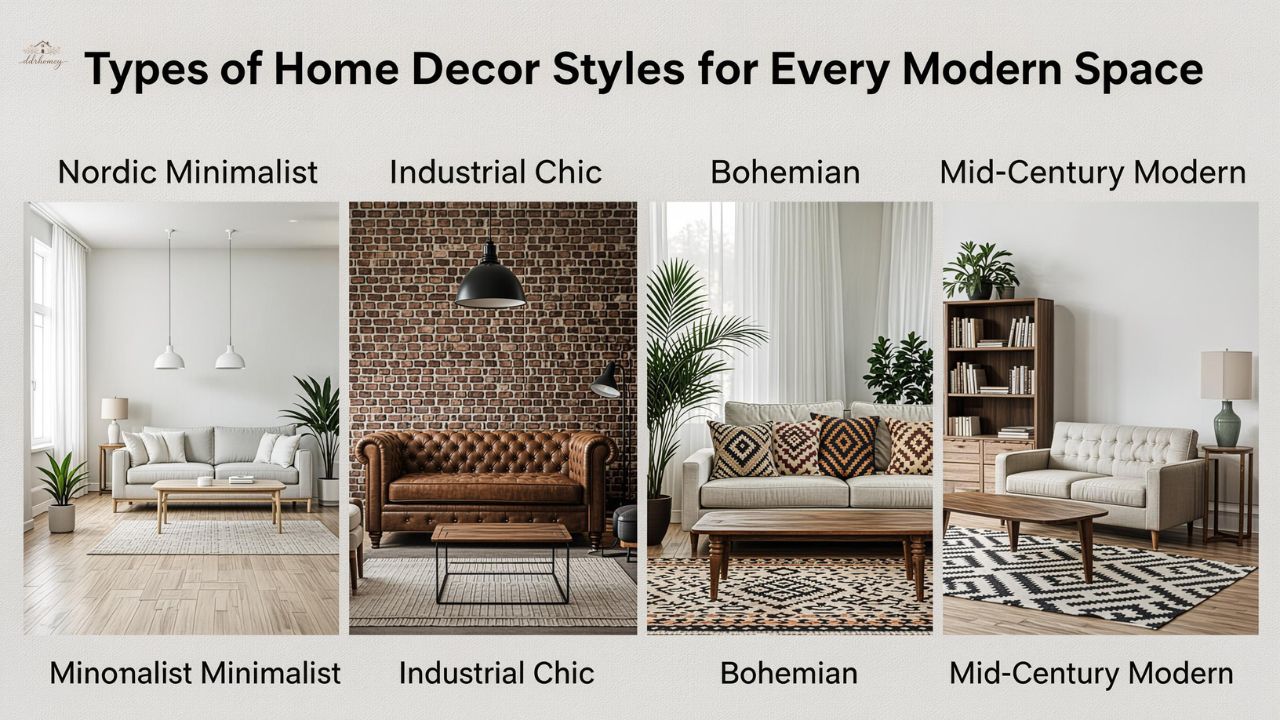
Core Industrial Features
Industrial spaces commonly feature:
- Exposed brick
- Concrete surfaces
- Metal accents
- Open ceilings
- Vintage lighting
The raw unfinished appearance creates bold visual character.
Balancing Harshness
Without soft elements, industrial rooms can feel cold. Designers often add:
- Area rugs
- Warm wood tones
- Leather furniture
- Green plants
Industrial aesthetics remain one of the most recognizable types of home decor styles for creative personalities and city living.
Rustic Home Decor Style
Rustic design celebrates natural beauty and organic textures.
Defining Rustic Interiors
Rustic homes often include:
- Exposed wood beams
- Stone fireplaces
- Handmade decor
- Warm earthy colors
- Vintage-inspired furniture
Emotional Warmth
Rustic spaces feel grounded and emotionally comforting. They remind many people of countryside cabins and family traditions.

This emotional nostalgia explains the lasting popularity of rustic interiors.
Farmhouse Interior Design
Farmhouse style blends rustic warmth with practical simplicity.
Modern Farmhouse Trends
Popular farmhouse features include:
- Shiplap walls
- Neutral palettes
- Barn doors
- Large dining tables
- Black metal fixtures
Why Farmhouse Became So Popular
Shows on home renovation television dramatically boosted farmhouse aesthetics over the past decade.
Many families appreciate how farmhouse interiors feel:
- Welcoming
- Relaxed
- Functional
- Family-oriented
Bohemian Home Decor
Bohemian design celebrates creativity, individuality, and freedom.
Core Boho Elements
Bohemian interiors typically feature:
- Layered textiles
- Global-inspired decor
- Vintage furniture
- Plants
- Bold colors
Personality-Driven Design
Unlike stricter styles, bohemian interiors thrive on imperfection and storytelling.
Travel souvenirs, handmade art, and collected treasures often become focal points.
Among the many types of home decor styles, bohemian decor feels the most emotionally expressive and artistic.
Mid-Century Modern Style
Mid-century modern design exploded in popularity during the 1950s and 1960s.

Signature Characteristics
This style includes:
- Tapered furniture legs
- Organic curves
- Retro color palettes
- Functional layouts
- Minimal ornamentation
Why It’s Still Trending
Mid-century pieces remain timeless because they blend elegance with practicality.
Furniture from this era works surprisingly well in both vintage and contemporary homes.
Coastal Interior Style
Coastal interiors aim to recreate the calmness of seaside living.
Typical Coastal Features
You’ll often find:
- Soft blues and whites
- Natural textures
- Linen fabrics
- Large windows
- Airy layouts
Relaxed Atmosphere
Coastal spaces feel light, peaceful, and refreshing.
Interestingly, homeowners don’t need beachfront properties to use coastal aesthetics successfully.
Luxury and Glam Decor
Luxury interiors focus on sophistication, elegance, and visual impact.
Common Glam Elements
Luxury homes may include:
- Marble surfaces
- Velvet furniture
- Metallic finishes
- Crystal lighting
- Statement mirrors
The Psychology of Luxury Design
People often associate glamorous interiors with success, confidence, and exclusivity.
However, balance remains important. Too much shine or ornamentation can quickly feel overwhelming.
Eclectic Home Design
Eclectic design combines multiple influences into one cohesive interior.
How Eclectic Style Works
Successful eclectic interiors mix:
- Patterns
- Textures
- Eras
- Colors
- Cultural influences
The Challenge of Balance
Eclectic decorating requires confidence and restraint simultaneously.
Without thoughtful planning, rooms can feel chaotic instead of artistic.
Still, eclectic spaces often become the most memorable because they reflect authentic personality.
Japandi Interior Style
Japandi combines Japanese minimalism with Scandinavian warmth.

Why Japandi Is Trending
This hybrid aesthetic emphasizes:
- Simplicity
- Craftsmanship
- Functionality
- Natural beauty
- Calm environments
Key Design Elements
Japandi spaces often include:
- Muted earth tones
- Handmade ceramics
- Light wood finishes
- Minimal clutter
- Organic textures
Many designers believe Japandi represents the future of mindful interior living.
How to Mix Different Decor Styles Successfully
Mixing styles allows homes to feel more personal and layered.
Start With a Dominant Style
Choose one primary aesthetic first. Then add accents from secondary styles.
For example:
- Scandinavian + bohemian
- Modern + industrial
- Farmhouse + contemporary
Use Consistent Color Palettes
Even mixed interiors feel cohesive when colors remain balanced.
Focus on Texture
Texture creates visual richness without overwhelming the room.
Examples include:
- Linen
- Leather
- Wood
- Metal
- Wool
Blending textures naturally softens contrasts between styles.
Common Decorating Mistakes to Avoid
Even beautiful furniture can fail if rooms lack cohesion.
Following Trends Blindly
Trends change quickly. Decorating solely for social media often leads to regret later.
Ignoring Scale and Proportion
Oversized furniture can overwhelm small spaces, while tiny pieces disappear in large rooms.
Poor Lighting Choices
Lighting dramatically affects mood and appearance. Many homeowners underestimate its importance.
Overcrowding Rooms
Too much furniture reduces comfort and visual clarity.
Understanding the fundamentals behind types of home decor styles helps homeowners avoid these common mistakes while creating spaces that feel intentional.
Personal Journey Behind Popular Interior Trends
Interior design trends evolve alongside cultural and lifestyle changes.

Decades ago, homes focused heavily on formal entertaining spaces. Today, people prioritize comfort, flexibility, and wellness. Remote work, social media, and rising housing costs have all influenced modern decorating choices.
Many influential designers built successful careers by making interior design feel accessible rather than intimidating.
Career Growth in Interior Design
Professional decorators often begin through:
- Architecture studies
- Art backgrounds
- Furniture design
- Home renovation projects
As social media platforms expanded, many designers gained massive audiences online through:
- YouTube
- Lifestyle blogs
Financial Growth and Industry Success
The global interior design industry generates billions annually.
Successful designers often earn revenue through:
- Client consultations
- Product collaborations
- Brand sponsorships
- Furniture collections
- Online courses
Some celebrity designers have estimated net worths reaching millions due to television appearances and product licensing deals.
The growing fascination with types of home decor styles continues fueling demand for designers, influencers, and home improvement content worldwide.
Frequently Asked Questions
What are the most popular types of home decor styles?
Modern, minimalist, Scandinavian, farmhouse, bohemian, and contemporary styles are currently among the most popular choices.
Which home decor style is best for small spaces?
Minimalist and Scandinavian interiors work exceptionally well in small spaces because they emphasize light, simplicity, and functionality.
Can I combine multiple decor styles?
Yes. Mixing styles often creates more personalized and visually interesting interiors when done thoughtfully.
What is the difference between modern and contemporary decor?
Modern design refers to a specific historical movement, while contemporary style reflects current evolving trends.
Is farmhouse decor going out of style?
Farmhouse decor is evolving rather than disappearing. Many homeowners now prefer softer, modern farmhouse variations.
Which decor style feels the most luxurious?
Luxury and glam interiors typically feel the most opulent because of premium materials and elegant finishes.
How do I discover my personal interior style?
Look at photos of spaces you consistently love. Notice recurring colors, textures, and furniture types.
Are interior design trends worth following?
Trends can inspire ideas, but homes should ultimately reflect personal comfort and lifestyle rather than temporary popularity.
Why do neutral colors dominate modern interiors?
Neutral palettes create flexibility, visual calmness, and timeless appeal while allowing textures and furniture to stand out.
Conclusion
A well-designed home does more than impress visitors—it quietly shapes everyday emotions, routines, and memories. The colors you wake up to, the textures you touch, and the atmosphere surrounding you all influence how you feel in subtle but powerful ways.
That’s why exploring different types of home decor styles is such a valuable process. It helps you understand not only what looks beautiful but also what genuinely feels right for your personality and lifestyle.
Some people thrive in calm minimalist environments, while others feel happiest surrounded by layered bohemian textures or cozy rustic warmth. There’s no universal “perfect” style. The best interiors are the ones that tell your story naturally and make you feel truly at home every single day.