Introduction
Imagine filling a large stockpot directly over the stove instead of carrying it across the kitchen from the sink. That’s exactly why the pot filler faucet has become one of the most sought-after kitchen upgrades in modern homes.
Originally found primarily in professional kitchens, pot fillers have steadily moved into residential design because they combine convenience, functionality, and visual appeal. Whether you’re preparing pasta, soups, seafood boils, or large family meals, this simple fixture can make cooking easier and more enjoyable.
Beyond convenience, a pot filler faucet adds a touch of luxury that instantly elevates the appearance of a kitchen. Available in a wide range of finishes and styles, these fixtures complement everything from modern minimalist spaces to classic farmhouse kitchens.
This guide explores everything homeowners need to know before installing a pot filler, including benefits, design considerations, installation requirements, maintenance, and whether this increasingly popular fixture is worth the investment.
What Is a Pot Filler Faucet?
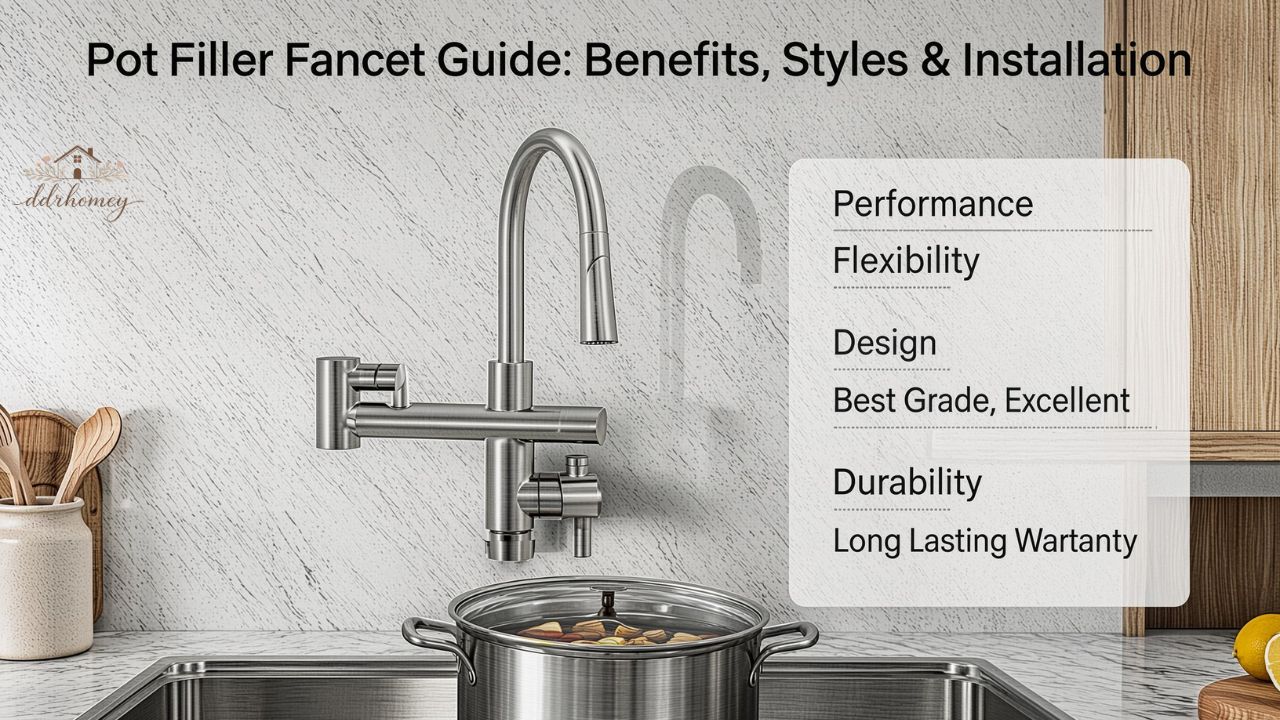
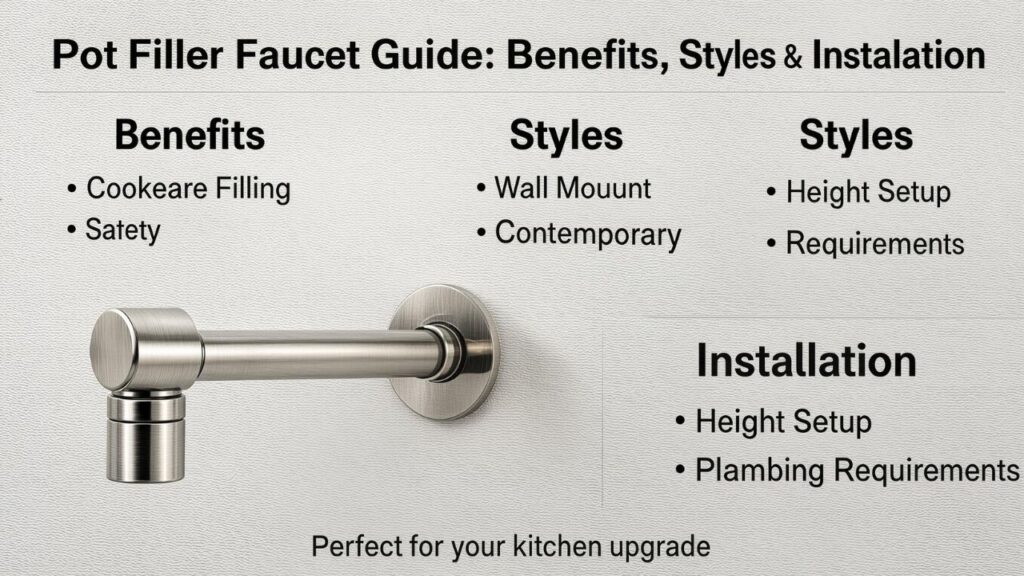
A pot filler faucet is a wall-mounted water fixture typically installed above or near a cooktop.
Its primary purpose is to fill cooking pots directly at the stove, eliminating the need to transport heavy containers of water across the kitchen.
How It Works
Most pot fillers feature:
- Articulating swing arms
- Dual shut-off valves
- Extendable reach
- Wall-mounted installation
When not in use, the faucet folds neatly against the wall.
When needed, it extends outward to reach pots positioned on the stovetop.
Why Homeowners Love Pot Fillers
Convenience
The most obvious advantage is convenience.
Large pots can become extremely heavy once filled with water.
A pot filler eliminates:
- Heavy lifting
- Carrying water across the room
- Potential spills
- Strain on wrists and back
Improved Cooking Workflow
Cooking becomes more efficient when water is available exactly where it’s needed.
This is particularly useful when preparing:
- Pasta
- Soups
- Stocks
- Seafood boils
- Large family meals
Luxury Appeal
Many homeowners install a pot filler faucet because it adds a professional and upscale appearance to the kitchen.
It serves as both a practical fixture and a design statement.
Benefits of Installing a Pot Filler Faucet
Reduced Physical Strain
Moving a large stockpot can be challenging, especially for:
- Seniors
- Individuals with mobility limitations
- Frequent home cooks
A pot filler minimizes unnecessary lifting.
Enhanced Kitchen Functionality
Convenient access to water streamlines meal preparation.
Many homeowners report using their kitchens more efficiently after installation.
Increased Home Appeal
Luxury kitchen features often attract prospective buyers.
A professionally installed pot filler may contribute to stronger visual appeal during resale.
Supports Frequent Cooking
Families who cook regularly often experience the greatest benefits.
The more often large pots are used, the more valuable the fixture becomes.
Popular Pot Filler Faucet Styles
Traditional Designs
Traditional pot fillers often feature:
- Ornate details
- Decorative handles
- Curved arms
- Vintage-inspired finishes
These styles complement classic kitchens beautifully.
Modern Minimalist Designs
Contemporary models emphasize:
- Clean lines
- Geometric shapes
- Streamlined silhouettes
Modern kitchens frequently incorporate these sleek options.
Industrial-Inspired Styles
Industrial designs often include:
- Exposed joints
- Matte finishes
- Commercial kitchen aesthetics
They pair especially well with professional-grade ranges.
Popular Finishes
Stainless Steel
Benefits include:
- Durability
- Corrosion resistance
- Modern appearance
Stainless steel remains a popular choice for contemporary kitchens.
Matte Black
Matte black offers dramatic contrast and modern sophistication.
It pairs well with:
- White cabinetry
- Wood accents
- Stone countertops
Brass Finishes
Brass continues gaining popularity among homeowners.
Options include:
- Polished brass
- Satin brass
- Unlacquered brass
These finishes add warmth and character.
Chrome
Chrome provides a classic appearance while remaining easy to coordinate with existing fixtures.
Pot Filler Faucet Placement Guidelines
Standard Height Recommendations
Most installations position the faucet:
- 12–24 inches above the cooktop
- High enough to clear large pots
- Low enough for comfortable access
The ideal height depends on cookware size and kitchen design.
Centering Above the Range
For optimal functionality, the fixture is typically centered over the cooking surface.
This ensures maximum reach and flexibility.
Reach Considerations
Before installation, verify that the swing arm can comfortably reach all burners.
Proper reach is critical for usability.
Installation Requirements
Plumbing Access
Unlike standard kitchen faucets, pot fillers require a dedicated water supply line within the wall.
This often makes installation easier during:
- New construction
- Major remodels
- Kitchen renovations
Professional Installation
Although some experienced DIY enthusiasts may attempt installation, most homeowners benefit from professional plumbing services.
Proper installation helps prevent leaks and ensures compliance with local building codes.
Water Pressure
Adequate water pressure supports efficient filling.
Most pot fillers function effectively with standard residential plumbing systems.
Is a Pot Filler Faucet Worth It?
Situations Where It Makes Sense
A pot filler faucet may be an excellent investment if you:
- Cook frequently
- Use large pots regularly
- Are remodeling your kitchen
- Want luxury features
- Have mobility concerns
Situations Where It May Not Be Necessary
It may offer limited value for homeowners who:
- Rarely cook
- Have compact kitchens
- Use small cookware
- Prefer minimalist fixtures
Ultimately, the decision depends on lifestyle and priorities.
Common Concerns About Pot Fillers
What About Dripping Water?
A common concern involves water remaining in the arm after use.
Most models incorporate dual shut-off valves to minimize this issue.
Do Pot Fillers Leak?
Quality fixtures installed correctly are generally reliable.
However, like any plumbing fixture, periodic maintenance may eventually be required.
Can They Dispense Hot Water?
Most residential models connect to cold water lines only.
Water heats naturally once cooking begins.
Pot Filler Faucet Maintenance
Regular Cleaning
Routine cleaning helps maintain appearance and performance.
Use:
- Soft cloths
- Mild soap
- Non-abrasive cleaners
Avoid harsh chemicals that may damage finishes.
Inspect Connections
Periodically check:
- Joints
- Valves
- Mounting hardware
Early detection prevents larger issues.
Finish-Specific Care
Different finishes require different care approaches.
Always follow manufacturer recommendations.
Design Tips for Integrating a Pot Filler
Coordinate Finishes
Match the pot filler with:
- Cabinet hardware
- Sink faucet
- Lighting fixtures
Consistency creates a polished appearance.
Consider Backsplash Design
The backsplash often serves as the visual backdrop.
Materials such as:
- Marble
- Tile
- Quartz slabs
Can help showcase the fixture beautifully.
Balance Function and Style
While aesthetics matter, functionality should remain the priority.
Choose a model that performs well while complementing your kitchen design.
FAQ
What is the purpose of a pot filler faucet?
Its primary purpose is to fill large pots directly at the stove without carrying water from the sink.
Does a pot filler use hot water?
Most residential installations provide cold water only.
Are pot fillers worth the investment?
For frequent cooks and large households, many homeowners find them highly beneficial.
How high should a pot filler be installed?
Typically 12–24 inches above the cooking surface, depending on cookware and design preferences.
Can a pot filler be installed on an exterior wall?
Yes, although special considerations may be necessary in colder climates.
Do pot fillers require special plumbing?
They require a dedicated water supply line behind the wall.
Which finish is most popular?
Stainless steel, matte black, and brass finishes remain among the most popular choices.
Do pot fillers increase home value?
While value varies by market, they often enhance kitchen appeal and perceived luxury.
Conclusion
A pot filler faucet combines convenience, functionality, and sophisticated design in a way few kitchen upgrades can match. By eliminating the need to carry heavy pots of water, it improves cooking efficiency while adding a professional touch to the heart of the home.
Whether you’re planning a complete kitchen remodel or simply exploring premium upgrades, a thoughtfully selected pot filler can provide lasting benefits for years to come. For homeowners who cook regularly and appreciate practical luxury, it remains one of the most rewarding additions available in modern kitchen design.