
Introduction
A front porch is the handshake of your home. It is the first place guests pause, the spot delivery drivers remember, and the little outdoor stage that tells people whether the house feels warm, stylish, tired, or loved.
That is why modern front porch ideas matter so much. A thoughtful porch can make a small entry feel generous, a plain façade feel intentional, and an older home feel refreshed without rebuilding the whole exterior.
The best part is that “modern” does not have to mean cold or expensive. In reality, today’s porch design is about clean lines, better lighting, natural textures, useful seating, low-maintenance plants, and details that make arriving home feel good.
Curb appeal is not just a design buzzword either. Houzz reported that among homeowners renovating outdoor spaces, nearly half upgraded the front of their home, and more than half cited improving aesthetics as their top outdoor-project goal.
Table of Contents
- What Makes a Front Porch Modern?
- Why Modern Front Porch Ideas Are Worth Planning
- Best Porch Layouts for Different Homes
- Materials, Colors, Doors, Railings, and Lighting
- Furniture, Plants, Décor, and Seasonal Styling
- Small Porch and Budget-Friendly Design Tips
- Safety, Maintenance, Weather, and Accessibility
- Costs, Resale Value, and Financial Insights
- Personal Background, Design Journey, Achievements, and Financial Insights
- Common Mistakes to Avoid
- FAQs
- Conclusion
What Makes a Front Porch Modern?
Definition: A modern front porch is an entry space designed with clean lines, practical materials, uncluttered décor, intentional lighting, comfortable scale, and a strong connection to the home’s exterior architecture.
That definition matters because modern porch design is not only about copying a black door or buying trendy planters. It is about making the entrance feel clear, useful, balanced, and welcoming.
A traditional porch may rely on ornate columns, decorative railings, turned posts, and layered accessories. A modern porch usually simplifies those elements. The columns may be square. The railing may be horizontal metal, cable, glass, or simple wood. The color palette may be tighter. The furniture may be sculptural but comfortable.
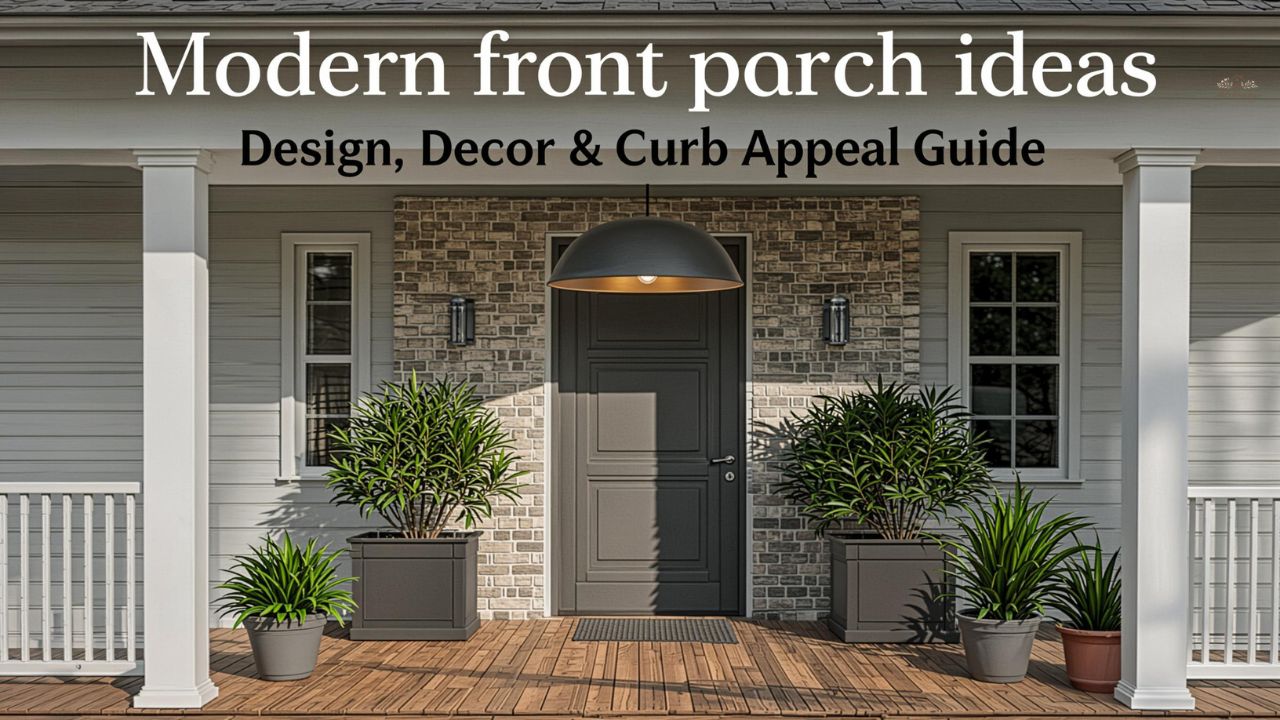
modern front porch ideas often focus on restraint. Instead of five small decorations, you choose one great bench, two oversized planters, warm lighting, and a door color that suits the house. The result feels calmer because every detail has a job.
Modern Does Not Mean Bare
One of the biggest myths is that modern design has to feel empty. It does not. A porch can be modern and still feel cozy, green, textured, and personal.
Warm wood, woven chairs, terracotta pots, native plants, soft outdoor cushions, concrete pavers, and matte metal fixtures can all belong in a modern entry. The difference is editing. You keep the strongest pieces and remove the visual noise.
Modern vs. Contemporary Porch Style
Modern style often refers to clean, minimal, mid-century, or architectural design language. Contemporary style means what feels current now. The two overlap, but contemporary porch design may include newer trends such as mixed materials, oversized house numbers, smart lighting, drought-tolerant planting, black-framed glass doors, and indoor-outdoor furniture.
For most homeowners, the label matters less than the result. You want a porch that looks fresh, fits the house, and feels good to use.
Why Modern Front Porch Ideas Are Worth Planning
Good porch design is worth planning because the front entry affects both daily life and first impressions. It is where you unlock the door in the rain, greet neighbors, receive packages, sit with coffee, water plants, and welcome guests.
Houzz’s 2025 roundup of most-saved porch photos described porches as indoor-outdoor living spaces that combine fresh air, garden views, comfortable seating, inventive layouts, retractable screens, and thoughtful architectural details.
That is the heart of modern front porch ideas: making the space useful, not just pretty. A porch that photographs well but has nowhere to put a package, no shade, no light at night, and no comfortable place to stand is not successful.
Curb Appeal Starts at the Entry
The front porch has a strong visual role because it frames the front door. Even a simple house can feel elevated when the porch has proportion, lighting, texture, and a clear path.
Houzz’s outdoor trends coverage found that 70% of renovating homeowners upgraded their front door during renovations, with wood, lited doors with glass, and fiberglass-clad doors among popular choices. The same report noted that exterior accents such as trimwork, columns, awnings, beams, window flower boxes, and shutters were common curb-appeal upgrades.
A beautiful entry also creates emotional relief. Coming home to a porch that feels neat, bright, and intentional can change your mood before you even step inside.
A Small Space Can Have Big Impact
A front porch does not need to be huge. Some of the most effective upgrades happen in tiny spaces: a new door color, cleaner house numbers, better lighting, symmetrical planters, a slim bench, or a fresh walkway.
The secret is proportion. A small porch needs fewer, better pieces. A large porch needs zones, rhythm, and enough furniture to avoid looking empty.
Best Porch Layouts for Different Homes
Before choosing colors or furniture, look at the shape of the porch. Layout decides what the space can realistically do.
Some porches are deep enough for seating. Others are narrow stoops. Some wrap around the house. Some sit under a flat roof. Some have stairs, railings, and columns that cannot easily change. Good design starts with the porch you actually have.
Small Modern Porch
A small porch needs discipline. You may only have room for a door mat, one planter, and a wall light. That is fine. The mistake is trying to force a full seating area where people can barely turn around.
Strong small-porch choices include:
- One oversized planter instead of several tiny pots.
- A slim vertical house number plaque.
- A wall-mounted mailbox.
- A flush or semi-flush ceiling light.
- A simple doormat with a clean pattern.
- A narrow bench only if there is real clearance.
- A bold but tasteful front door color.
Small modern front porch ideas work best when every item is scaled correctly. If the planter blocks the door swing or the mat curls underfoot, the design is not working.
Covered Front Porch
A covered porch gives more opportunities. You can add seating, a ceiling light, pendant fixture, fan, rug, plants, and weather-protected décor.
The roof also creates a room-like feeling. Treat it that way. Choose furniture that fits the depth, place lighting where faces are visible at night, and keep a clear path from steps to door.
Long or Wide Porch
A wide porch can feel awkward if all the furniture sits against the wall. Create zones instead. One end might hold a pair of chairs. The other might have a bench or swing. The middle should keep a clean arrival path.
| Porch Type | Best Design Move | What to Avoid |
|---|---|---|
| Tiny stoop | Strong door, light, number, and planter | Crowding it with furniture |
| Narrow porch | Slim bench, wall hooks, vertical décor | Deep chairs that block movement |
| Deep porch | Lounge seating and layered lighting | Furniture too small for the space |
| Wide porch | Separate seating and entry zones | A long empty wall with no rhythm |
| Covered porch | Ceiling lighting, rug, fan, plants | Ignoring the ceiling surface |
| Raised porch | Simple railings and safe steps | Railings that fight the house style |
Modern Farmhouse Porch
Modern farmhouse porches still feel popular, but the fresher versions are less cluttered than the older sign-heavy look. Think black or bronze fixtures, simple white or warm siding, natural wood accents, clean railings, and relaxed seating.
Skip the porch full of word signs. Let the architecture and materials do more of the talking.
Mid-Century Modern Porch
Mid-century entries look best with low horizontal lines, warm wood doors, breeze blocks, terrazzo or concrete, globe lighting, and sculptural plants.
A mid-century porch can feel playful without becoming messy. One bold door color, one statement light, and a few architectural plants may be enough.
Materials, Colors, Doors, Railings, and Lighting
Materials decide whether a porch feels expensive, durable, and connected to the home. The goal is not to use every modern material at once. The goal is to choose a small palette that works together.
For example, a porch might combine warm wood, black metal, concrete, and soft green planting. Another might use white stucco, pale stone, bronze lighting, and a natural oak door.
Modern Porch Materials
| Material | Best Use | Design Feeling |
|---|---|---|
| Wood | Doors, ceilings, benches, columns | Warm and natural |
| Concrete | Steps, planters, pavers | Clean and architectural |
| Metal | Railings, lights, numbers, furniture | Crisp and modern |
| Brick | Flooring, steps, walls | Textured and timeless |
| Stone | Columns, paths, accent walls | Solid and upscale |
| Fiber cement | Siding, trim, panels | Durable and clean |
| Composite decking | Porch floors | Low-maintenance and consistent |
| A smart material palette also considers climate. Wood near heavy rain or coastal air needs proper protection. Dark metal in intense sun can get hot. Smooth tile on outdoor steps can become slippery. Beauty has to survive weather. |
Front Door Choices
The front door is usually the star. If the porch feels dull, start there.
Good modern door options include:
- Flat-panel wood doors.
- Glass-panel doors with clean grids.
- Matte black doors.
- Soft sage, charcoal, navy, or terracotta doors.
- Oversized pivot-style doors for large modern homes.
- Fiberglass doors with a realistic wood look.
- Steel doors for security and crisp profiles.
The 2025 Cost vs. Value Report lists steel entry door replacement with a national average job cost of $2,435, resale value of $5,270, and cost recouped of 216%. It also lists a fiberglass grand entrance at $11,754 job cost and 85% cost recouped.
Railings and Columns
Railings can make a porch look modern or dated very quickly. Simple vertical metal railings, cable railings, glass panels, and square wood balusters all work depending on the home.
Columns should match the architecture. Thin black steel posts can look sharp on a modern home. Chunky tapered columns may suit a craftsman house. Square wood columns can bridge traditional and modern styles.
The mistake is mixing languages. A sleek glass railing, ornate Victorian column, farmhouse sign, and rustic lantern all on one porch will feel confused.
Lighting That Changes Everything
Lighting may be the highest-impact porch upgrade after the door. It improves safety, mood, and curb appeal.
Use lighting in layers:
- Wall sconces beside the door.
- Ceiling light under a covered porch.
- Step lights for safety.
- Path lights along the walkway.
- Uplights for trees or architectural columns.
- Warm bulbs to avoid a harsh commercial look.
Choose fixtures that fit the home’s scale. Tiny lights beside a tall front door look cheap. Oversized lights on a small cottage can look cartoonish. Good proportion matters more than trend.
Furniture, Plants, Décor, and Seasonal Styling
Furniture turns a porch from a pass-through into a place to pause. But not every porch needs furniture. A tiny stoop may look better with none.
When furniture does fit, choose pieces that are outdoor-rated, comfortable, and visually light enough for the space. Modern furniture often has simple frames, natural woven texture, powder-coated metal, teak, or clean upholstered cushions.
Seating Ideas
Try these seating options:
- One sculptural chair for a small covered porch.
- A slim bench beside the door.
- Two matching lounge chairs with a small table.
- A porch swing with clean lines.
- A built-in bench with hidden storage.
- A pair of stools that can move easily.
- A compact bistro set for morning coffee.
Seating should never block the natural route to the door. If guests have to squeeze past a chair to enter, the layout needs editing.
Planting for a Modern Porch
Plants soften hard materials and make the entry feel alive. Modern planting is often simpler than cottage-style planting. Instead of many small pots, use fewer larger containers with strong shapes.
Good plant choices depend on climate, sun, shade, and maintenance comfort, but the design principles are universal:
- Use matching planters for symmetry.
- Mix tall, medium, and trailing forms.
- Choose drought-tolerant plants where water is limited.
- Use evergreens for year-round structure.
- Add seasonal color sparingly.
- Avoid blocking railings, house numbers, or lights.
Large planters with grasses, olive trees, boxwood, snake plants, ferns, palms, or native shrubs can make a porch feel polished without fuss.
Décor Without Clutter
Modern décor works best when it is intentional. Use texture instead of clutter.
Consider:
- A woven outdoor rug.
- One ceramic planter.
- A simple wreath made of greenery.
- A stone or concrete side table.
- A clean-lined doormat.
- Minimal black or brass house numbers.
- A small lantern, not a cluster of many.
The porch should feel lived-in, not staged like a shop display. Leave breathing room around each item.
Seasonal Styling
Seasonal decorating can still be modern. In autumn, use a few pumpkins in similar tones instead of twenty bright orange ones. In winter, use evergreen branches, a simple wreath, and warm lighting. In spring, refresh planters. In summer, add breathable cushions or a lightweight throw.
The rule is simple: add season, not chaos.
Small Porch and Budget-Friendly Design Tips
You do not need a major remodel to make a porch look better. Many modern front porch ideas are affordable because they rely on editing, cleaning, painting, and upgrading small details.
Start by removing what no longer helps: faded fake plants, broken pots, rusty hooks, old mats, dead bulbs, cluttered signs, and furniture that does not fit. A porch can look more expensive simply by becoming calmer.
Budget Upgrades With Big Impact
| Upgrade | Why It Works | Budget Level |
|---|---|---|
| Paint the front door | Creates an instant focal point | Low to medium |
| Replace house numbers | Adds a clean modern detail | Low |
| Add new sconces | Improves safety and style | Medium |
| Use large planters | Frames the entrance | Low to medium |
| Replace the doormat | Makes the entry feel fresh | Low |
| Paint railings | Refreshes worn surfaces | Low to medium |
| Add a bench | Makes the porch useful | Medium |
| Update hardware | Door handle, knocker, mailbox | Low to medium |
Paint and Color Tricks
Modern color palettes often use contrast. White siding with black trim. Charcoal doors with warm wood. Creamy walls with bronze lights. Soft green doors with natural stone.
Houzz reported that white was the leading trim color among renovating homeowners in its outdoor trends coverage, followed by black and green, and that 71% of renovating homeowners chose contrasting wall and trim colors.
If you are nervous about bold color, use it on the door rather than the whole exterior. A front door is easier to repaint than siding, brick, or stucco.
Renter-Friendly Porch Updates
Renters can still improve a porch without permanent changes:
- Add a better doormat.
- Use portable planters.
- Choose solar path lights where allowed.
- Add a small outdoor chair.
- Use removable hooks if permitted.
- Place a weatherproof storage basket.
- Clean the door and threshold.
- Add battery-operated lanterns.
Even temporary changes can make coming home feel nicer.
Safety, Maintenance, Weather, and Accessibility
A front porch has to be safe. It may look decorative, but people use it while carrying groceries, holding children, unlocking doors, stepping through rain, or walking at night.
Safety details are easy to ignore until someone trips. Good porch design includes stable steps, secure railings, slip-resistant surfaces, enough lighting, clear walking paths, and door hardware that works smoothly.
Step and Walkway Safety
Check these details:
- Are the steps even?
- Is the surface slippery when wet?
- Is the railing sturdy?
- Is the path wide enough?
- Is the porch well lit at night?
- Does water pool near the entry?
- Does the mat lie flat?
- Are plants blocking the route?
A beautiful porch that feels unsafe is not finished.
Weather Protection
Weather changes what a porch needs. A sunny porch may need shade, UV-resistant furniture, and heat-tolerant plants. A rainy porch may need better drainage, covered storage, and mildew-resistant materials. A snowy climate may require durable steps, handrails, and easy snow clearance.
Think about your worst weather, not your best day. Design for the storm, the heat wave, the windy afternoon, and the muddy shoes.
Low-Maintenance Choices
Low maintenance does not mean no maintenance. It means choosing materials and layouts that age gracefully.
Good low-maintenance ideas include:
- Powder-coated metal furniture.
- Composite porch boards.
- Fiber-cement siding.
- Washable outdoor cushions.
- Self-watering planters.
- Native or climate-adapted plants.
- Durable exterior paint.
- Simple railings with fewer dust-catching details.
A porch should not become another source of guilt. Choose what you can realistically care for.
Costs, Resale Value, and Financial Insights
Porch projects can range from a $100 refresh to a serious exterior remodel. The cost depends on whether you are decorating, replacing surfaces, rebuilding steps, adding a roof, changing railings, upgrading lighting, or replacing the door.
Exterior projects often matter financially because buyers see them immediately. Zonda’s 2025 Cost vs. Value summary said exterior home improvement projects consistently deliver more resale value than larger discretionary interior remodels, with eight of the top 10 projects being exterior replacements.
The 2025 Cost vs. Value Report also shows why curb appeal receives so much attention: garage door replacement, steel entry door replacement, manufactured stone veneer, fiber-cement siding, vinyl siding, wood deck additions, and composite deck additions all ranked among high-return national projects.
Where the Money Usually Makes Sense
Spend money first on:
- Safe steps.
- Solid railings.
- Weather protection.
- Good lighting.
- A strong front door.
- Durable hardware.
- Drainage issues.
- Paint or finish repairs.
- Walkway improvements.
Then spend on décor, cushions, seasonal items, and accessories.
This order matters because style cannot hide structural neglect forever. A porch with a beautiful bench but rotten steps sends the wrong message.
Budget Ranges by Project Type
| Project Type | Typical Scope | Cost Behavior |
|---|---|---|
| Décor refresh | Mat, planters, pillows, small furniture | Usually low cost |
| Door refresh | Paint, hardware, numbers, lights | Low to medium |
| Surface refresh | Paint railings, stain floor, repair trim | Medium |
| Entry upgrade | New door, new fixtures, improved path | Medium to high |
| Porch rebuild | Structure, roof, railings, decking, steps | High |
| Full exterior makeover | Porch plus siding, stone, landscaping | Highest |
Financial Value Beyond Resale
Not every improvement has to be justified by resale. A front porch can add daily joy. It can make you feel proud when you pull into the driveway. It can give you a place to sit during rain, wave to neighbors, or drink tea before the house wakes up.
That emotional return is real. A home is not only an asset; it is where life happens.
Personal Background, Design Journey, Achievements, and Financial Insights
Because this topic is a design idea rather than a person, personal background and net worth do not apply in the usual biographical sense. There is no individual founder, celebrity profile, or verified personal wealth figure attached to modern porch design.
What does apply is the design journey of the front porch itself. Historically, porches were social spaces. People sat outside, greeted neighbors, cooled off before air conditioning, watched children play, and treated the porch as a bridge between private home and public street.
Over time, many homes became more inward-facing. Garages grew larger, back patios became the preferred outdoor zone, and front porches sometimes shrank into decorative entry platforms. Now the porch is quietly returning as homeowners rediscover curb appeal, neighborhood connection, and outdoor living.
The Career Journey of the Modern Porch
The modern porch has moved through several stages:
- Practical shelter at the front door.
- Social sitting area.
- Decorative architectural feature.
- Neglected entry zone.
- Curb-appeal upgrade.
- Indoor-outdoor living space.
- Wellness-friendly place to pause.
Its achievement is simple but powerful: it makes the front of the house feel human again.
Financial Insights
Financially, porch improvements make sense when they improve safety, first impressions, and usability. A new front door, upgraded lighting, repaired steps, fresh paint, and thoughtful planting can make a home look cared for before buyers or guests see anything else.
However, the smartest spending is balanced. Do not pour luxury money into a porch while ignoring peeling siding, cracked steps, poor drainage, or a failing roof. The basics create trust. The styling creates charm.
Common Mistakes to Avoid
The first mistake is buying furniture too large for the porch. A chair that looks perfect online may block the door, crowd the walkway, or make the entry feel smaller.
The second mistake is using too many tiny accessories. Small pots, small signs, small lanterns, and small mats can make a porch look cluttered rather than styled.
The third mistake is ignoring scale. House numbers, lights, planters, railings, and door hardware should match the size of the home. Too small feels cheap. Too large feels awkward.
The fourth mistake is choosing style over safety. Slippery tile, curled mats, weak railings, and dark steps are not worth the risk.
The fifth mistake is copying modern front porch ideas without considering the house. A sleek black-and-glass entry may look amazing on a contemporary home but strange on a cottage unless softened with warmer materials.
The sixth mistake is forgetting maintenance. White cushions, delicate plants, raw wood, and high-gloss surfaces may look beautiful for a week and exhausting after a season.
A Real-Life Example
Imagine a homeowner with a plain beige house and a narrow porch. She saves dozens of inspiration photos with deep lounge chairs, huge planters, layered rugs, and dramatic lighting. The images are beautiful, but her porch is only five feet deep.
Instead of forcing the full look, she makes smarter choices. She paints the door a soft olive green, replaces the old brass light with a warm black sconce, adds one tall planter with structured greenery, installs modern house numbers, and uses a simple woven mat.
The porch still feels modern. More importantly, it works. Guests can reach the door, packages have a place to sit, and the entry finally feels intentional.
FAQs
What makes a front porch look modern?
A modern porch usually has clean lines, simple materials, uncluttered décor, intentional lighting, updated hardware, and a color palette that works with the home’s exterior. It should feel fresh without looking cold.
Are modern front porch ideas expensive?
Not always. Some of the best updates are affordable, such as painting the front door, replacing house numbers, adding planters, upgrading the doormat, or installing better lighting. Larger projects like new railings, steps, doors, or porch roofs cost more.
What color is best for a modern front door?
Black, charcoal, warm wood, navy, sage green, deep red-brown, terracotta, and soft cream can all work. The best color depends on siding, trim, roof, stone, brick, and landscape tones.
How do I decorate a small modern porch?
Use fewer, better pieces. Try one oversized planter, a clean doormat, modern house numbers, and a stylish light fixture. Add seating only if it does not block movement.
What plants look good on a modern porch?
Structured plants often work well, including grasses, boxwood, ferns, snake plants, olive trees, palms, succulents, and native shrubs. Choose plants that fit your climate and porch sunlight.
Should porch lights match door hardware?
They do not have to match exactly, but they should coordinate. Matte black, bronze, brass, nickel, and wood tones can mix well when repeated thoughtfully.
What is the best flooring for a modern porch?
Concrete, stone, brick, composite decking, porcelain outdoor tile, and stained wood can all work. Choose a surface that suits your climate and has enough slip resistance for wet conditions.
Does a front porch improve curb appeal?
Yes, when it is clean, safe, well lit, and visually connected to the home. NAR’s outdoor features report found that 97% of NAR members believe curb appeal is important in attracting a buyer.
How do I make my porch feel welcoming without clutter?
Use warm lighting, a clear path, one or two healthy plants, a good door color, comfortable seating if space allows, and simple décor. Leave empty space so the entry can breathe.
Conclusion
A front porch does not need to be large to feel special. It needs intention. The right door color, lighting, plants, furniture, railings, and materials can turn an ordinary entry into a place that feels calm, modern, and genuinely welcoming.
The best modern front porch ideas are not about chasing every trend. They are about choosing details that fit your house, your climate, your budget, and the way you actually use the space.
Start with safety and structure. Then improve lighting, door appeal, house numbers, planters, seating, and seasonal touches. Edit more than you add. Let the porch breathe.
When the front entry feels right, the whole home feels better. It welcomes guests, improves curb appeal, and gives you a small moment of pride every time you come home.