Introduction
Your home quietly tells people who you are before you say a word. That’s why understanding different decor styles matters so much—because the colors, textures, furniture, lighting, and tiny details around you can completely change how a space feels.
Maybe you love calm rooms with clean lines. Maybe you’re drawn to cozy farmhouse warmth, bold bohemian layers, or sleek contemporary spaces that feel like a boutique hotel. In reality, there’s no single “right” style. The best home is the one that supports your everyday life and still feels personal.
Interior design trends have also shifted toward comfort, sustainability, natural materials, and wellness-focused spaces, with designers increasingly blending styles instead of following one rigid look.
What Are Different Decor Styles?
Modern Decor Style
Contemporary Decor Style
Minimalist Decor Style
Scandinavian Decor Style
Traditional Decor Style
Transitional Decor Style
Farmhouse Decor Style
Rustic Decor Style
Industrial Decor Style
Bohemian Decor Style
Mid-Century Modern Decor Style
Coastal Decor Style
Japandi Decor Style
How to Choose Between Different Decor Styles
Common Decor Mistakes to Avoid
FAQs
Conclusion
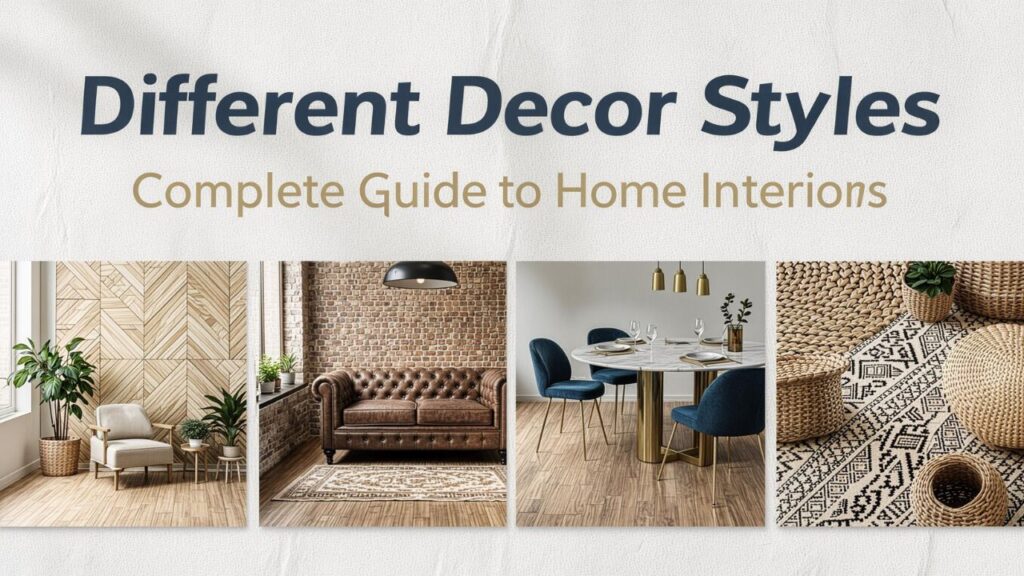
What Are Different Decor Styles?
Different decor styles are design approaches that shape how a room looks, feels, and functions. Each style has its own personality, usually built around color palettes, furniture shapes, materials, patterns, lighting, and decorative details.
Think of decor styles like wardrobes. Some people dress in tailored neutrals, some love vintage layers, and others prefer relaxed linen and earthy tones. Homes work the same way. Your style should feel comfortable, practical, and honest—not forced.
Here’s a quick comparison:
| Decor Style | Best For | Common Features |
|---|---|---|
| Modern | Clean, simple homes | Straight lines, neutral colors |
| Farmhouse | Cozy family spaces | Wood, soft whites, rustic details |
| Bohemian | Creative homes | Layered rugs, plants, global decor |
| Scandinavian | Small bright rooms | Light wood, white walls, cozy textures |
| Industrial | Urban apartments | Metal, brick, concrete |
| Coastal | Relaxed spaces | Blue, white, linen, rattan |
Modern Decor Style
Modern decor is clean, functional, and uncluttered. It grew from early-to-mid 20th-century design and still feels fresh because it avoids unnecessary decoration.
Key Features
- Neutral colors like white, beige, gray, and black
- Sleek furniture with simple silhouettes
- Open layouts
- Natural materials such as wood, leather, and stone
- Minimal accessories
Modern homes often feel calm and controlled. However, if you remove too much warmth, they can become cold. A soft rug, textured curtains, or warm wood table can make a big difference.
Contemporary Decor Style
Contemporary decor reflects what feels current right now. Unlike modern style, which refers to a specific design era, contemporary interiors evolve over time.
What Makes It Work
Contemporary spaces often include curved furniture, statement lighting, organic shapes, and layered neutrals. Recent design conversations also highlight soft retro colors, natural textures, and calming spaces that feel stylish without being stiff.
A contemporary living room might include a cream sofa, sculptural coffee table, oversized artwork, and warm brass lighting.
Minimalist Decor Style
Minimalist decor is built around the idea that less can feel better. It focuses on space, function, and intentional choices.
Minimalist Style Definition
Minimalism means removing visual clutter so each object has a purpose. It does not mean your home has to feel empty.
Common elements include:
- Hidden storage
- Simple furniture
- Clean surfaces
- Neutral tones
- One or two meaningful decor pieces
This is one of the most practical different decor styles for apartments, busy professionals, and anyone who feels stressed by clutter.
Scandinavian Decor Style
Scandinavian decor comes from Nordic design traditions and emphasizes simplicity, comfort, light, and nature. It became popular because it feels both minimal and cozy.
Scandinavian Features
- Pale wood
- White or soft gray walls
- Wool, cotton, and linen textures
- Functional furniture
- Natural light
- Cozy accents
Scandinavian interiors are especially useful in small homes because light colors and simple furniture make rooms feel larger. The style is also known for warmth through natural fibers and organic shapes.
Traditional Decor Style
Traditional decor feels classic, elegant, and familiar. It often draws from European-inspired furniture, balanced layouts, rich materials, and detailed craftsmanship.
Common Traditional Details
- Dark wood furniture
- Patterned rugs
- Symmetrical layouts
- Chandeliers
- Framed artwork
- Cream, navy, burgundy, and gold tones
Traditional rooms can feel deeply comforting, especially in family homes. That said, too much heavy furniture can make a room feel dated, so mixing in lighter fabrics or modern lighting helps.
Transitional Decor Style
Transitional decor blends traditional comfort with modern simplicity. It is perfect for people who want a home that feels timeless but not old-fashioned.
Why It’s Popular
This style works because it avoids extremes. You may see a classic sofa paired with a sleek coffee table, or neutral walls with elegant crown molding.
Transitional decor is one of the easiest different decor styles to live with because it feels polished, flexible, and welcoming.
Farmhouse Decor Style
Farmhouse decor is warm, relaxed, and practical. It became popular because it feels lived-in rather than overly perfect.
Farmhouse Elements
- Shiplap or paneled walls
- Distressed wood
- Apron-front sinks
- Vintage-style lighting
- Soft whites and warm neutrals
- Woven baskets
Modern farmhouse often adds black hardware, cleaner lines, and less clutter. It still feels cozy, but more refined than older country-style interiors.
Rustic Decor Style
Rustic decor celebrates natural beauty. It often includes raw textures, earthy colors, and materials that feel aged or handcrafted.
Rustic Style Features
- Reclaimed wood
- Stone fireplaces
- Leather seating
- Iron details
- Warm brown, tan, and green tones
A rustic room should feel grounded and honest. Imagine a cabin living room with a chunky wood coffee table, wool throw, and soft lighting after sunset.
Industrial Decor Style
Industrial decor takes inspiration from warehouses, lofts, and old factories. It is bold, raw, and urban.
Industrial Design Details
- Exposed brick
- Concrete floors
- Black metal frames
- Edison bulbs
- Leather furniture
- Open shelving
This style works beautifully in loft apartments, home offices, and kitchens. However, too much metal or concrete can feel harsh, so balance it with wood, rugs, and plants.
Bohemian Decor Style
Bohemian decor is expressive, layered, and personal. It does not follow strict rules, which is exactly why many people love it.
Boho Decor Features
- Colorful rugs
- Macramé wall hangings
- Rattan furniture
- Plants
- Vintage finds
- Global-inspired patterns
Bohemian homes often feel collected over time. A room might include a Moroccan rug, thrifted side table, woven pendant light, and shelves full of books and ceramics.
Among different decor styles, boho is one of the most forgiving because personality matters more than perfection.
Mid-Century Modern Decor Style
Mid-century modern decor became popular from the 1940s through the 1960s and remains one of the most loved home styles today.
Signature Features
- Tapered furniture legs
- Warm wood tones
- Clean silhouettes
- Geometric patterns
- Mustard, olive, rust, and teal accents
This style feels nostalgic but still modern. It works especially well with open layouts and natural light.
Coastal Decor Style
Coastal decor is relaxed, breezy, and inspired by seaside living. Done well, it feels calm rather than overly themed.
Coastal Decor Ideas
- White walls
- Blue accents
- Linen curtains
- Jute rugs
- Rattan chairs
- Driftwood textures
The trick is subtlety. You don’t need seashells everywhere. A soft blue pillow, light wood table, and airy curtains can say “coastal” without shouting it.
Japandi Decor Style
Japandi blends Japanese minimalism with Scandinavian warmth. It has become popular because it feels peaceful, balanced, and deeply intentional.
Japandi Style Features
- Low-profile furniture
- Natural wood
- Warm neutrals
- Handmade ceramics
- Clean lines
- Calm, uncluttered spaces
Japandi is ideal for anyone who wants a home that feels quiet, thoughtful, and restorative.
How to Choose Between Different Decor Styles
Choosing between different decor styles becomes easier when you stop asking, “What’s trending?” and start asking, “How do I want to live?”
Start With Your Daily Routine
A beautiful white sofa may look amazing online, but if you have pets, children, or frequent guests, it might become stressful. Your home should support your life, not fight against it.
Notice What You Keep Saving
Look at the rooms you save on Pinterest, Instagram, or design blogs. Do you keep choosing warm wood? Clean lines? Colorful rugs? Soft neutrals? Your pattern is probably already there.
Match Style to Space
| Home Type | Decor Styles That Work Well |
|---|---|
| Small apartment | Scandinavian, minimalist, Japandi |
| Family home | Transitional, farmhouse, traditional |
| Urban loft | Industrial, modern, contemporary |
| Beach house | Coastal, rustic, contemporary |
| Older home | Traditional, transitional, vintage-inspired |
Mix Carefully
You can absolutely mix different decor styles, but choose one dominant style and one supporting style. For example, modern farmhouse works because modern lines balance rustic warmth.
Common Decor Mistakes to Avoid
Even lovely homes can feel “off” when small design choices compete with each other.
Buying Everything From One Store
A room can look flat when every piece feels too matching. Mix old and new items for character.
Ignoring Scale
A tiny rug under a large sofa makes a room feel awkward. In most living rooms, at least the front legs of furniture should sit on the rug.
Following Trends Too Closely
Trends come and go. Your core furniture should be timeless, while trendier colors and patterns can appear in pillows, art, lamps, and accessories.
Forgetting Lighting
Lighting changes everything. Use a mix of overhead lighting, table lamps, floor lamps, and accent lights to create warmth.
FAQs
What are the most popular different decor styles?
The most popular different decor styles include modern, contemporary, farmhouse, Scandinavian, minimalist, traditional, transitional, bohemian, coastal, rustic, industrial, and mid-century modern.
How do I know my home decor style?
Save inspiration photos and look for repeated patterns. If you keep choosing light wood and white walls, you may like Scandinavian design. If you love layered rugs and plants, bohemian decor may suit you.
Can I mix different decor styles in one home?
Yes. Many beautiful homes combine different decor styles. The secret is choosing one main style, repeating colors, and keeping materials consistent.
What decor style is best for small spaces?
Minimalist, Scandinavian, and Japandi styles work well in small spaces because they use light colors, simple furniture, and smart storage.
What is the difference between modern and contemporary decor?
Modern decor refers to a specific design movement with clean lines and function. Contemporary decor changes with current trends and often feels more fluid.
Which decor style is easiest to maintain?
Minimalist, Scandinavian, and transitional styles are usually easier to maintain because they avoid excessive clutter and overly delicate materials.
What decor style makes a home feel cozy?
Farmhouse, rustic, traditional, bohemian, and Scandinavian decor all create cozy spaces through warm textures, layered textiles, soft lighting, and natural materials.
Are decor trends important?
Trends can inspire you, but they should not control your home. The best interiors balance current ideas with personal comfort and long-term function.
Conclusion
Exploring different decor styles is not about copying a perfect showroom. It is about understanding what makes you feel comfortable, inspired, relaxed, and genuinely at home.
Maybe your style is clean and modern. Maybe it is colorful and bohemian. Maybe it is a quiet mix of Scandinavian simplicity and rustic warmth. Whatever direction you choose, let your home grow naturally. The most memorable spaces are rarely perfect—they feel lived-in, thoughtful, and personal.