Introduction
A beautifully designed home can completely change the way people feel. Some interiors create instant calmness with soft neutral colors and natural light, while others energize spaces through bold textures and artistic details. That emotional connection is one reason different styles of interior design continue inspiring homeowners around the world.
Interior design is not simply about furniture placement or decorative accessories. It shapes how people relax, work, socialize, and experience everyday life. Interestingly, many homeowners feel overwhelmed because there are so many design aesthetics available today.
Social media, home renovation shows, and digital inspiration platforms introduced millions of people to decorating styles from every corner of the world. As a result, modern interiors have become more creative, personal, and emotionally driven than ever before.
Whether you love minimalist simplicity, rustic warmth, luxurious elegance, or eclectic creativity, understanding interior design styles can help you create spaces that feel functional, comfortable, and deeply personal.
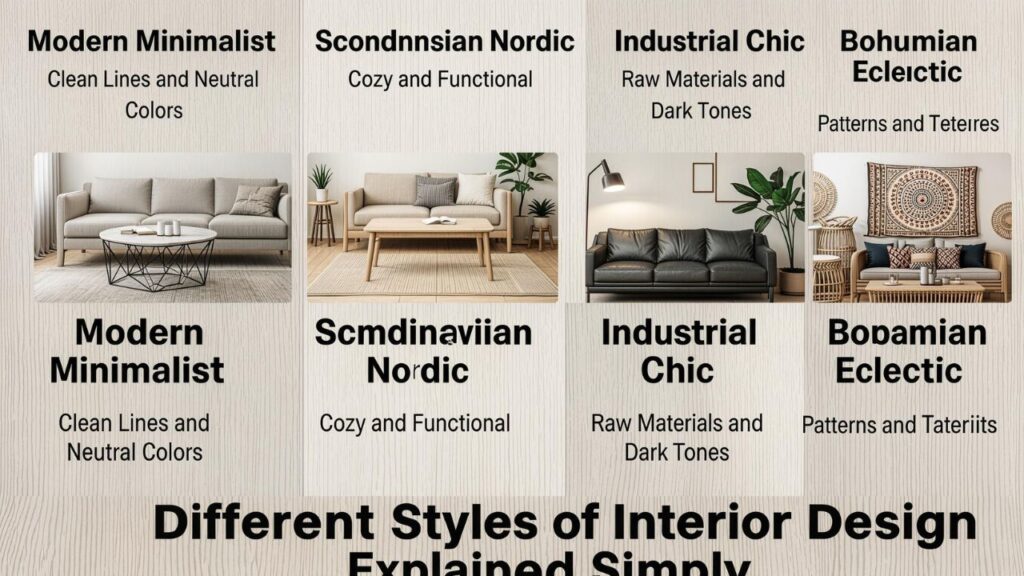
Table of Contents
Why Interior Design Styles Matter
Understanding the Psychology of Interior Spaces
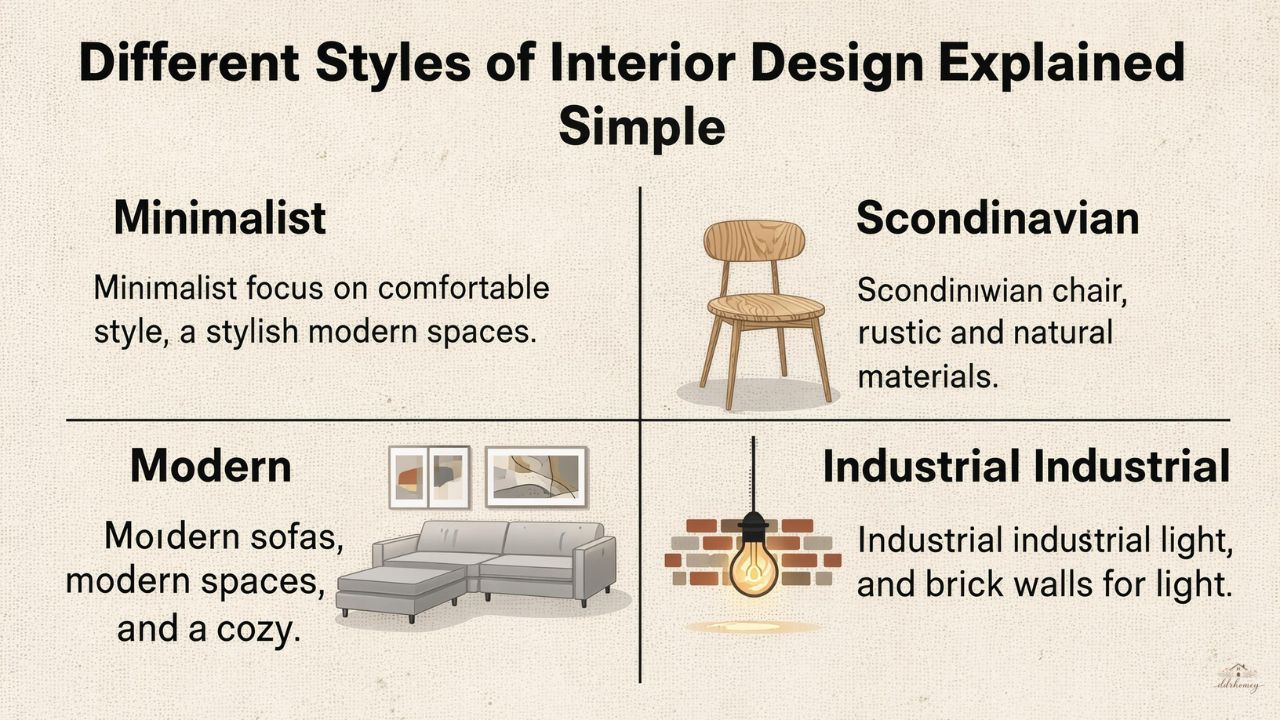
Modern Interior Design Style
Minimalist Interior Design Concepts
Scandinavian Interior Design
Contemporary Interior Style
Traditional Interior Design Style
Rustic and Farmhouse Interiors
Industrial Interior Design
Bohemian and Eclectic Interiors
Mid-Century Modern Design Style
Coastal and Beach-Inspired Interiors
Luxury and Glamorous Interior Design
Sustainable and Eco-Friendly Interior Trends
Personal Background Behind Modern Design Culture
Financial Influence of Interior Design Trends
Common Interior Design Mistakes to Avoid
How to Choose the Best Design Style for Your Home
FAQ
Conclusion
Why Interior Design Styles Matter
People often underestimate how strongly their surroundings affect emotions and behavior.
The colors, lighting, textures, and furniture inside a home shape comfort, productivity, and emotional well-being. A thoughtfully designed room can feel peaceful, energizing, or welcoming depending on the atmosphere created.
Personal Identity Through Design
Homes often reflect personality and lifestyle. Some people prefer clean minimalist interiors, while others feel happiest surrounded by vibrant colors and layered decor.
Better Everyday Functionality
Understanding different styles of interior design helps homeowners create spaces that support daily routines more effectively.
Emotional Comfort and Relaxation
Warm lighting, soft textures, and organized layouts improve emotional comfort.
Increased Property Appeal
Beautiful interiors often attract stronger buyer interest and increase perceived home value.
Understanding the Psychology of Interior Spaces
Interior design strongly influences human emotions.
Color Psychology in Interiors
Neutral tones often create calmness, while bold colors increase energy and creativity.
Lighting and Mood
Natural light improves productivity and emotional wellness.
Texture Creates Warmth
Wood, fabrics, and layered materials make rooms feel inviting.
Layout Shapes Social Interaction
Furniture arrangement influences movement and communication.
Personalization Builds Emotional Connection
Meaningful decor and personal details help homes feel authentic.
Modern Interior Design Style
Modern interiors focus on clean lines, functionality, and simplicity.
Key Features of Modern Design
- Neutral color palettes
- Open layouts
- Sleek furniture
- Minimal clutter
- Natural lighting
Why Modern Design Remains Popular
Modern spaces feel timeless and adaptable.
Common Materials Used
Glass, steel, polished surfaces, and natural wood often appear in modern interiors.
Real-Life Example
A couple in Chicago redesigned their
using floating shelves, neutral fabrics, and layered lighting. Despite a limited budget, the space immediately felt larger and more luxurious.
Many homeowners exploring different styles of interior design start with modern aesthetics because they combine beauty and practicality effectively.
Minimalist Interior Design Concepts
Minimalism emphasizes intentional simplicity.
Philosophy Behind Minimalist Living
Minimalist spaces reduce unnecessary distractions and visual clutter.
Popular Minimalist Features
- Hidden storage
- Neutral tones
- Functional furniture
- Open surfaces
- Limited decor accessories
Emotional Benefits of Minimalism
Minimalist interiors often feel calming and mentally refreshing.
Common Misconceptions
Minimalism does not mean empty or cold environments. Well-designed minimalist homes still feel warm and welcoming.
Scandinavian Interior Design
Scandinavian design blends simplicity with comfort.
Defining Scandinavian Characteristics
Natural wood, soft fabrics, bright lighting, and cozy textures define this style.
The Concept of Hygge
Hygge focuses on emotional warmth, comfort, and relaxation.
Functionality and Beauty Combined
Scandinavian interiors balance practicality and aesthetics effectively.
Why Scandinavian Design Became Global
Its calm and livable atmosphere appeals to modern homeowners worldwide.
Contemporary Interior Style
Contemporary interiors evolve alongside current trends.
Flexible and Adaptive Aesthetics
Unlike modern design, contemporary style changes over time.
Current Contemporary Trends
| Trend | Main Feature |
|---|---|
| Curved furniture | Softer visual flow |
| Earth-tone palettes | Natural atmosphere |
| Sustainable materials | Eco-conscious design |
| Smart home integration | Convenience and efficiency |
| Layered textures | Visual depth |
Blending Different Influences
Contemporary homes often combine elements from multiple aesthetics.
Traditional Interior Design Style
Traditional interiors focus on elegance and timeless detail.
Key Features of Traditional Design
Detailed furniture, rich fabrics, and classic symmetry define this style.
Warm and Rich Color Palettes
Cream, burgundy, navy, and gold tones appear frequently.
Decorative Architectural Details
Crown molding, ornate mirrors, and layered textiles add sophistication.
Emotional Appeal of Traditional Homes
These spaces often feel comforting and familiar.
Rustic and Farmhouse Interiors
Rustic and farmhouse interiors celebrate warmth and natural beauty.
Common Rustic Features
- Reclaimed wood
- Vintage decor
- Warm lighting
- Cozy textiles
- Natural materials
Why Farmhouse Design Became So Popular
Social media and television strongly influenced farmhouse decorating trends.
Emotional Warmth in Rustic Interiors
These spaces often create nostalgic and comforting atmospheres.
different styles of interior design frequently overlap, and farmhouse interiors often combine rustic, modern, and traditional influences naturally.
Industrial Interior Design
Industrial interiors originated from converted urban warehouses.
Signature Industrial Features
Exposed brick walls, steel accents, and raw textures define industrial spaces.
Spacious Open Layouts
Industrial interiors usually emphasize openness and structure.
Dark Neutral Color Schemes
Black, gray, brown, and metallic shades dominate this style.
Balancing Warmth and Raw Materials
Wood furniture and soft fabrics help soften industrial environments.
Bohemian and Eclectic Interiors
Bohemian interiors celebrate individuality and artistic freedom.
Rich Layers and Patterns
Boho spaces often include rugs, pillows, plants, and colorful textiles.
Global Cultural Influence
Many bohemian interiors incorporate handmade and globally inspired decor.
Why Bohemian Homes Feel Personal
The style encourages self-expression instead of rigid decorating rules.
Indoor Plants and Organic Decor
Greenery plays a major role in bohemian aesthetics.
Mid-Century Modern Design Style
Mid-century modern interiors remain incredibly influential.
Functional Furniture Design
Furniture often features sleek lines and tapered legs.
Retro Color Palettes
Mustard yellow, olive green, and burnt orange are common accents.
Organic Curves and Shapes
Rounded forms create balance and softness.
Lasting Popularity of Mid-Century Design
The style feels nostalgic while remaining modern and relevant.
Coastal and Beach-Inspired Interiors
Coastal interiors create bright and peaceful atmospheres.
Common Coastal Design Features
- White and blue palettes
- Natural textures
- Bright lighting
- Lightweight fabrics
- Ocean-inspired accents
Emotional Atmosphere of Coastal Homes
These interiors often feel calm and refreshing.
Modern Coastal Trends
Today’s coastal interiors avoid excessive themed decorations.
Luxury and Glamorous Interior Design
Luxury interiors focus on elegance, comfort, and premium materials.
High-End Materials Matter
Marble, velvet, brass, and crystal details frequently appear in glamorous homes.
Statement Lighting Fixtures
Large chandeliers create dramatic focal points.
Hotel-Inspired Comfort
Modern luxury spaces increasingly prioritize livability and comfort.
Softer Modern Glam Trends
Today’s glamorous interiors feel more relaxed and welcoming.
Sustainable and Eco-Friendly Interior Trends
Sustainability strongly influences modern interior design.
Reclaimed and Natural Materials
Eco-conscious interiors often include recycled wood and sustainable fabrics.
Energy-Efficient Lighting Solutions
LED systems reduce electricity costs and environmental impact.
Durable Long-Term Furniture Choices
Quality furniture reduces waste over time.
Indoor Plants and Wellness Benefits
Plants improve air quality while enhancing atmosphere.
Many homeowners researching different styles of interior design now prioritize sustainability alongside aesthetics.
Personal Background Behind Modern Design Culture
Interior design evolved dramatically during the digital era.
Social Media Transformed Design Inspiration
Platforms like Pinterest and Instagram made global design trends widely accessible.
Career Growth in Interior Content Creation
Home decor influencers built successful careers through relatable decorating content.
Achievements of the Interior Industry
The global interior design market generates billions annually.
Financial Accessibility of Design Trends
Affordable furniture companies made stylish interiors more accessible to everyday homeowners.
Financial Influence of Interior Design Trends
Interior design trends influence global industries and personal finances.
Increased Property Appeal
Beautiful interiors often increase resale value.
Growth of Furniture and Decor Industries
Consumer demand for stylish home products continues rising.
Rental Market Advantages
Updated interiors attract stronger tenant interest.
DIY and Budget Decorating Growth
Affordable decorating trends expanded rapidly during recent years.
Long-Term Investment Perspective
Timeless interiors usually hold value better than short-term trends.
Common Interior Design Mistakes to Avoid
Even stylish interiors can feel uncomfortable without thoughtful planning.
Following Trends Without Personalization
Homes should reflect personality instead of social media perfection.
Overdecorating Rooms
Too many accessories create visual clutter.
Ignoring Lighting Quality
Poor lighting dramatically affects mood and comfort.
Mixing Styles Without Balance
Combining too many aesthetics can feel chaotic.
Prioritizing Appearance Over Functionality
Beautiful spaces should still support everyday routines.
How to Choose the Best Design Style for Your Home
Choosing a design style becomes easier with self-awareness.
Understand Your Lifestyle Needs
Families, remote workers, and minimalists often require different environments.
Create Inspiration Boards
Mood boards help identify recurring preferences.
Focus on Emotional Comfort
The best interiors feel calming and emotionally supportive.
Blend Styles Thoughtfully
Combining multiple influences often creates more unique interiors.
Prioritize Long-Term Satisfaction
Comfort and functionality usually matter more than temporary trends.
The most successful different styles of interior design are adapted naturally to real lifestyles instead of copied perfectly from magazines or social media.
FAQ
What are the most popular interior design styles?
Modern, Scandinavian, farmhouse, minimalist, bohemian, and contemporary styles remain among the most popular.
Can I combine multiple interior design styles?
Yes. Many modern homes successfully mix different aesthetics when balanced thoughtfully.
Which design style works best for small spaces?
Minimalist and Scandinavian interiors often work well because they emphasize simplicity and light.
What colors are common in modern interiors?
Neutral shades such as white, gray, beige, and black are widely used.
Is farmhouse style still popular?
Yes. Farmhouse interiors continue evolving and remain highly popular worldwide.
How do I create a luxurious interior?
Layered lighting, rich textures, quality materials, and thoughtful layouts create luxury atmosphere.
Are sustainable interior designs expensive?
Not always. Many eco-friendly decorating practices reduce long-term costs.
Why is Scandinavian design so loved?
It balances comfort, simplicity, functionality, and emotional warmth effectively.
What makes bohemian interiors unique?
Bohemian interiors celebrate individuality, layered textures, and artistic freedom.
Conclusion
Interior design shapes far more than appearance. It influences how people relax, focus, socialize, and emotionally experience their homes every day. Understanding different styles of interior design allows homeowners to create environments that feel comfortable, functional, and deeply personal.
Whether you are drawn to minimalist calmness, rustic warmth, Scandinavian simplicity, or luxurious elegance, the most meaningful interiors are always the ones designed around real lifestyles and authentic preferences. Great design is not about perfection or expensive trends. It is about creating spaces that feel welcoming and emotionally supportive.
As homes continue evolving into more personalized environments, thoughtful design choices will remain incredibly important. The best interiors are not necessarily the most dramatic or expensive. Instead, they are the spaces that make people feel peaceful, inspired, and genuinely happy the moment they walk inside.