
Article
There is something instantly comforting about a kitchen that feels lived in, warm, and full of texture. A brick backsplash can do that in a way glossy tile often cannot, because it brings a little history, softness, and handmade charm into one of the busiest rooms in the home.
It matters because your backsplash is not just a wall covering. It sits right where cooking, cleaning, gathering, and daily routines happen. The right material can make a plain kitchen feel personal, while the wrong one can feel cold, messy, or hard to maintain.
In reality, brick works because it has personality. It can look rustic, industrial, farmhouse, European, vintage, or surprisingly modern depending on the color, finish, grout, cabinets, lighting, and countertop around it.
That said, brick also needs thoughtful planning. It is textured, often porous, and more detailed than smooth ceramic tile. This guide walks through styles, layouts, colors, installation choices, maintenance, costs, pros, cons, and design mistakes so you can choose with confidence.
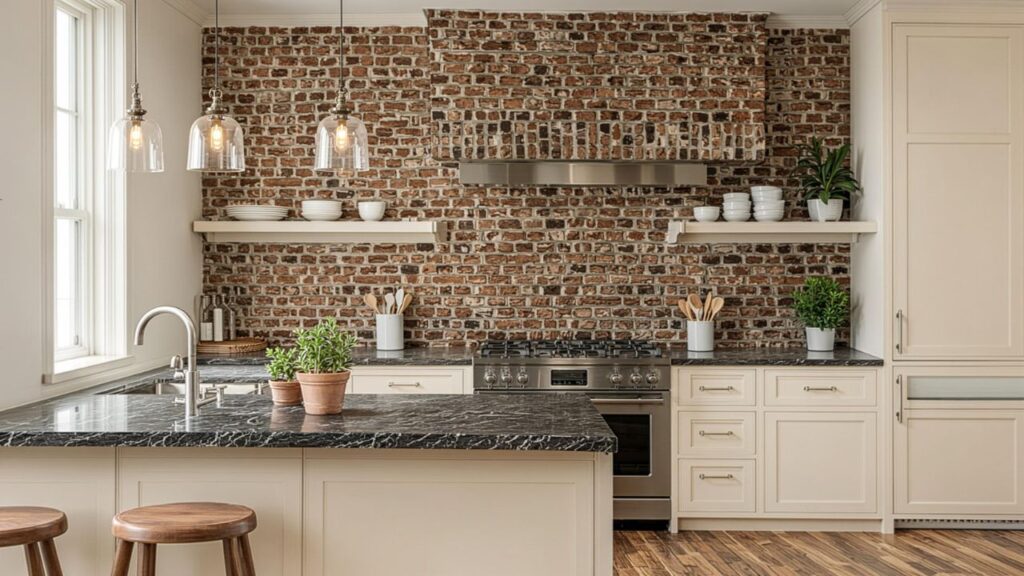
Table of Contents
- What Is a Brick Backsplash?
- Why Homeowners Love This Look
- Brick Backsplash Styles for Different Kitchens
- Real Brick, Thin Brick, and Faux Brick Compared
- Best Colors and Finishes
- Layouts, Patterns, and Design Details
- Grout Choices That Change the Whole Look
- Where to Use Brick in the Kitchen
- Cost, Installation, and Budget Planning
- Cleaning and Maintenance Tips
- Pros and Cons
- Common Mistakes to Avoid
- FAQs
- Conclusion
What Is a Brick Backsplash?
A <strong>brick backsplash is a protective wall surface made with real brick, thin brick veneer, reclaimed brick slices, or brick-look materials placed behind counters, sinks, ranges, or open shelving. Its main job is to guard the wall from splashes, grease, and everyday kitchen mess, but its visual job is just as important.
Unlike flat subway tile or slab stone, brick has depth. It shows texture, slight color variation, surface marks, and shadow. That makes it feel more relaxed and natural, especially in kitchens that need warmth.
Thin brick is especially common for backsplashes because it gives the look of full brick without the same weight or depth. The Brick Industry Association notes that thin brick is made from the same materials as modular clay brick but is thinner and lighter, making it versatile for design projects.
Some manufacturers define thin brick veneer under ASTM C1088 as clay or shale veneer units with a maximum thickness of 1-3/4 inches, though many interior products are thinner than that.
Why Homeowners Love This Look
The biggest reason people choose brick is feeling. A kitchen with brick often feels warmer the moment you walk in. Even when the cabinets are white, the counters are smooth, and the appliances are modern, brick adds a grounding layer.
Another reason is flexibility. Brick can soften a sleek black kitchen, add age to a new-build home, make a farmhouse kitchen feel more authentic, or give an apartment-style kitchen a loft mood. It can also hide small imperfections better than very glossy, flat tile.
Kitchen design is also moving toward more character-rich spaces. NKBA’s 2026 Kitchen Trends Report says statement colors are expected to appear in backsplashes for 60% of respondents, which shows how much visual attention this surface now receives.
At the same time, homeowners are being more selective. Forbes reported from the NKBA/KBIS 2026 report that ceramic and porcelain tile are predicted to remain highly popular for kitchen backsplashes, while other surface types continue to compete for easier cleaning and seamless looks.
Brick sits in a lovely middle ground. It is not as seamless as slab stone, but it offers a more soulful look. For many people, that trade feels worth it.
Brick Backsplash Styles for Different Kitchens
A <strong>brick backsplash</strong> can shift from cozy to polished with only a few design choices. The same red brick may look country-style with cream cabinets, industrial with black metal shelves, or European with aged brass fixtures.
Rustic farmhouse kitchen
For farmhouse kitchens, choose soft red, muted terracotta, whitewashed, or reclaimed-style brick. Pair it with shaker cabinets, wood shelves, butcher block, apron-front sinks, and warm lighting.
The look should not feel too perfect. Slightly uneven color, rough edges, and a matte surface make it more believable. If every brick looks identical, the room can lose that farmhouse softness.
Modern industrial kitchen
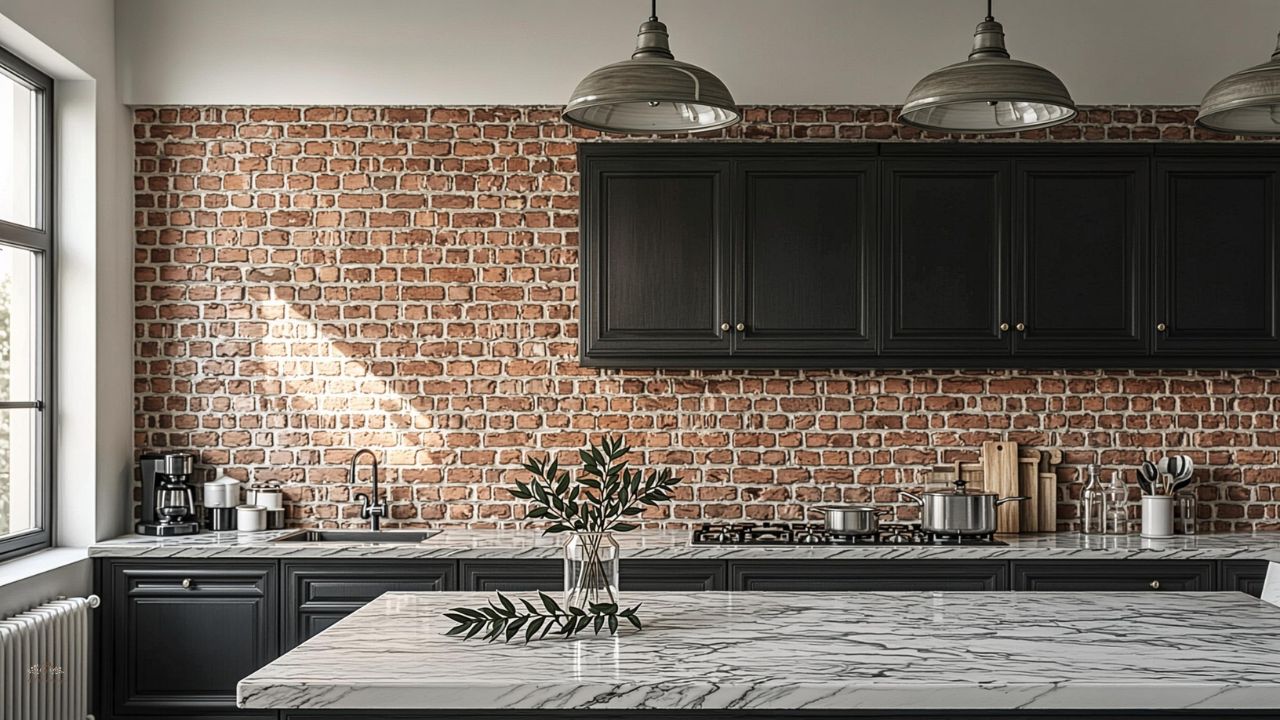
Industrial kitchens work well with darker brick, charcoal grout, black hardware, stainless steel, concrete-look counters, and open shelving. This style feels bold, urban, and a little dramatic.
To keep it from feeling cold, add wood stools, warm bulbs, or leather accents. Brick has a rugged edge, but it still needs balance.
Traditional warm kitchen
A traditional kitchen can use brick in a more polished way. Think soft brown brick, neat grout lines, framed range areas, paneled cabinetry, and stone counters.
This look works especially well when the brick does not compete with ornate cabinet details. A quieter brick color usually feels more elegant.
Cottage and European-inspired kitchen
For a cottage mood, whitewashed or limewashed brick is beautiful. It feels old-world without becoming heavy. Pair it with cream cabinets, unlacquered brass, small lamps, blue-gray accents, and natural wood.
The result feels collected rather than showroom-perfect, which is why this style photographs so well.
Transitional kitchen
Transitional kitchens mix classic and modern features. Brick works here when it is controlled. Use a clean pattern, simple grout, balanced colors, and modern lighting.
This is a smart choice if you like character but still want your kitchen to feel tidy and updated.
Real Brick, Thin Brick, and Faux Brick Compared
Before choosing a style, decide what material makes sense for your wall, budget, and maintenance comfort. Not every kitchen needs full brick, and in many homes, thin veneer is the better choice.
| Option | Best For | Main Benefit | Main Concern |
|---|---|---|---|
| Full brick | Historic homes, structural walls, exposed original brick | Authentic depth and age | Heavy, thick, harder to add later |
| Thin brick veneer | Most kitchen remodels | Real brick look with less weight | Needs proper sealing and grout care |
| Reclaimed brick slices | Vintage or rustic kitchens | Unique color and old character | Can vary in thickness and texture |
| Faux brick panels | Budget or rental-style updates | Fast and affordable | May look less realistic up close |
| Brick-look tile | Easier cleaning with brick effect | Smoother surface, often simpler care | Less authentic texture |
Full brick
Full brick is usually seen when a home already has an exposed masonry wall. It can look incredible, especially in older homes, lofts, or converted spaces.
Adding full brick as a new kitchen wall feature is less common because it takes more space and may need structural planning. For most modern remodels, it is not the easiest route.
Thin brick veneer
Thin brick veneer is the practical favorite. It is real clay brick, but sliced or manufactured thinner for interior and exterior surfaces. Some thin brick products are often around half an inch to one inch thick, depending on the manufacturer.
It gives the depth and color variation people want without building a full masonry wall. It can be installed similarly to tile, though the surface texture requires more patience.
Faux brick panels
Faux panels are useful when budget, speed, or weight matters most. They can be fine for a decorative wall, but they are not always ideal behind a range unless rated for heat and kitchen use.
If you go this route, check material safety, cleaning instructions, and heat distance before installing.
Brick-look tile
Brick-look tile is a practical compromise. It gives the pattern of brick with a more tile-like surface. If you love the look but worry about grease, crumbs, and scrubbing, this may be your safer option.
Best Colors and Finishes
Color changes everything. Brick is not just “red.” It can be pale, smoky, orange, brown, gray, whitewashed, or nearly black.
Classic red brick
Red brick gives a warm, familiar, heritage look. It works well with white cabinets, navy islands, black fixtures, butcher block, and cream walls.
Use it carefully in small kitchens. A strong red wall can feel heavy if the room has little light. In that case, choose a softer red blend or use brick only behind the range.
Whitewashed brick
Whitewashed brick keeps the texture while softening the color. It is excellent for small kitchens, cottage spaces, coastal homes, and bright farmhouse designs.
The beauty of whitewash is that it does not erase the brick completely. Some red or brown still peeks through, which keeps the wall from looking flat.
Limewashed brick
Limewash has an old-world feeling. It creates cloudy, mineral-like variation rather than a painted surface. It feels softer than regular white paint and can age gracefully.
This finish suits European kitchens, organic modern homes, and spaces with natural stone or warm wood.
Gray brick
Gray brick can look modern, but it needs warmth nearby. Pair it with wood cabinets, warm white walls, brass fixtures, or creamy counters.
Too much cool gray can make the kitchen feel lifeless, especially if the lighting is harsh.
Brown and taupe brick
Brown, taupe, and mushroom-toned brick feel quiet and expensive. These shades work well with beige cabinets, walnut, stone countertops, and muted green accents.
They are also easier to live with than bright red if your style changes over time.
Painted brick
Painted brick offers a clean look while keeping texture. White, cream, black, and soft gray are common choices.
The downside is commitment. Once brick is painted, returning it to a natural finish is difficult. Make sure you truly want that painted look before covering the surface.
Layouts, Patterns, and Design Details
A brick backsplash usually looks best when the layout feels intentional. Even a simple running bond pattern can look high-end when the cuts, grout, edges, and stopping points are handled well.
Running bond
Running bond is the classic brick pattern, where each row is offset from the row below. It is simple, timeless, and friendly.
This is the safest option for most kitchens because it feels natural to brick. It also works well across long counter runs.
Stacked bond
Stacked bond lines the bricks directly above one another. It looks cleaner and more modern.
This layout is helpful when you want the brick to feel less rustic. It works especially well with slim brick pieces and simple cabinets.
Herringbone
Herringbone brick creates movement and visual interest. It is beautiful behind a range or inside a framed feature area.
That said, it costs more to install because it requires more cuts and careful alignment. Use it as an accent instead of across every wall if your budget is tight.
Vertical brick
Vertical brick gives the wall height. It can make a small kitchen feel taller and more custom.
This style is less traditional, so it pairs best with modern, transitional, or designer-led kitchens.
Framed range feature
A framed brick panel behind the stove can feel like a focal point. You can use a trim border, slightly different pattern, or arched niche.
This is a lovely choice when you want drama without covering every wall in brick.
Grout Choices That Change the Whole Look
Grout is not a small detail. It can make brick feel bright, aged, bold, subtle, rustic, or polished.
| Grout Color | Visual Effect | Best Match |
|---|---|---|
| White | High contrast, fresh, farmhouse feel | Red brick, white cabinets |
| Cream | Softer contrast, warm and classic | Terracotta, beige, taupe brick |
| Gray | Balanced, practical, slightly modern | Red, brown, or gray brick |
| Charcoal | Bold, industrial, dramatic | Dark brick, black fixtures |
| Matching grout | Quiet and seamless | Modern or transitional kitchens |
Cement-based grout is common, but it is porous and can absorb stains or water if left unsealed. Sealing is often recommended to help protect it from staining and moisture.
If your kitchen sees heavy cooking, do not choose grout based only on color. Think about cleaning. White grout can look beautiful on day one, but near a stove it may need more attention.
Wide grout lines
Wide grout lines look rustic and old-world. They are great for farmhouse or reclaimed brick designs.
They also collect more visual texture, so they may feel busy in a small kitchen.
Thin grout lines
Thin grout lines feel cleaner. They let the brick itself stand out without making the wall too patterned.
This is better for modern and transitional spaces.
German smear effect
A German smear finish spreads mortar across the brick surface, leaving some brick color visible. It can look aged, cozy, and European.
Use it only if you want a heavily textured wall. It is not the easiest surface to wipe down.
Where to Use Brick in the Kitchen
You do not have to cover every wall. In fact, restraint often makes brick look better.
Behind the range
The range wall is the most common spot because it naturally acts as a focal point. Brick behind a range feels warm and architectural.
For heavy cooking, make sure the surface is sealed and easy enough to wipe. Grease can settle into textured areas if the finish is too rough.
Between countertop and upper cabinets
This is the traditional backsplash zone. Brick here creates a continuous band of texture around the kitchen.
It works best when outlets, cabinet edges, and corners are planned neatly. Messy cuts around outlets can cheapen the finished look.
Around open shelving
Brick behind wood or metal shelves looks natural and layered. It makes simple shelves feel designed rather than added later.
Keep the shelf styling light. If you add too many jars, bowls, and plants, the wall can feel cluttered.
Full feature wall
A full wall of brick can be stunning in a large kitchen. It works especially well in open-plan homes where the kitchen connects to dining or living areas.
In a small kitchen, use caution. A full wall may feel heavy unless the brick is pale or whitewashed.
Coffee bar or pantry nook
A smaller brick area in a coffee station, bar nook, or pantry wall can add character without a major renovation.
This is also a nice way to test the look before using it across the whole kitchen.
Cost, Installation, and Budget Planning
The cost of a brick-look kitchen wall depends on material, labor, wall condition, pattern, grout, sealing, and location. A simple straight layout with standard thin brick veneer usually costs less than reclaimed brick in a herringbone pattern.
Kitchen improvements also vary widely in return depending on region, home value, and the scale of renovation. Zillow notes that kitchen remodel ROI changes by location and project scope, which is a useful reminder not to spend only for resale numbers.
Think of a backsplash as both a design upgrade and a daily-use surface. It may not be the largest part of a remodel budget, but it is one of the most visible.
Budget factors to consider
- Material price per square foot
- Wall preparation
- Labor rate in your area
- Pattern complexity
- Outlet cuts and edge finishing
- Grout type and color
- Sealer quality
- Range hood or shelf adjustments
- Demolition of old tile
- Repairing drywall or cement board
DIY or professional installation?
A confident DIY homeowner can install some thin brick products, especially in a small area. Still, brick is less forgiving than flat tile. Uneven rows, messy grout, and poor sealing are very visible.
Hire a professional if:
- The wall is large
- The pattern is herringbone
- The brick is reclaimed or irregular
- You need electrical outlets adjusted
- The range wall needs heat-conscious planning
- You want a very clean, high-end finish
Hidden costs
The hidden costs are usually not the brick itself. They come from prep work, trim pieces, outlet extenders, sealer, extra cuts, and labor time.
Always order extra material. Brick shade and texture can vary, and you do not want to run short in the middle of a visible wall.
Cleaning and Maintenance Tips
Brick is beautiful, but it asks for a little care. The goal is not to scrub it aggressively every week. The goal is to protect it from stains before they become a problem.
Seal the surface
Sealing matters because brick and grout can be porous. A penetrating sealer can help reduce staining while keeping the surface natural-looking.
Avoid shiny sealers unless you truly want a glossy finish. A high-gloss surface can make rustic brick look artificial.
Wipe splashes quickly
Tomato sauce, oil, coffee, and wine can stain textured surfaces. Wipe splashes as soon as possible with a soft cloth and gentle cleaner.
Do not use harsh acids unless the manufacturer says it is safe. Strong cleaners can damage grout or change the finish.
Use a range hood
Good ventilation helps reduce grease buildup. If you cook often, a proper hood is more than a design feature. It protects cabinets, walls, and indoor comfort.
This matters even more with textured surfaces because airborne grease can settle into small grooves.
Dust the texture
Brick texture can collect dust. Use a soft brush attachment on a vacuum or a dry microfiber cloth.
This small habit keeps the wall fresh without turning cleaning into a big chore.
Refresh sealer when needed
Sealer does not last forever. How often you refresh it depends on the product, cooking habits, and cleaning routine.
A simple water-drop test can help. If water darkens the brick quickly instead of sitting on the surface briefly, it may be time to reseal.
Pros and Cons
Every material has trade-offs. Brick is charming, but it is not perfect for every homeowner.
| Pros | Cons |
|---|---|
| Warm, textured, and timeless | Can be harder to clean than smooth tile |
| Works with many kitchen styles | Needs sealing in many cases |
| Hides small marks better than glossy tile | Rough surfaces can trap grease |
| Adds architectural character | Poor installation is noticeable |
| Pairs well with wood, stone, and metal | Trendy finishes may date faster |
| Can make new kitchens feel older and richer | Not ideal for people wanting a seamless look |
The best choice depends on your daily life. If you cook often with oil, spices, and sauces, choose smoother brick, sealed grout, and good ventilation. If you mostly want warmth and design character, you have more freedom with rougher finishes.
Common Mistakes to Avoid
A kitchen backsplash is too visible for careless decisions. These mistakes are easy to avoid if you plan early.
Choosing brick that is too dark for the room
Dark brick can look rich, but in a small kitchen with little natural light, it may make the room feel smaller.
Balance dark brick with pale counters, warm lighting, reflective hardware, or open shelving.
Ignoring undertones
Brick can have orange, pink, brown, purple, gray, or yellow undertones. These undertones must work with cabinets and counters.
Bring samples home. Look at them in morning, afternoon, and evening light before deciding.
Forgetting about outlet placement
Outlets interrupt the pattern. If they are not planned well, they can make the installation look messy.
Use outlet covers that blend with the brick or coordinate with hardware. In high-end remodels, consider under-cabinet plug strips where allowed.
Skipping sealer
Skipping sealer can turn small splashes into stubborn stains. This is especially risky behind a stove or sink.
Ask your installer what sealer suits your specific brick and grout. Not all products behave the same.
Using too many rustic elements
Brick already has texture. If you add distressed cabinets, rough wood, busy counters, patterned floors, and heavy decor, the room may feel crowded.
Let the brick be the textured star, then keep nearby finishes calmer.
Picking the wrong grout contrast
High-contrast grout makes every brick stand out. Low-contrast grout softens the wall.
Neither is wrong, but the choice should match your style. Test a small sample board if possible.
Not matching the style of the home
A rough red wall may feel perfect in a farmhouse, loft, or cottage. It may feel forced in a sleek luxury kitchen unless handled carefully.
The best designs feel connected to the home, not copied from a photo.
Smart Pairings for a More Polished Kitchen
A beautiful backsplash depends on everything around it. Brick rarely works alone; it works as part of a layered kitchen palette.
Cabinets
White cabinets create contrast and freshness. Cream cabinets feel softer. Navy adds drama. Green feels earthy. Natural wood makes the space warm and grounded.
For a safe and timeless choice, pair warm brick with warm white or light oak.
Countertops
Quartz, marble-look surfaces, soapstone, butcher block, honed granite, and concrete-look counters can all work.
If the brick has strong color variation, choose a quieter countertop. If the brick is pale and subtle, the counter can carry more movement.
Hardware and fixtures
Brass warms the brick. Black adds contrast. Brushed nickel keeps things simple. Copper can look beautiful but may feel too themed if overused.
For a modern farmhouse look, try black or aged brass. For a softer cottage look, try warm brass or polished nickel.
Lighting
Lighting can make brick look cozy or harsh. Warm bulbs usually suit brick better than cool white bulbs.
Under-cabinet lights are useful, but place them carefully. Strong light can exaggerate texture and shadows.
Flooring
Wood flooring is an easy match because it repeats natural warmth. Stone or terracotta tile can also look lovely.
If your floor is already busy, keep the brick quieter.
Best Design Ideas to Try
Here are practical ideas that work in real kitchens, not just staged photos.
Red brick with white cabinets
This is a classic for a reason. The white cabinets brighten the room, while the brick keeps it from feeling plain.
Add wood shelves or brass hardware for warmth.
Whitewashed brick with oak shelves
This combination feels relaxed and airy. It suits small kitchens because it keeps the wall light.
Use simple dishware and avoid over-styling the shelves.
Dark brick behind a black range
This creates a dramatic cooking zone. It feels restaurant-inspired and confident.
Balance it with lighter counters or a warm wood floor so the kitchen does not feel too dark.
Brick behind a curved range hood
A plaster, wood, or metal hood over brick can look custom and architectural.
This works especially well in Mediterranean, European, and transitional kitchens.
Thin brick with quartz counters
Quartz adds practicality, while brick adds soul. This pairing is great for families who want a kitchen that looks warm but still performs well.
Choose a quartz color that picks up one of the softer tones in the brick.
Brick coffee bar
A small coffee bar with brick behind it can feel cozy without overwhelming the kitchen.
Add a small lamp, wood tray, and simple mugs for a welcoming moment.
Pale brick with green cabinets
Muted green cabinets and pale brick feel calm, earthy, and current.
This look works beautifully with cream counters and brass fixtures.
Is It a Good Choice for Small Kitchens?
Yes, but only when you control color and coverage. Small kitchens can benefit from texture, but they can also feel crowded if the brick is too dark or busy.
Choose whitewashed, cream, taupe, or soft red brick. Keep grout low contrast. Use good lighting. Consider one wall or one zone instead of wrapping the entire kitchen.
Reflective details can also help. Glass-front cabinets, light counters, and under-cabinet lighting keep the room from feeling closed in.
A small kitchen should feel charming, not cramped. The right brick can do that.
Is It Still Timeless or Too Trendy?
Brick has been used in homes for centuries, so the material itself is not a short-lived trend. What can become dated is the way it is styled.
For example, an overly fake distressed finish may age faster than honest red brick or soft limewash. Very high-contrast styling may also feel tied to a specific design era.
To keep it timeless:
- Choose natural-looking color
- Avoid overly artificial finishes
- Match the home’s architecture
- Keep surrounding materials simple
- Use quality grout and clean edges
- Do not force the look into a kitchen where it feels out of place
Brick is safest when it looks like it belongs.
FAQs
Is a brick backsplash hard to clean?
It can be slightly harder to clean than smooth ceramic tile because the surface has texture. Sealing the brick and grout makes maintenance easier. A soft cloth, mild cleaner, good ventilation, and quick wiping after spills help a lot.
Does brick need to be sealed in a kitchen?
In most kitchens, yes. Brick and grout can absorb stains, grease, and moisture. A matte penetrating sealer is often preferred because it protects the surface without making it look shiny or fake.
Can I put brick behind a stove?
Yes, but the material, adhesive, sealer, and clearance should suit the cooking area. Behind a stove, choose a durable surface, seal it properly, and use a good range hood to reduce grease buildup.
What color cabinets look best with brick?
White, cream, navy, muted green, black, and natural wood cabinets can all look beautiful. The best choice depends on the brick undertone. Warm brick usually pairs well with warm whites, oak, walnut, and earthy cabinet colors.
Is thin brick better than full brick for a kitchen?
For most remodels, thin brick is easier. It is lighter, takes less space, and can still give the look of real brick. Full brick is usually best when the home already has an exposed masonry wall.
Can a brick backsplash work in a modern kitchen?
Yes. Use a cleaner brick profile, stacked layout, simple grout, sleek cabinets, and minimal decor. Modern kitchens benefit from brick when it adds warmth without making the design feel messy.
What grout color should I choose?
Choose white or cream for contrast and farmhouse charm. Choose gray for balance. Choose charcoal for an industrial look. Choose a close color match when you want the wall to feel softer and less busy.
Is faux brick okay for a kitchen backsplash?
Faux brick can work in low-splash areas or budget projects, but check heat rating, cleanability, and product instructions. Behind a range or sink, real thin brick or brick-look tile is usually a more durable choice.
Will brick make my kitchen look smaller?
Dark or high-contrast brick can make a small kitchen feel tighter. Pale, whitewashed, or low-contrast brick can add texture without shrinking the room visually.
How do I make brick look elegant instead of rustic?
Use cleaner edges, subtle color, low-contrast grout, refined lighting, simple cabinets, and quality hardware. Elegance comes from restraint. Let the brick add texture, but avoid too many distressed finishes around it.
Conclusion
A <strong>brick backsplash</strong> is more than a decorative kitchen trend. It is a way to bring warmth, texture, and a sense of age into a room that can easily feel too polished or too plain.
The best version is not always the boldest one. Sometimes it is soft whitewashed brick behind oak shelves. Sometimes it is warm red brick behind a range. Sometimes it is a small coffee-bar wall that makes the whole kitchen feel more personal.
Choose the material carefully, test the color in your own light, think about grout, seal the surface, and balance the texture with calmer finishes nearby. When those pieces come together, brick can make a kitchen feel welcoming, practical, and beautifully lived in for years.