

Introduction
Walking from the garage to the house in rain, snow, heat, or darkness can get old very quickly. That is why enclosed breezeway ideas from garage to house are so useful for homeowners who want comfort, storage, and a smoother daily routine.
An enclosed breezeway can turn an awkward gap between buildings into a protected passage, mudroom, drop zone, pantry extension, pet area, laundry connector, or bright sun-filled entry. It can also make a detached or semi-detached garage feel more connected to the main home.
However, this project needs careful planning. Rooflines, foundations, drainage, fire separation, insulation, doors, lighting, permits, and garage safety rules all matter. A breezeway may look simple from outside, but once enclosed, it can affect how the house functions every single day.
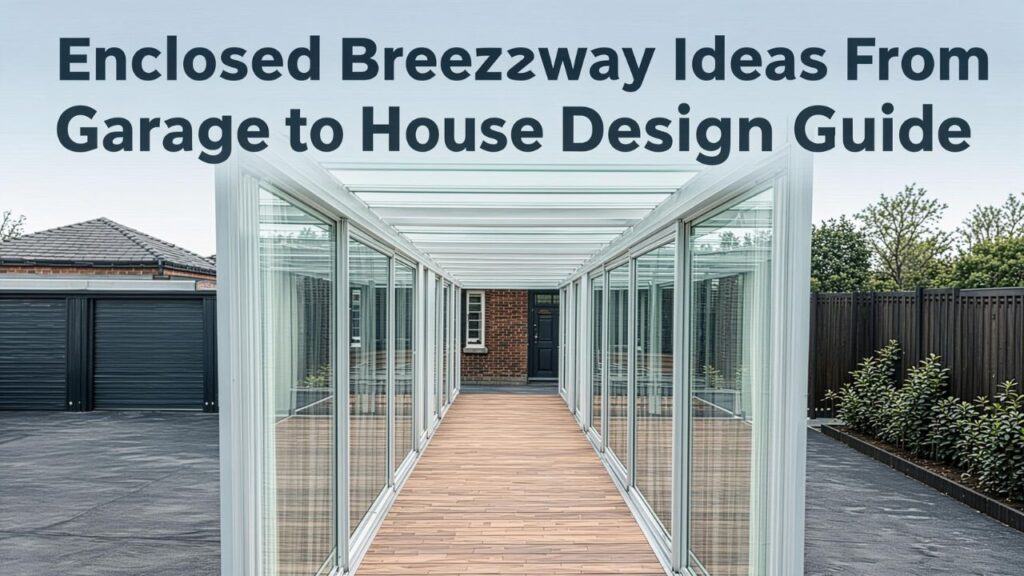
Table of Contents
- What Is an Enclosed Breezeway?
- Why Build an Enclosed Breezeway From Garage to House?
- Best Enclosed Breezeway Ideas From Garage to House
- Enclosed Breezeway Layout Options
- Mudroom and Storage Ideas
- Windows, Doors, and Natural Light
- Flooring, Lighting, and Interior Finishes
- Heating, Cooling, and Insulation
- Cost and Permit Considerations
- Garage Safety and Building Code Basics
- Common Mistakes to Avoid
- Industry Background and Financial Insights
- FAQs
- Conclusion
What Is an Enclosed Breezeway?
An enclosed breezeway is a covered and walled passage that connects two structures, most often a house and a garage. A traditional breezeway is usually open-air, but an enclosed version adds walls, windows, doors, screens, insulation, or finished interior materials.
A basic breezeway may simply protect you from rain while walking between the garage and home. A more finished version can feel like a real room. Some homeowners use it as a mudroom, garden room, storage hall, pet zone, craft corner, or casual entry space.
Houzz describes a breezeway as a roofed open passage connecting two buildings or two parts of one building, often used to funnel breezes and create a semi-enclosed outdoor area. An enclosed version keeps the same connecting purpose but adds more protection and daily function.
Why Build an Enclosed Breezeway From Garage to House?
People search for enclosed breezeway ideas from garage to house because this space solves real problems. It is not only about curb appeal. It changes how groceries, coats, shoes, school bags, pets, tools, and bad weather move through the home.
A good breezeway can help with:
- Dry access from garage to house
- Better entry organization
- Extra mudroom storage
- More natural light
- Safer nighttime entry
- Cleaner kitchen or side entry
- Better connection between detached structures
- Extra space without a full room addition
- Improved exterior balance
- Possible resale appeal
For example, imagine coming home with groceries during heavy rain. Without a breezeway, you rush from garage to side door, juggling bags and keys. With an enclosed breezeway, you walk through a bright, dry, organized connector with a bench, hooks, and a place to drop muddy shoes. That small daily comfort can feel surprisingly valuable.
Best Enclosed Breezeway Ideas From Garage to House
The best enclosed breezeway ideas from garage to house depend on your home style, climate, garage distance, budget, and how you want to use the space.
| Idea | Best For | Why It Works |
|---|---|---|
| Mudroom breezeway | Busy families | Handles shoes, coats, bags, and pets |
| Glass breezeway | Modern homes | Keeps the connector light and elegant |
| Farmhouse breezeway | Traditional homes | Uses benches, hooks, shiplap, and warm lighting |
| Sunroom-style breezeway | Garden views | Adds plants, seating, and natural light |
| Pantry breezeway | Garage near kitchen | Supports grocery unloading |
| Laundry connector | Utility-focused homes | Combines entry and laundry tasks |
| Pet-friendly breezeway | Dog owners | Adds washing, feeding, and leash storage |
| Storage hallway | Small homes | Adds cabinets without cluttering main rooms |
| Three-season breezeway | Mild climates | Offers comfort without full HVAC |
| Fully conditioned breezeway | Cold or hot climates | Feels more like part of the house |
Mudroom Breezeway
A mudroom breezeway is one of the most practical choices. It gives you a buffer zone between the garage and main living space.
Add a bench, cubbies, coat hooks, closed cabinets, shoe drawers, and durable flooring. This layout works especially well for families with kids, pets, sports gear, gardening tools, or winter clothing.
Glass Breezeway
A glass breezeway feels modern and architectural. Large windows or glass doors keep the connector from feeling like a dark tunnel.
This option works beautifully when the gap between house and garage faces a garden, courtyard, or landscaped side yard. However, glass increases cost and may need careful planning for privacy, heat gain, and insulation.
Farmhouse Breezeway
A farmhouse-style enclosed breezeway can feel warm and welcoming. Think painted wood paneling, black hooks, a built-in bench, woven baskets, lantern-style lighting, and brick or slate-look flooring.
This design is useful because it looks charming while hiding real-life mess.
Sunroom-Style Breezeway
A sunroom-style breezeway uses windows, plants, and comfortable seating. It can become more than a passage. It can be a quiet morning coffee spot or a bright plant room.
This works best when the breezeway is wide enough to hold furniture without blocking movement.
![Image suggestion: Enclosed breezeway mudroom with built-in bench, coat hooks, shoe storage, windows, and durable tile flooring]
Enclosed Breezeway Layout Options
A breezeway layout should feel natural. The best plan connects the garage to a useful part of the house, usually a kitchen, mudroom, laundry room, side entry, or hallway.
Straight Connector
A straight connector is the simplest layout. It runs directly from the garage door to the house door.
This is usually the most efficient option because it minimizes framing, roofing, flooring, and walking distance.
L-Shaped Connector
An L-shaped breezeway works when the garage and house doors do not line up. It can also create a small entry nook or storage corner.
This layout may cost more because the roofline and foundation are more complex.
Wide Breezeway Room
A wider breezeway can function as a real mudroom, breakfast nook, plant room, or storage room. It feels less like a hallway and more like a useful extension.
Narrow Hallway Breezeway
A narrow enclosed breezeway saves space and cost. It works well when the goal is only protected access.
However, avoid making it too tight. A narrow connector should still allow people to carry groceries, laundry baskets, luggage, or tools comfortably.
Courtyard Breezeway
A courtyard-style breezeway uses windows or glass doors facing a small outdoor garden between the garage and house. It can make the connector feel peaceful instead of purely practical.
Mudroom and Storage Ideas
Storage is often the biggest reason homeowners love enclosed breezeways.
Good storage ideas include:
- Built-in bench with shoe drawers
- Tall cabinets for coats
- Open hooks for everyday jackets
- Cubbies for kids’ backpacks
- Closed storage for cleaning supplies
- Baskets for gloves and hats
- Wall-mounted mail organizer
- Pet leash station
- Umbrella stand
- Boot tray near the garage door
- Slim pantry cabinet for bulk items
- Charging drawer for devices
The trick is to mix open and closed storage. Open hooks are easy for daily use. Closed cabinets hide visual clutter.
Windows, Doors, and Natural Light
A breezeway can become dark if it is enclosed without enough windows. Natural light makes the space feel safer, cleaner, and more inviting.
Window Ideas
- Tall narrow windows
- Clerestory windows
- Sliding windows
- Casement windows
- Frosted privacy glass
- Transom windows above doors
- Full-height glass panels
- Skylights or roof windows
Door Ideas
Use doors carefully. Since this space connects a garage and a house, garage separation rules may affect door choices. Many residential code handouts based on IRC Section R302 require the door between a garage and residence to be solid wood, solid or honeycomb-core steel, or 20-minute fire-rated, with a self-closing or automatic-closing device. Local interpretation can vary, especially when a breezeway changes whether the garage is treated as attached.
For exterior-facing doors, choose materials that handle weather well. Fiberglass, insulated steel, and high-quality wood doors are common options.
Flooring, Lighting, and Interior Finishes
An enclosed breezeway from garage to house sees dirt, grit, moisture, shoes, pets, and temperature changes. Choose finishes that can handle real life.
Best Flooring Options
| Flooring | Best Feature | Watch Out For |
|---|---|---|
| Porcelain tile | Durable and water resistant | Can feel cold |
| Brick pavers | Warm, classic, and tough | Needs proper sealing |
| Luxury vinyl plank | Comfortable and practical | Must suit temperature swings |
| Slate-look tile | Stylish and durable | Natural stone may need sealing |
| Sealed concrete | Modern and low maintenance | Can feel hard underfoot |
| Rubber flooring | Great for pets and utility use | Less formal look |
Lighting Ideas
Use layered lighting so the breezeway feels safe at night.
Try:
- Flush ceiling lights
- Wall sconces
- Recessed lights
- Motion-sensor lighting
- Under-bench lighting
- Pendant light in wider breezeways
- Exterior lights at both entries
Avoid relying on one dim fixture. A breezeway is a transition space, so it should feel clear and secure.
Wall Finishes
Durable wall finishes work best:
- Painted drywall
- Beadboard
- Shiplap
- Board-and-batten
- Tile wainscoting
- Washable paint
- Wood-look panels
- Moisture-resistant trim
The style should match your home, not fight it. If your house is traditional, a breezeway with warm trim and classic doors may feel natural. If your home is modern, smooth walls and large glass panels may work better.
Heating, Cooling, and Insulation
One of the biggest decisions is whether the breezeway should be conditioned.
A simple enclosed breezeway may not need full heating and cooling. It may work as a three-season space or weather-protected connector. But if you want it to feel like part of the house, you need insulation, air sealing, better windows, and a safe heating or cooling plan.
Three-Season Breezeway
This option is useful in mild climates. It may include windows, screens, basic insulation, and durable finishes.
Fully Conditioned Breezeway
This option is more expensive but more comfortable. It may include:
- Insulated walls
- Insulated roof or ceiling
- Energy-efficient windows
- Weatherstripped doors
- HVAC extension or mini-split
- Proper vapor and moisture control
- Finished flooring and walls
Heated Mudroom Breezeway
A heated mudroom breezeway is practical in cold regions. It helps dry boots, coats, and pet gear. However, adding heat may trigger energy code requirements, permit rules, and insulation standards.
Cost and Permit Considerations
Costs vary widely because an enclosed breezeway can be a simple weather-protected connector or a fully finished addition.
HomeAdvisor reports that an enclosed porch averages about $17,826, with many homeowners spending between $8,698 and $28,355, while high-end enclosures can cost much more depending on size, finishes, labor, and design complexity. An enclosed breezeway is not exactly the same project, but porch enclosure pricing gives a useful comparison because both involve framing, enclosure, finishes, and sometimes electrical work.
Realtor.com reports that breezeways can start around $40,000, with costs rising based on size, path distance, and design details. This higher figure reflects more custom, architecturally integrated breezeway work.
| Cost Factor | Why It Matters |
|---|---|
| Distance between garage and house | Longer breezeways need more foundation, framing, roofing, and flooring |
| Foundation type | Slab, crawl space, frost footings, or piers affect price |
| Roof tie-in | Matching rooflines can be complex |
| Windows and doors | Glass, insulation, and rated doors increase cost |
| Insulation | Needed for conditioned spaces |
| Electrical work | Lighting, outlets, and switches add cost |
| HVAC | Heating or cooling raises budget and code needs |
| Exterior matching | Siding, brick, trim, and roofing affect the finished look |
| Drainage | Water must move away from the connector |
| Permits and design | Local approval, drawings, and inspections may be required |
| Before building, ask your local building department about permits. Enclosing a connector between garage and home may change how the structures are classified, how fire separation is handled, and whether energy code requirements apply. |
Garage Safety and Building Code Basics
Garage connections need extra care because garages can contain vehicles, fuel, tools, paints, chemicals, and carbon monoxide risk.
Code requirements vary by location, but many jurisdictions follow IRC-based garage separation rules. Common requirements may include garage-to-house separation with approved drywall assemblies, protected openings, self-closing rated doors, and limits on ducts or penetrations between garage and living space. The Boise IRC handout, for example, explains door requirements and duct penetration rules for garage separation.
This is one reason enclosed breezeway ideas from garage to house should be reviewed by a contractor, designer, or building official. The safest design depends on whether the breezeway is treated as living space, an unconditioned connector, or part of the garage separation path.
Important safety points:
- Do not allow garage exhaust into the breezeway
- Use proper rated doors where required
- Maintain required fire separation
- Install carbon monoxide alarms where code requires
- Seal penetrations correctly
- Avoid open ducts between garage and home
- Use exterior-rated or suitable doors where exposed
- Confirm whether the garage becomes “attached” under local rules
A pretty breezeway is not enough. It must be safe.
Enclosed Breezeway Ideas From Garage to House by Home Style
Modern Home
Use large glass panels, simple black frames, smooth concrete floors, flat trim, and clean lighting. Keep storage hidden behind flush cabinet doors.
Farmhouse Home
Use board-and-batten walls, a built-in bench, black hooks, warm wood shelves, brick flooring, and lantern lights.
Ranch Home
Many ranch homes have garages close to side entries, making them good candidates for breezeway-to-mudroom conversions. Keep the roofline low and simple so the addition looks original.
Cottage Home
Use beadboard, soft paint colors, stone or brick flooring, flower boxes outside, and cozy lighting.
Traditional Home
Match trim, siding, roof pitch, windows, and door style. A traditional breezeway should feel like it was always part of the house.
Craftsman Home
Use wood posts, divided-light windows, built-ins, natural stain, and warm tile or brick flooring.
Common Mistakes to Avoid
Ignoring the Roofline
A bad roof tie-in can make the breezeway look awkward or cause drainage problems. Match pitch, overhangs, gutters, and flashing carefully.
Making It Too Narrow
A tight hallway may technically connect the garage and house, but it can feel frustrating when carrying groceries, luggage, or laundry.
Forgetting Storage
Without storage, the breezeway becomes only a pass-through. Even a narrow space can usually fit hooks, shelves, or a slim bench.
Skipping Garage Safety Rules
This is a serious mistake. Doors, walls, penetrations, and ventilation must be handled correctly.
Using Delicate Flooring
This space takes abuse. Avoid flooring that cannot handle wet shoes, grit, pets, or temperature shifts.
Poor Lighting
A dark connector can feel unsafe. Add enough light near both doors and along the walkway.
Not Matching Exterior Materials
If the breezeway looks like an afterthought, it can hurt the home’s appearance. Match siding, trim, roofing, gutters, and window style where possible.
Forgetting Drainage
Water should move away from the breezeway foundation and doors. Gutters, grading, thresholds, and exterior drains matter.
How to Plan the Project Step by Step
Start with function before finishes.
- Decide how the breezeway will be used.
- Measure the distance between garage and house.
- Check door locations and traffic flow.
- Decide whether it will be unconditioned, three-season, or fully conditioned.
- Review garage separation and code rules.
- Think about roofline and exterior matching.
- Plan storage, lighting, and flooring.
- Ask about permits.
- Get contractor or designer input.
- Compare written estimates.
This process helps you avoid designing a beautiful space that fails on comfort, safety, or budget.
Industry Background and Financial Insights
This topic is about a home design feature, not a public person, so personal background and net worth are not directly applicable.
However, the “career journey” of breezeways is interesting. Traditional breezeways began as open passages that allowed airflow and gave sheltered movement between structures. Over time, homeowners started enclosing them for comfort, storage, weather protection, and better connection between garages and homes.
Today, contractors, architects, remodelers, garage builders, and designers may all work on breezeway projects. A simple enclosure may only need a general contractor. A more complex version with foundation changes, structural roof tie-ins, HVAC, and code-sensitive garage separation may need drawings, permits, and multiple trades.
Financially, an enclosed breezeway can be a smart lifestyle upgrade when it solves daily problems. It may not always be valued like a full bedroom or major addition, but it can improve convenience, curb appeal, storage, and buyer perception. The strongest value usually comes when the connector looks original to the home and works as a practical mudroom or entry.
FAQs
What are the best enclosed breezeway ideas from garage to house?
The best ideas include mudroom breezeways, glass connectors, farmhouse-style entry halls, sunroom-style breezeways, pantry connectors, laundry breezeways, and storage-focused passageways.
Does an enclosed breezeway make a garage attached?
It may, depending on local code interpretation and how the breezeway is built. Ask your building department because this can affect garage separation, permits, and safety requirements.
How much does an enclosed breezeway cost?
Costs vary widely. Enclosed porch-type projects often average around $17,826, while custom breezeways may start around $40,000 or more depending on size, roof tie-ins, windows, finishes, and complexity.
Can an enclosed breezeway be used as a mudroom?
Yes. This is one of the most practical uses. Add hooks, bench seating, shoe storage, cabinets, washable flooring, and good lighting.
Should a breezeway be heated?
It depends on your climate and use. A simple connector may not need heat. A daily-use mudroom in a cold region may benefit from insulation and safe heating.
What flooring is best for an enclosed breezeway?
Porcelain tile, sealed concrete, brick pavers, slate-look tile, and durable luxury vinyl are common choices because they handle dirt and moisture well.
Do I need a permit to enclose a breezeway?
Often, yes. Permit needs depend on structure, foundation, electrical work, heating, insulation, and how the breezeway connects the garage to the house.
How wide should an enclosed breezeway be?
A basic passage can be narrow, but a mudroom breezeway should be wider. Leave enough space for walking, opening doors, storing shoes, and carrying groceries.
Can I add windows to an enclosed breezeway?
Yes. Windows are highly recommended because they keep the connector bright and less tunnel-like. Choose glass based on privacy, insulation, and weather exposure.
What should I avoid when planning enclosed breezeway ideas from garage to house?
Avoid poor roof tie-ins, weak lighting, delicate flooring, no storage, bad drainage, and ignoring garage fire separation or local permit requirements.
Conclusion
The best enclosed breezeway ideas from garage to house are not only about filling a gap between two buildings. They are about making everyday life easier, cleaner, safer, and more comfortable.
A well-planned breezeway can become a hardworking mudroom, a bright entry, a protected walkway, or a beautiful architectural connector. The strongest designs respect the home’s style, handle weather properly, include useful storage, and meet garage safety rules.
Plan the layout first, then choose finishes. Think about how you come home, where groceries go, where shoes pile up, how much light you need, and what your local code requires. When those details come together, an enclosed breezeway can feel like the missing piece your home always needed.