
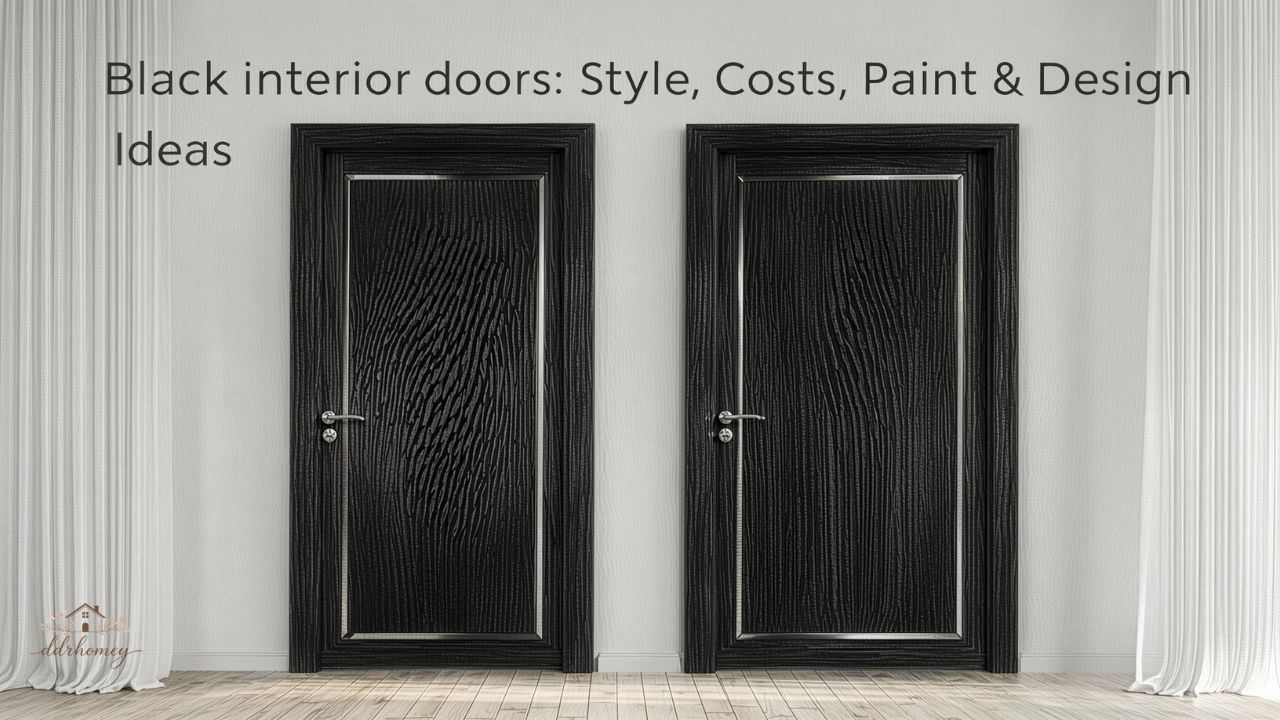
The appeal is easy to understand once you see it in a real home. A plain white hallway can suddenly feel intentional. A builder-grade bedroom can look more polished. A small powder room can feel boutique instead of basic. That is why this idea matters: it gives homeowners, renters, designers, and renovators a high-impact update that can feel expensive even when the project is mostly paint, planning, and better hardware.
In real life, doors are not just background pieces. They break up walls, guide the eye, hide storage, frame rooms, and influence how clean or finished a space feels. Home Depot lists common interior door widths such as 18, 20, 24, 28, 30, 32, and 36 inches, with common heights including 80, 84, and 96 inches, so even a normal door has enough visual presence to affect the whole room.
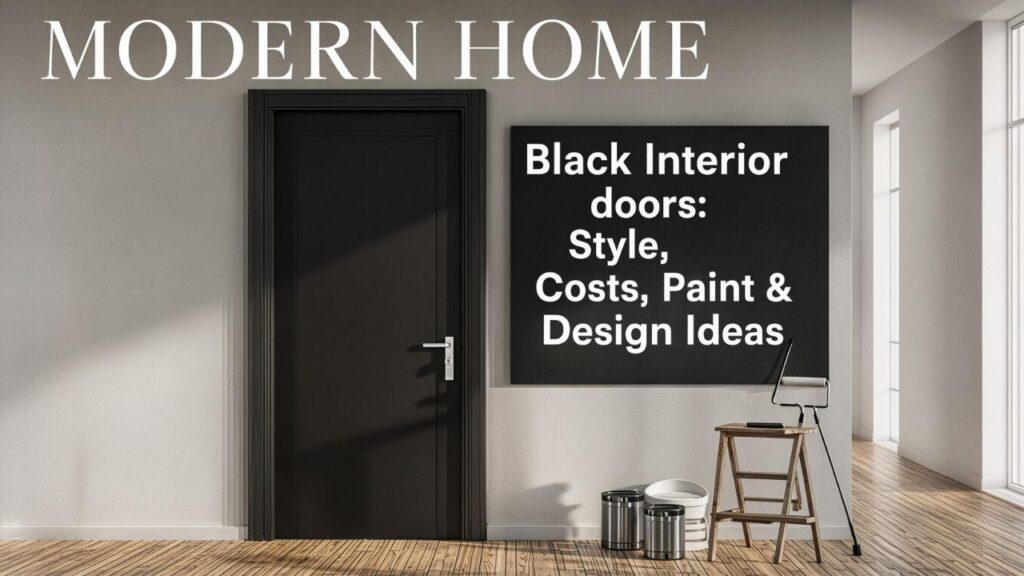
The best part is that this look is flexible. It can feel classic with white trim, modern with flat-panel doors, cozy with warm wood, or bold with black casing. The trick is not simply choosing a dark color. The trick is choosing the right door style, finish, wall color, lighting, hardware, and level of contrast.
There is also a mood shift. Black brings weight, structure, and calm. In a bright home, it can balance all the light. In a neutral home, it can prevent the design from feeling washed out. In a colorful home, it can act like punctuation at the end of a sentence.
Houzz has long highlighted the elegance of dark painted doors, noting that black can turn a plain doorway into a more sophisticated design feature. It also points out that black doors pair especially well with clean whites and light neutrals, which explains why the look has stayed popular in many modern, transitional, farmhouse, and classic interiors.
Think about a small entry hall. White walls, white trim, white closet doors, and a pale ceiling can look clean, but also a bit empty. Paint the closet and room doors black, add warm metal knobs, and suddenly the same hallway feels tailored. Nothing major moved. The bones simply look sharper.
That means a homeowner can achieve the look in several ways:
- Paint existing doors.
- Buy prefinished doors.
- Install new slab doors.
- Replace old frames with prehung doors.
- Use black glass doors for offices or closets.
- Match black doors with black trim for a stronger architectural look.
Bedrooms are another natural fit. A black door can make a simple room feel more settled, especially when paired with linen bedding, warm lamps, wood furniture, and soft rugs. It can also make a basic closet door look more like part of the room design.
Bathrooms and powder rooms may benefit even more. These spaces are small, and small rooms often handle bold choices better than people expect. A dark door outside a powder room creates a stylish moment, while a dark vanity, mirror frame, or light fixture inside the room can help the look feel connected.
[Image 2 Placeholder: A small powder room entrance with a black door, creamy walls, framed art, and brushed brass hardware. Alt text: black bathroom door with cream walls and brass hardware.]
Home offices also love this treatment. A black French door or glass-panel office door gives privacy while still looking professional. If the office has bookcases, a dark desk, or black-framed artwork, the door can make the room feel cohesive.
For open-plan homes, use the color with purpose. One black pantry door in a white kitchen can look charming. Five unrelated dark doors scattered around the house can feel random. Repetition matters.
A modern space can also handle black trim, especially when the walls are light and the floors are warm. The result feels graphic but not messy. If your home already has black window frames, black railings, or black light fixtures, repeating the color on the doors can make the whole place feel connected.
A good example is a colonial-style hallway with white wainscoting, warm wood floors, and dark doors. The black finish gives contrast, while the panel details keep the space rooted in traditional design.
A black barn door can also work, but be careful. Barn doors became popular quickly, and not every room needs one. Use them where they make functional sense, such as a pantry, laundry room, closet, or office. Avoid forcing the look where a regular swinging door would work better.
For a boutique-hotel feeling, pair dark doors with warm white walls, stone surfaces, soft lighting, and metal accents. Brass feels warm and classic. Polished nickel feels crisp. Matte black hardware creates a quiet, seamless look.
Sherwin-Williams describes Tricorn Black SW 6258 as a true black that pairs with white for classic contrast, which is why many designers and homeowners use it when they want a clean, neutral black.
Benjamin Moore describes Onyx 2133-10 as a deep black that feels luxurious and grounded, making it another popular option for doors, trim, and dramatic accents.
For most homes, satin is the sweet spot. It gives enough durability without looking plastic. Semi-gloss can work if the trim is also semi-gloss, but make sure the door surface is smooth before painting.
Here is a simple guide:
- Brass: warm, classic, slightly luxurious.
- Antique brass: vintage, cozy, and character-rich.
- Matte black: minimal, quiet, and modern.
- Polished nickel: crisp, refined, and bright.
- Chrome: clean, budget-friendly, and simple.
- Oil-rubbed bronze: traditional, deep, and warm.
For professional interior door installation, Angi lists a typical range of $362 to $1,234, with cost depending on door type, material, and size. HomeAdvisor lists a similar average for interior door installation at $798, with most homeowners spending between $362 and $1,234.
Visible improvements affect how buyers feel. The 2025 Remodeling Impact Report from NAR and NARI found that Americans spent an estimated $603 billion on home remodeling in 2024. It also found that Realtors most often recommended painting the entire home before listing at 50%, followed by painting a single interior room at 41%.
Doors sit inside the paint-and-finish category buyers notice quickly. A buyer may not know the brand, but they will notice clean lines, fresh paint, smooth hardware, and a home that feels cared for.
Use this quick decision guide:
- Paint when the door shape is good but the color feels boring.
- Replace when the door is cracked, swollen, or poorly fitted.
- Upgrade to solid-core doors if sound control matters.
- Choose glass doors where borrowed light matters.
- Choose prehung doors when the existing frame is out of square.
- Keep the current frame if it is straight, clean, and in good condition.
Gray walls can work, but choose carefully. Cool gray with black can feel cold if the flooring is also gray. Add warmth through wood, woven textures, leather, brass, or warm artwork. Greige, mushroom, taupe, and clay-based neutrals are often easier to live with.
Wood floors are a natural partner. Oak, walnut, pine, and hickory all soften the strong contrast. If your floors are very dark, consider using lighter rugs to stop the space from feeling heavy. If your floors are pale, black doors can add the weight the room needs.
For trim, you have three main choices:
- White trim with black doors: classic and bright.
- Black trim with black doors: dramatic and built-in.
- Stained wood trim with black doors: warm and character-rich.
One mistake people make is painting only the door slab black while leaving old, yellowed trim around it. Sometimes that contrast works. Sometimes it makes the trim look dirty. If your trim is worn, refresh it at the same time.
For low-light rooms, use satin instead of matte. Add a mirror, soft lamp, pale rug, or light artwork nearby. Also look at the undertone. A softer black or dark charcoal may feel kinder than a pure black in a dim room.
The second mistake is choosing the wrong sheen. A glossy black door with dents can look worse than the original door. A flat black door in a busy hallway can collect fingerprints quickly. Satin is often the safest choice for daily life.
The third mistake is ignoring lighting. Paint a sample on the back of a door first. Check it in the morning, afternoon, and at night.
The fourth mistake is forgetting the edges. If the door is open often, the edge color matters. Paint the hinge edge and latch edge cleanly. Also decide whether both sides should be black. For many homes, painting both sides looks more intentional.
The fifth mistake is using the trend without a plan. A single black door can be an accent. A full set of black doors can be a design language. The awkward middle is when two random doors are dark and the rest are not. Repetition makes the choice feel confident.
Avoid harsh scrubbing pads. They can polish one spot and leave an uneven sheen. For chips, keep a small labeled jar of touch-up paint. Dab lightly rather than brushing a large area. If the door gets a lot of sun, check whether the paint fades or warms over time.
Indoor air quality also matters during painting. The U.S. Environmental Protection Agency advises increasing ventilation when using products that emit VOCs and following label precautions. When painting indoors, open windows when possible, use fans safely, and choose low-odor or low-VOC products where appropriate. (US EPA)
If you have children, pets, allergies, or breathing sensitivities at home, plan painting during a time when the room can air out. A beautiful door is not worth a headache, strong odor, or avoidable discomfort.
That said, not every home needs black on every door. The best interiors usually feel layered, not copied. If your home is soft, coastal, and pale, one or two dark doors may be enough. If your home already has black windows, black lighting, and clean modern lines, a full set may feel natural.
The more personal question is this: do you want the doors to disappear, or do you want them to become part of the design? If you want quiet walls and invisible transitions, keep them light. If you want contrast, structure, and a stronger finished look, black interior doors are worth considering.
The secret is balance. Choose the right black, use the right finish, respect the home’s style, and repeat the color with purpose. Pair dark doors with thoughtful hardware, clean trim, good lighting, and warm textures. When those pieces work together, the result feels less like a trend and more like a confident design decision.
For anyone craving a home update that feels bold but still practical, this is one of the most satisfying places to start.