

A chipped cup, a faded wooden table, or a linen shirt softened by years of wear can carry more warmth than something flawless and new. Wabi sabi gives us a language for that feeling: the quiet beauty found in age, imperfection, simplicity, and change.
For many people, the idea arrives through carefully styled rooms filled with clay pottery and neutral fabrics. Yet the real philosophy reaches further than decoration. It can influence how you furnish a home, choose clothes, repair belongings, notice the seasons, and respond when life refuses to stay polished.
People searching for the wabi sabi meaning are often looking for relief from visual clutter, disposable trends, and the pressure to make everything perfect. This guide explores the concept respectfully, explains how it differs from ordinary minimalism, and shows how you can apply it without turning a thoughtful Japanese aesthetic into a shopping theme.
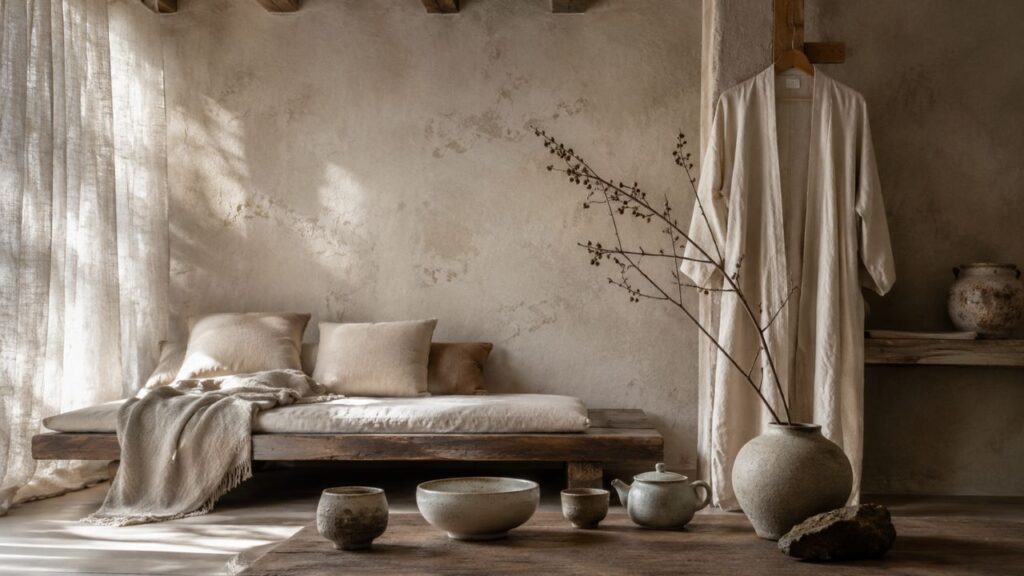
What Is Wabi Sabi?
The question what is wabi sabi doesn’t have a single English answer that captures every layer. In broad terms, it is a Japanese aesthetic sensibility that recognizes beauty in impermanence, irregularity, modesty, incompleteness, and the natural traces left by time.
A practical wabi sabi definition might be: an appreciation of things that are temporary, imperfect, unpretentious, and shaped by use. That explanation is useful, but the philosophy is better understood through experience than through a dictionary sentence.
Think of a handmade bowl with a slightly uneven rim. Its difference from a factory-perfect bowl isn’t necessarily a defect. The marks of the maker reveal process, material, and individuality. The bowl feels alive because it hasn’t been stripped of every irregular detail.
Understanding the Two Words
Historically, “wabi” and “sabi” carried separate associations before becoming closely linked. Wabi came to suggest simplicity, restraint, solitude, and a life less dependent on luxury. Sabi developed associations with age, weathering, patina, and the subdued beauty that appears over time.
Together, they describe a sensibility rather than a rigid decorating formula. That is why another wabi sabi definition focused only on distressed furniture or beige walls misses the deeper point.
Why You May See “Wabisabi” Written as One Word
The spelling wabisabi appears frequently in product names, social-media captions, business names, and informal English writing. The more conventional English rendering separates the words or uses a hyphen, but wabisabi is often used when designers want a compact brand term.
Searching wabisabi may lead to furniture, ceramics, clothing labels, cafés, and creative studios. The spelling doesn’t automatically show whether the maker understands the philosophy, so judge the work by its materials, process, honesty, and respect for cultural context.
Some people also use wabisabi as shorthand for anything rustic. That is too broad. A mass-produced object covered with artificial scratches may look aged, but manufactured damage alone doesn’t give it history or emotional depth.
The Cultural Roots Behind Wabi-Sabi
The development of wabi-sabi is commonly associated with Japanese Buddhist-influenced thought, traditional arts, and tea culture. It grew through practices that valued restraint, attentiveness, natural materials, seasonal awareness, and humble objects over excessive display.
In the Japanese tea tradition, an ordinary clay vessel, bamboo tool, or weathered room could offer a richer experience than an ornate item chosen mainly to display wealth. Beauty came from proportion, touch, use, atmosphere, and the relationship between host, guest, object, and season.
That context is important. Removing the philosophy from its cultural roots can reduce it to a commercial look: cracked pottery, unfinished plaster, and brown fabric sold as a coordinated lifestyle package.
Impermanence Is Central
Nothing remains unchanged. Wood darkens, metal oxidizes, fabric fades, flowers wilt, and people age. Instead of treating every sign of change as a failure, the philosophy asks you to notice what time adds.
This doesn’t mean neglecting possessions. A table can be maintained while still showing dents from family dinners. A repaired garment can be clean and useful without pretending it was never torn.
Imperfection Is Not Carelessness
A common misunderstanding is that wabi-sabi celebrates poor workmanship. It doesn’t excuse unstable furniture, unsafe repairs, careless construction, or products designed to fail.
A skilled potter may intentionally preserve subtle irregularities while controlling the clay, firing, balance, and function. The finished piece can be imperfect in appearance yet deeply considered in execution.
Incompleteness Leaves Room for Life
A room doesn’t need to look permanently finished. An empty wall, an unfilled shelf, or a garden that changes throughout the year allows space for future experience.
This aspect of the wabi sabi meaning can be freeing. Your home can develop slowly instead of being completed through one large shopping trip.
The Main Principles of Wabi Sabi Style
Wabi sabi style isn’t created by following a list of approved colors. It develops when your choices express simplicity, natural change, useful beauty, and respect for materials.
Several principles can guide you without turning the philosophy into a strict rulebook:
- Choose objects for usefulness, character, and emotional connection.
- Let natural materials reveal grain, texture, variation, and age.
- Repair worthwhile possessions rather than replacing them automatically.
- Leave visual space instead of filling every surface.
- Prefer thoughtful craftsmanship over artificial perfection.
- Accept that a home changes with its occupants and seasons.
- Avoid buying distressed objects merely to imitate history.
Simplicity Without Sterility
Minimalism sometimes aims for a highly controlled, almost untouched environment. Wabi sabi style can also be simple, but it usually feels warmer and more human.
A nearly empty room with one uncomfortable chair isn’t meaningful just because it is sparse. A modest room with a worn reading chair, a handmade lamp, and a repaired side table may express the philosophy more fully because the objects support real life.
Natural Materials and Honest Surfaces
Wood, clay, stone, linen, wool, paper, leather, iron, and woven fibers often fit naturally into wabi sabi design. These materials change over time and tend to reveal rather than conceal their structure.
Plastic and synthetic materials aren’t morally wrong, and a home doesn’t need to imitate a historical Japanese interior. The key question is whether an object is honest about what it is and whether it serves your life well.
Quiet Color Rather Than Mandatory Beige
Earthy neutrals are common because they reflect soil, bark, stone, straw, smoke, and unbleached fiber. Still, the palette can include charcoal, indigo, moss, muted rust, faded rose, and weathered green.
Color should feel grounded rather than excessively polished. A deep blue wall with uneven handmade pottery can express wabi sabi style more effectively than an all-beige room assembled from matching mass-market accessories.
Creating Wabi Sabi Interior Design at Home
Successful wabi sabi interior design begins with observation. Before buying anything, look at how daylight enters the room, where people naturally sit, which objects are used daily, and what materials already have character.
You may discover that the scratched dining table doesn’t need replacing. It might need cleaning, tightening, or a gentle refinish that protects the surface without removing every sign of family life.
Start With What You Already Own
Walk through the room and identify items that are useful, repairable, inherited, handmade, or personally meaningful. Keep those pieces visible and remove objects that exist only to fill space.
This approach makes wabi sabi interior design more sustainable and personal. A house developed around its occupants will feel more authentic than one copied exactly from a photograph.
Use Texture to Create Depth
Combine surfaces that respond differently to light: rough plaster, matte pottery, washed linen, woven baskets, aged wood, and softly oxidized metal. Texture adds richness without requiring bold patterns or crowded decoration.
Avoid making every item rough. A smooth wooden spoon beside a coarse linen cloth creates contrast, just as a polished stone can look beautiful on an irregular shelf.
Choose Furniture With Visible Structure
Look for furniture that shows how it was made. Mortise-and-tenon joints, hand-shaped edges, woven seats, visible grain, and natural variation give the eye something to discover.
In wabi sabi interior design, a repaired chair can be more interesting than a perfect replacement. The repair should be structurally sound, but it doesn’t always have to disappear.
Let Rooms Breathe
Negative space is an active part of the composition. Leaving part of a shelf empty can make a single ceramic vessel more noticeable. Keeping a walkway open can make the room feel calmer and improve daily movement.
A thoughtful room doesn’t need décor on every wall. The quiet areas allow materials, shadows, and useful objects to hold attention.
Room-by-Room Wabi Sabi Design Ideas
Different rooms need different balances of beauty and practicality. Wabi sabi design should never make a kitchen hard to clean, a bedroom uncomfortable, or a bathroom vulnerable to moisture damage.
Living Room
Build the room around comfort and conversation. A linen sofa, wool throw, solid wood table, handmade lamp, and a few pieces of art can create more warmth than a large collection of matching accessories.
Use signs of age selectively. A vintage cabinet can sit beside a modern, supportive sofa. Mixing periods keeps the space from looking like a themed set.
Kitchen
Open shelves can display pottery, wooden boards, baskets, and frequently used cookware. However, only use open storage if you’re comfortable cleaning it and keeping essential items orderly.
The best wabi sabi design in a kitchen comes from honest use: a butcher block that develops a patina, a hand-thrown mug used every morning, or a copper pan maintained rather than discarded when its surface changes.
Bedroom
Choose breathable bedding, gentle lighting, simple furniture, and a restrained number of personal objects. Washed linen, cotton, wool, and unfinished or lightly finished wood create a soft atmosphere.
A bedroom doesn’t need intentionally wrinkled sheets to qualify. Cleanliness, comfort, and rest matter more than making the space look casually imperfect.
Bathroom
Stone, wood tones, plaster-like surfaces, woven textiles, and handmade containers can soften a bathroom. Materials must still be suited to humidity and cleaned correctly.
Good wabi sabi interior design respects function. Moisture damage, mold, loose tiles, and failing seals aren’t beautiful signs of age; they’re maintenance problems that should be fixed.
Entryway
An entry can be simple: one bench, several hooks, a durable mat, and a bowl for keys. A worn wooden surface may become more attractive as it records daily use.
This is a useful place to practice restraint. Keep only the items needed for leaving and returning home rather than turning the area into an overflow storage zone.
Wabi Sabi Clothing and Slow Personal Style
The philosophy can also influence what you wear. Wabi sabi clothing values natural materials, comfort, repairability, individual wear, and garments that become more personal over time.
This doesn’t require dressing entirely in loose beige linen. Denim faded at the knees, a wool sweater carefully darned at the elbow, a handwoven scarf with irregular threads, or leather shoes maintained for years can all express the idea.
Fabric That Changes Gracefully
Linen softens, denim fades, leather develops patina, and wool can be repaired visibly. These materials often become more attractive when cared for properly.
Good wabi sabi clothing should still fit, function, and feel intentional. A stained garment left untreated isn’t automatically meaningful, and poor-quality fabric that falls apart after a few wears doesn’t become valuable simply because it looks distressed.
Visible Mending and Thoughtful Repair
Visible mending can turn maintenance into part of the garment’s story. Contrasting thread, patchwork, darning, and reinforced seams reveal that someone considered the piece worth saving.
The repair doesn’t need to be decorative. Quiet, nearly invisible work can also reflect wabi sabi clothing because the value lies in continued use rather than public display.
How a Brocade Skirt Can Fit the Aesthetic
At first glance, a brocade skirt may seem too ornate for a philosophy associated with restraint. Yet an inherited or vintage piece with softened fabric, faded metallic thread, and a carefully repaired hem can hold the kind of history the philosophy values.
Pairing a brocade skirt with a plain linen shirt, worn leather flats, or a simple wool cardigan can balance richness with modesty. The contrast prevents the outfit from feeling theatrical.
A handmade brocade skirt may also reveal irregular pattern alignment, hand-finished seams, or evidence of previous alteration. Those details can make the garment more personal rather than less desirable.
If a brocade skirt no longer fits, a skilled tailor may adjust the waistband, replace the lining, or reshape the length while preserving the original textile. Repair is usually more meaningful than artificially distressing a new garment.
When shopping for a vintage brocade skirt, inspect the seams, lining, waistband, odor, fabric strength, and metallic threads. Age adds character only when the textile remains wearable or can be restored responsibly.
Building a Smaller Wardrobe
A small wardrobe works when the pieces suit your real activities. Choose garments you can layer, repair, and wear repeatedly rather than purchasing clothes for an imagined lifestyle.
Over time, wabi sabi clothing becomes specific to your body. The softened cuff, repaired pocket, or faded collar records use without needing to look careless.
Wabi Sabi Meaning in Daily Life
The philosophy becomes more valuable when it moves beyond objects. Another way to understand what is wabi sabi is to notice how you respond to delay, aging, unfinished plans, and changing relationships.
You might serve dinner in mismatched bowls instead of waiting until you own a complete set. You might enjoy a garden during its bare winter phase rather than valuing it only in bloom.
Accepting Change Without Becoming Passive
Acceptance doesn’t mean refusing improvement. You can repair a leaking roof, learn a new skill, or work through a difficult habit while recognizing that complete control is impossible.
This is an important part of the wabi sabi meaning. The philosophy can soften perfectionism, but it shouldn’t become an excuse for avoiding responsibility.
Creating Small Rituals
Simple rituals slow attention. Making tea, folding laundry, sweeping a floor, oiling a wooden board, or mending a sleeve can become more satisfying when you stop treating the task as an obstacle between you and “real life.”
These moments help answer what is wabi sabi in a practical way. It is partly the ability to notice ordinary experience before it disappears.
Keeping Memories Without Keeping Everything
A meaningful life can produce too many objects. Respecting memory doesn’t require storing every possession associated with it.
Keep a smaller number of items that carry the clearest stories. Photograph objects before releasing them, pass useful things to relatives, or donate them where they’ll continue to be used.
Common Misunderstandings About Wabi Sabi
The first misunderstanding is that wabi sabi means buying damaged products. Authentic age and manufactured distress aren’t identical. A new table attacked with chains to look old may imitate wear without carrying real history.
The second misunderstanding is that the aesthetic requires poverty, discomfort, or neglect. Simplicity can be chosen thoughtfully, but romanticizing hardship is neither respectful nor useful.
It Is Not Just Rustic Minimalism
Rustic décor often emphasizes reclaimed wood, farmhouse references, and visibly aged surfaces. Minimalism often emphasizes reduction and clean form. The Japanese philosophy may overlap with both, but it also includes impermanence, humility, seasonal change, and emotional attentiveness.
That is why the wabi sabi definition cannot be reduced to “Japanese rustic style.” The phrase describes a way of perceiving beauty, not merely a furniture category.
It Is Not Kintsugi Alone
Kintsugi, the Japanese practice of repairing ceramics with lacquer and metal powder, is often used as a visual symbol of repair. It can relate to broader ideas of accepting damage and transformation, but the two terms aren’t interchangeable.
Not every cracked object should be repaired with gold paint. Safe, skilled restoration matters, especially for food vessels.
It Is Not an Excuse for Poor Quality
A badly built chair will remain unstable. A garment sewn from weak fabric may continue tearing. A damp room needs ventilation and repair.
Responsible wabi sabi style combines acceptance with care. The aim is to value natural variation and honest aging, not to celebrate preventable deterioration.
Finding Wabi Sabi Designers, Makers, and Clothing Near You
Local craftspeople can help you apply the philosophy without filling your home with mass-produced “imperfect” accessories. Search for ceramicists, woodworkers, textile artists, upholsterers, tailors, repair cafés, vintage dealers, and interior designers who prioritize natural materials and long-term use.
Ask about process rather than relying on labels. A trustworthy professional should be able to explain where materials come from, how finishes age, what maintenance is required, and whether an item can be repaired later.
What Custom Work May Cost
Prices vary widely by city, material, size, skill level, and project complexity. A handmade ceramic cup might cost more than a factory set because the maker forms, finishes, fires, and sometimes refires each piece. Custom furniture can require weeks of design, joinery, finishing, and curing.
A designer specializing in wabi sabi interior design may charge hourly, by room, or as a percentage of the project budget. Request a written scope that identifies consultations, sourcing, drawings, purchasing, installation, travel, and returns.
How Long Projects Usually Take
Small styling consultations may be completed in one or two meetings. Custom furniture, plaster work, upholstery, tailoring, or handmade tile can take several weeks or months.
Long lead times aren’t automatically a sign of quality, but careful work often cannot be rushed. Ask for milestones and updates rather than expecting an exact result overnight.
Frequently Asked Questions
Where can I find a wabi sabi interior designer near me?
Search local design directories, artisan markets, architecture studios, and social platforms using your city name with wabi sabi interior design. Review complete projects rather than isolated photographs, and ask how the designer handles budget, practical storage, maintenance, and culturally respectful sourcing.
How much does a wabi sabi room makeover cost?
A small consultation may cost a few hundred dollars, while custom plaster, handmade furniture, lighting, textiles, and professional installation can raise the budget considerably. A reliable designer should separate design fees, products, labor, delivery, and contingency costs in writing.
Are there local stores that sell authentic wabi sabi design pieces?
Pottery studios, woodworking shops, textile cooperatives, vintage dealers, and Japanese craft specialists are good places to begin. Instead of asking whether an item is “authentic,” ask who made it, which material was used, how it was finished, and how it will change over time.
How do I know whether a wabisabi furniture seller is trustworthy?
A trustworthy wabisabi seller should provide accurate dimensions, material details, construction methods, finish information, care instructions, delivery terms, and a clear return policy. Be cautious when every object has identical artificial cracks, stains, or distress marks.
Can a local tailor create wabi sabi clothing from old garments?
Many alteration specialists, visible-mending artists, and independent designers can reshape or repair existing pieces. Bring clean garments and explain whether you want a subtle repair, decorative patch, reconstruction, or sizing adjustment.
How long does visible mending usually take?
A simple hole may be repaired within a few days, while extensive hand darning, patchwork, lining replacement, or structural work can take several weeks. Ask the maker to inspect the fabric first because fragile cloth may need reinforcement beyond the visible damage.
Where can I repair a vintage brocade skirt near me?
Look for a tailor experienced in eveningwear, bridal alterations, vintage textiles, or theatrical costumes. A brocade skirt may require careful seam work, lining replacement, or hand stitching, so ask to see examples of repairs on patterned or metallic fabric.
Can I hire someone locally to repair old wooden furniture?
Furniture restorers, cabinetmakers, conservators, and experienced woodworkers may handle structural repairs, finish revival, or missing parts. Ask whether they plan to preserve patina or strip the surface completely, since those approaches produce very different results.
Is wabi sabi style suitable for a rental apartment?
Yes. Use removable linen curtains, vintage furniture, pottery, baskets, lamps, natural bedding, and artwork without altering permanent finishes. Focus on fewer meaningful objects rather than expensive construction that your lease may not allow.
What should I ask before hiring a designer?
Ask how the designer interprets wabi sabi design, which materials they recommend for your climate, how they balance beauty with storage, and whether they reuse existing furniture. Clear communication matters more than a portfolio filled with fashionable neutral rooms.
Conclusion
A useful wabi sabi definition doesn’t end with imperfection. It includes time, restraint, attention, repair, humility, and the recognition that beauty can deepen as objects and people change.
Understanding what is wabi sabi won’t make every broken item worth keeping or every unfinished room meaningful. It can, however, help you distinguish between what needs repair, what deserves acceptance, and what no longer serves your life.
The deepest wabi sabi meaning appears when you stop trying to freeze your home, wardrobe, and daily life in a flawless state. A well-used table, a mended garment, and a room that changes slowly can remind you that lasting beauty is often found not in perfection, but in care.