
Introduction
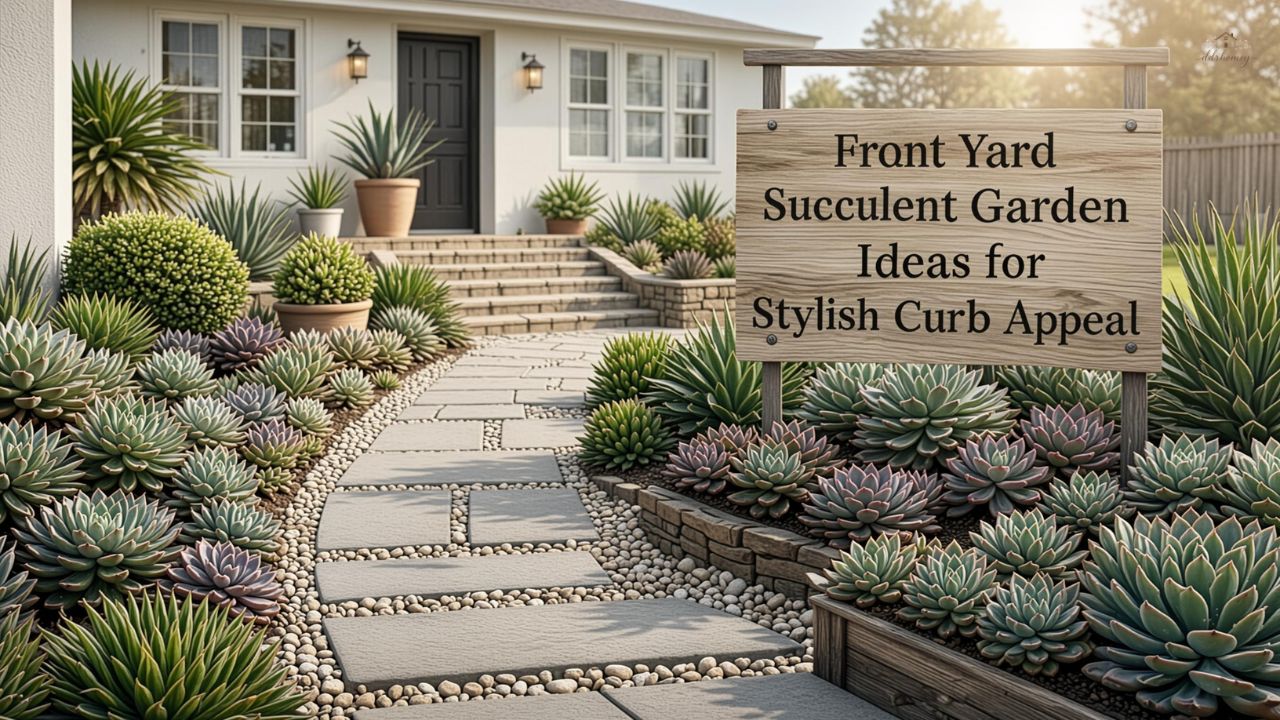
A front yard does not need a thirsty green lawn to look beautiful. With the right front yard succulent garden ideas, you can create a space that feels sculptural, colorful, modern, and surprisingly easy to care for.
Succulents are loved because they store water in thick leaves or stems, need modest watering, and usually prefer bright light and well-drained soil. University extension guidance also notes that many succulents need little water and fertilizer compared with many common garden plants.
![Image: Modern front yard succulent garden with agave, aloe, gravel, boulders, and a clean walkway]
This matters because front yards have to do more than look pretty. They handle heat, foot traffic, curb appeal, maintenance, water use, and first impressions. EPA WaterSense guidance says careful plant choice and water-smart landscape design can reduce outdoor water use by 20% to 50%.
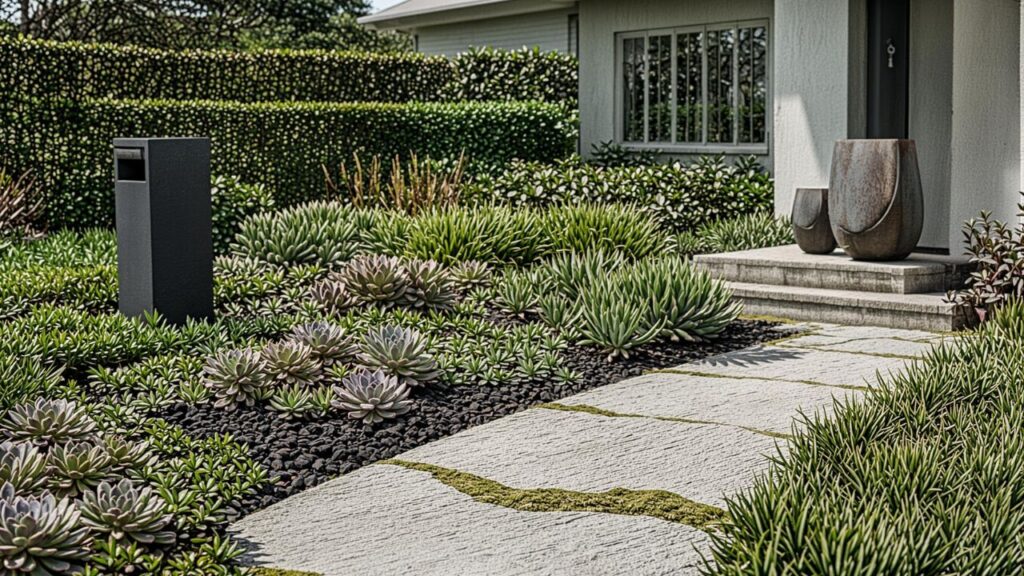
Table of Contents
- What Is a Front Yard Succulent Garden?
- Why Succulents Work So Well in Front Yards
- Best Front Yard Succulent Garden Ideas
- Design Principles for a Balanced Succulent Yard
- Best Succulents for Front Yard Landscaping
- Rocks, Gravel, Pathways, and Hardscape Ideas
- Small Front Yard Succulent Garden Ideas
- Watering, Soil, Drainage, and Easy Care
- Cost and Budget Planning
- Mistakes to Avoid
- Personal and Financial Insight
- FAQs
- Conclusion
What Is a Front Yard Succulent Garden?
A front yard succulent garden is a landscape design that uses drought-tolerant succulent plants as the main feature. Instead of relying on a traditional lawn, it often combines agave, aloe, sedum, echeveria, yucca, cactus, gravel, rocks, boulders, pathways, and low-water companion plants.
The style can be desert-inspired, modern, coastal, Mediterranean, rustic, or clean and minimal. Some gardens use bold sculptural plants. Others feel soft and colorful with rosette succulents, flowering groundcovers, and warm gravel.
The best part is flexibility. You can create a full lawn replacement, a small entry bed, a mailbox garden, a driveway border, or a simple rock garden near the front porch.
Why Succulents Work So Well in Front Yards
Succulents are practical for front yards because many of them handle sun, dry periods, and poor watering habits better than thirsty ornamental plants.
They also offer shape. A lawn is flat, but succulents can be round, spiky, upright, trailing, blue-green, silver, purple, lime, or deep burgundy. That variety makes a front yard feel designed even with fewer plants.
Low-Water Appeal
Water-wise landscaping is especially useful in dry climates, hot regions, and areas with rising water costs. EPA WaterSense recommends water-smart landscape design, careful plant selection, mulch, and avoiding midday watering to reduce waste.
Strong Curb Appeal
Succulents look architectural. A large agave near an entry path can act like outdoor sculpture. Aloe flowers can add height and color. Sedum can soften edges. Gravel can make everything feel clean and intentional.
Lower Maintenance
A well-planned succulent yard can reduce mowing, frequent watering, and heavy pruning. However, it is not “no maintenance.” You still need weeding, occasional cleanup, plant spacing, drainage care, and seasonal checks.
Best Front Yard Succulent Garden Ideas
1. Modern Agave and Gravel Garden
Agave is bold, sculptural, and perfect for a modern front yard. Use one or three large agaves as focal points, then surround them with gravel, boulders, low sedum, and simple lighting.
This style works especially well with:
- White stucco homes
- Black window frames
- Concrete walkways
- Minimalist architecture
- Desert-modern houses
Leave enough space around agaves. Many varieties grow wide, and sharp leaf tips can be risky near walkways.
2. Aloe Garden With Seasonal Color
Aloe plants are beautiful because many varieties send up tall flower spikes. These blooms can bring orange, yellow, red, or coral color to the front yard.
Use aloe near rocks, low grasses, and warm gravel. It looks relaxed but still polished.
3. Rock Garden With Mixed Succulents
A rock garden is one of the most natural front yard succulent garden ideas. Combine different rock sizes so the design does not look flat.
Use:
- Large boulders for structure
- Medium rocks for natural movement
- Gravel for groundcover
- Small stones around plant bases
- Succulents in groups of odd numbers
This creates depth without needing many flowers.
4. Succulent Border Along the Walkway
A walkway border can make the entrance feel more welcoming. Use low-growing succulents near the path and taller plants farther back.
Good choices include sedum, echeveria, aeonium, small aloes, and compact agaves.
5. Desert-Inspired Front Yard
A desert-style yard uses gravel, cactus, agave, yucca, boulders, warm-toned stone, and open spacing.
This style looks best when plants have room to breathe. Do not overcrowd it. The empty space is part of the design.
6. Mediterranean Succulent Garden
Mediterranean gardens feel warm and relaxed. Pair succulents with lavender, rosemary, olive trees, gravel paths, terracotta pots, and natural stone.
This look is softer than a desert garden and works beautifully with cream, beige, stone, and stucco homes.
7. Colorful Rosette Succulent Bed
Rosette succulents such as echeveria and aeonium bring soft color and beautiful symmetry. Use them near the front porch, in raised beds, or around a mailbox.
They look best when planted in repeated clusters instead of scattered randomly.
8. Succulent Mailbox Garden
A mailbox garden is a small project with big visual impact. Add gravel, a few compact succulents, one upright plant, and a clean border.
This is a good beginner project if you are not ready to redesign the whole yard.
9. Raised Succulent Planter Beds
Raised beds improve drainage and make the garden feel more structured. They also help display small succulents better.
Use corten steel, stone, concrete, brick, or wood depending on your home style.
10. Succulent Garden With Outdoor Lighting
Low-voltage lighting can make succulents look dramatic at night. Uplight an agave, place path lights along gravel, or use soft lighting near boulders.
Good lighting improves both curb appeal and safety.
Design Principles for a Balanced Succulent Yard
A succulent garden can look stunning or messy depending on layout. The plants are beautiful, but the design still needs order.
Use Focal Points
Every front yard needs a main visual anchor. This could be a large agave, a boulder, a small tree, a sculptural aloe, or a raised planter.
Repeat Plants
Repetition makes the garden feel calm. Instead of buying one of every succulent, repeat a few varieties in groups.
Mix Heights
Use tall plants in the back or center, medium plants around them, and low plants near edges.
Create Contrast
Succulent gardens look best with contrast:
- Spiky agave beside soft sedum
- Blue-gray plants beside burgundy aeonium
- Round boulders beside sharp leaves
- Pale gravel beside dark foliage
Leave Negative Space
Do not fill every inch. Gravel, stones, and open space help succulents stand out.
Match the House
A modern home may need clean lines and simple plant groups. A cottage-style home may need softer edges and more flowering companions.
Best Succulents for Front Yard Landscaping
The best plants depend on your climate, sunlight, rainfall, and winter temperatures. Always check local hardiness before planting.
| Succulent | Best Use | Look | Care Notes |
|---|---|---|---|
| Agave | Focal point | Bold, spiky, architectural | Needs space and good drainage |
| Aloe | Color and structure | Upright leaves, flower spikes | Loves sun and drainage |
| Sedum | Groundcover | Soft, low, spreading | Many hardy options |
| Echeveria | Decorative beds | Rosette shape | Protect from extreme cold |
| Aeonium | Color contrast | Rosettes on stems | Best in mild climates |
| Yucca | Height and drama | Spiky upright form | Tough and structural |
| Sempervivum | Cold-hardy accents | Small rosettes | Good for rock gardens |
| Cactus | Desert look | Sculptural forms | Needs careful placement |
Agave
Agave is powerful in front yard design. It gives instant structure. Use it as a focal plant, but keep it away from tight walkways because many varieties have sharp tips.
Aloe
Aloe adds structure and seasonal flowers. It pairs well with gravel, rocks, and warm-toned architecture.
Sedum
Sedum is useful for edges, groundcover, and softening rocks. Some sedums are hardy in colder zones, making them more flexible than many tender succulents.
Echeveria
Echeveria is loved for its rose-like form. It works best in mild climates or protected areas where frost is not severe.
Yucca
Yucca gives height and strong shape. It works well near modern homes, desert gardens, and wide front beds.
Sempervivum
Sempervivum, often called hens and chicks, is a good choice for rock gardens and colder climates. It forms tight rosettes and spreads slowly.
Rocks, Gravel, Pathways, and Hardscape Ideas
Succulent gardens rely heavily on hardscape. Gravel, stone, and pathways are not just decoration; they help define the space.
Gravel Groundcover
Gravel gives a clean base and helps reduce exposed soil. It also makes the front yard feel finished.
Popular gravel colors include:
- Decomposed granite
- Pea gravel
- Black lava rock
- White gravel
- Tan crushed stone
- Warm desert gravel
Choose a gravel color that works with your roof, siding, stone, and driveway.
Boulders
Boulders make a succulent garden feel grounded. Use fewer large rocks instead of many tiny ones. Place them partly buried so they look natural.
Stepping Stones
Stepping stones create movement through the garden and stop people from stepping on plants.
Concrete Walkways
Concrete works well with modern succulent landscaping. Use straight lines for a clean look or large pavers with gravel joints.
Dry Creek Bed
A dry creek bed can solve visual and drainage problems. It guides the eye, manages runoff, and adds a natural shape to the yard.
Retaining Edges
Metal edging, stone borders, brick, or concrete curbing can keep gravel neat and stop mulch from spilling into walkways.
Small Front Yard Succulent Garden Ideas
A small front yard can look amazing with succulents because these plants do not always need large beds.
Use One Strong Focal Plant
Choose one bold plant near the entrance. A single agave or yucca can make a small yard feel intentional.
Keep the Palette Simple
Use three to five plant types, not twenty. Too many varieties can make a small front yard feel cluttered.
Add Vertical Interest
Use tall planters, upright aloes, slim yuccas, or a trellis with drought-tolerant vines.
Use Gravel to Open the Space
A clean gravel field can make a small yard feel wider. Pair it with defined planting pockets.
Create a Mini Rock Garden
A small slope, corner bed, or strip along the driveway can become a tiny succulent rock garden.
Use Containers Near the Door
Potted succulents are easy to move and replace. Use large matching pots for a polished look.
Watering, Soil, Drainage, and Easy Care
Succulents are tough, but poor drainage can ruin them. Most problems come from too much water, heavy soil, or planting the wrong succulent in the wrong climate.
Soil
Succulents generally prefer fast-draining soil. University of Minnesota Extension notes that most cacti and succulents grow in well-drained sandy soil and need modest water and fertilizer.
Drainage
If your front yard has clay soil, improve drainage before planting. You may need raised beds, gravelly amendments, mounded planting areas, or professional advice for serious drainage problems.
Watering
New plants need regular watering until established. After that, many succulents need less frequent watering than traditional landscape plants.
Avoid watering lightly every day. Deep, less frequent watering is usually better, depending on plant type and local conditions.
Mulch
Rock mulch is common in succulent gardens. Organic mulch can hold too much moisture around some succulents, so use it carefully.
Sunlight
Many succulents need bright light, but not all love harsh afternoon sun in extreme heat. Check plant labels and local guidance.
Fertilizer
Succulents usually do not need heavy feeding. Too much fertilizer can lead to weak, stretched growth.
Cost and Budget Planning
The cost of a succulent front yard depends on plant size, hardscape, soil work, irrigation, lighting, and whether you hire a designer or landscaper.
| Project Type | Budget Level | Notes |
|---|---|---|
| Small mailbox succulent bed | Low | Good beginner project |
| Front walkway succulent border | Low to medium | Adds curb appeal quickly |
| Gravel and rock garden | Medium | Cost depends on stone and delivery |
| Full lawn replacement | Medium to high | May need soil prep and irrigation changes |
| Raised succulent beds | Medium to high | Materials affect cost |
| Designer landscape plan | Medium to high | Helpful for complex yards |
| Lighting and hardscape upgrade | High | Adds polish and function |
Where to Save
- Start with a small bed
- Use smaller plants and let them grow
- Reuse existing rocks
- Choose local gravel
- Propagate sedum or hardy succulents
- Keep the design simple
Where to Spend More
- Soil preparation
- Drainage correction
- Quality focal plants
- Durable edging
- Proper irrigation
- Professional help for slopes or runoff
Good front yard succulent garden ideas do not always require a huge budget. Strong layout matters more than buying the largest plants.
Mistakes to Avoid
Planting Too Close Together
Succulents need airflow and room to grow. Crowding may look full at first, but it can lead to disease, poor shape, and difficult maintenance.
Ignoring Mature Size
A small agave in a nursery pot may become several feet wide. Always check mature size before planting near paths or doors.
Using the Wrong Plants for Your Climate
Some succulents tolerate frost. Others do not. Choose plants that match your winter lows and summer heat.
Poor Drainage
This is the biggest mistake. Wet roots can kill succulents quickly.
Too Much Gravel Without Design
A yard covered in gravel with random plants can look unfinished. Add focal points, boulders, paths, and repeated plant groups.
Forgetting Safety
Sharp plants should not sit too close to walkways, driveways, children’s play areas, or entry steps.
Overwatering
Many homeowners kill succulents with kindness. Water based on plant needs, weather, and soil moisture.
Personal and Financial Insight
This topic is not connected to a public personal background, career journey, achievements, or net worth profile. Still, there is a useful financial lesson.
A front yard is one of the first things people notice about a home. A thoughtful succulent garden can improve curb appeal, reduce lawn maintenance, and lower water demand when designed well.
The smartest approach is to invest in structure first. Good drainage, pathways, edging, soil preparation, and focal plants create the foundation. Decorative pots and small plants can come later.
A succulent garden should not only look good on installation day. It should still look balanced after plants grow, seasons change, and maintenance routines settle.
FAQs
Are succulents good for front yards?
Yes, succulents can be excellent for front yards, especially in sunny, dry, or water-conscious landscapes. They offer strong shapes, low-water needs, and attractive curb appeal.
What are the best front yard succulent garden ideas for beginners?
Start with a small rock garden, mailbox bed, walkway border, or raised planter. Use easy plants like sedum, aloe, agave, yucca, or sempervivum based on your climate.
Do succulent gardens need a lot of water?
Most succulents need less water than many traditional landscape plants, but new plants still need water while establishing. Water needs depend on climate, soil, and plant type.
What soil is best for outdoor succulents?
Fast-draining soil is best. Sandy, gritty, or amended soil usually works better than heavy clay. Good drainage is more important than rich soil.
Can I replace my lawn with succulents?
Yes, in suitable climates. A lawn replacement may use succulents, gravel, rocks, native plants, drought-tolerant perennials, and pathways.
What rocks look best with succulents?
Decomposed granite, pea gravel, lava rock, river rock, crushed stone, and natural boulders can all work. Choose colors that match your home exterior.
Are succulents low maintenance?
They can be low maintenance, but not maintenance-free. They still need weeding, occasional pruning, drainage checks, and proper watering.
Can succulents survive winter?
Some can, such as many sedum and sempervivum varieties. Others, like many echeveria and tender aloes, may need mild climates or protection from frost.
How do I make a succulent front yard look expensive?
Use a clear layout, repeat plants, add boulders, choose clean gravel, install edging, add lighting, and avoid overcrowding.
What should I plant with succulents?
Pair succulents with drought-tolerant companions such as ornamental grasses, lavender, rosemary, native perennials, and low-water flowering plants suited to your region.
Conclusion
The best front yard succulent garden ideas combine beauty with smart planning. Succulents bring shape, color, texture, and low-water appeal, but the real magic comes from layout, drainage, rocks, pathways, and plant spacing.
Start small if needed. Choose plants that fit your climate. Build around a strong focal point. Add gravel, boulders, and lighting with care. When all these pieces work together, your front yard can feel modern, welcoming, and wonderfully easy to enjoy.