
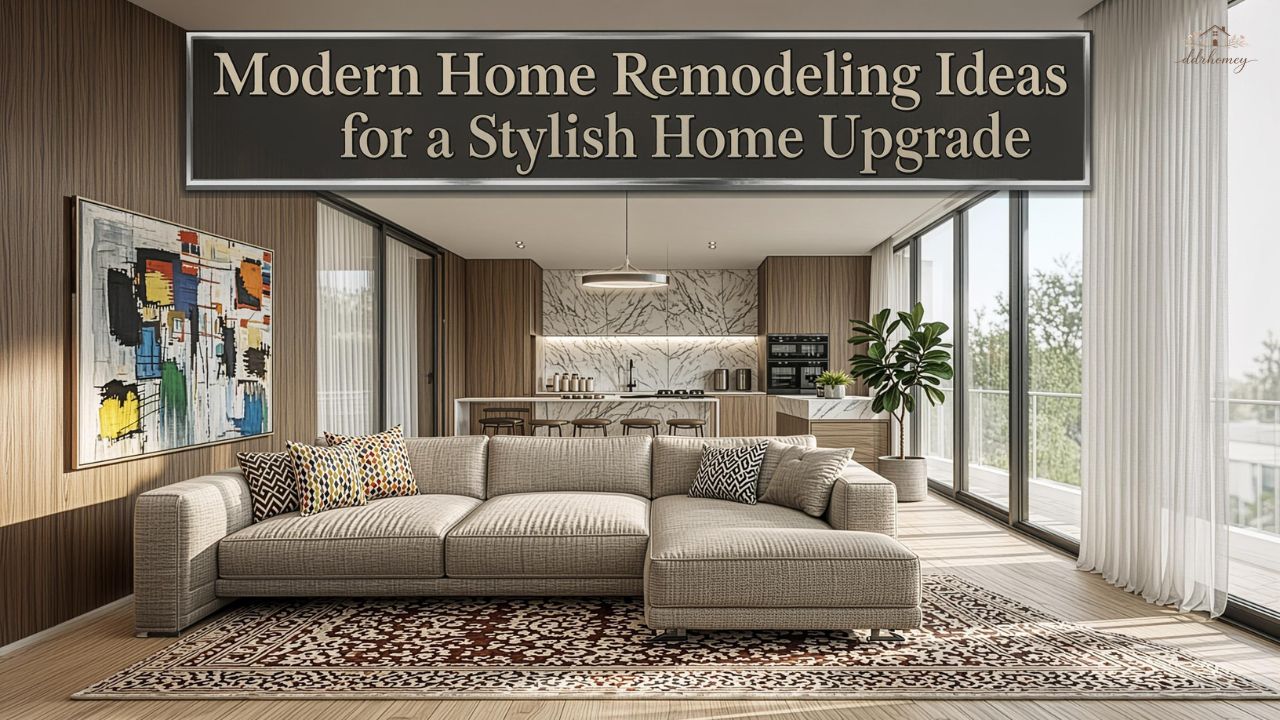
A home can quietly fall behind your lifestyle before you even notice it. One day, the kitchen feels too cramped, the living room feels dark, and the bathroom no longer feels like a relaxing space.
That is where modern home remodeling becomes exciting. It is not only about making a house look newer. It is about creating a home that works better, feels calmer, saves space, improves comfort, and supports the way people actually live today.
The best remodels do not scream for attention. They feel natural. A better layout, improved lighting, smart storage, durable finishes, and thoughtful details can completely change how a home feels from morning to night.
In reality, a stylish remodel is not always the most expensive one. Sometimes, replacing heavy cabinets, opening a wall, adding layered lighting, or upgrading old flooring can make a bigger difference than a full luxury renovation.

Table of Contents
- What modern home remodeling really means
- Why homeowners are choosing modern upgrades
- Planning your remodel before spending money
- Best rooms to remodel first
- Modern kitchen remodeling ideas
- Bathroom remodeling ideas for a cleaner look
- Living room and open-plan design ideas
- Smart storage and space-saving upgrades
- Materials, colors, and finishes that feel modern
- Energy efficiency and smart home features
- Budget planning and cost expectations
- Mistakes to avoid during a remodel
- FAQs
- Conclusion
What modern home remodeling really means
Modern home remodeling means updating a house with cleaner layouts, better function, improved comfort, and a fresher visual style. It usually includes open spaces, simple lines, practical storage, natural light, energy-conscious upgrades, and materials that are both attractive and durable.
This does not mean your home must look cold, empty, or too perfect. A modern home can still feel warm. In fact, many current remodels mix sleek cabinetry with wood tones, soft fabrics, stone textures, indoor plants, and cozy lighting.
The goal is balance. You want the home to feel updated, but not lifeless. You want it to look beautiful, but not become hard to maintain. You want better flow, but not lose the character that made the house special in the first place.
Think of it this way. A dated home often has chopped-up rooms, dark corners, unused spaces, bulky trim, old fixtures, and storage that does not match real daily routines. A modern remodel solves those problems with intention.
Why homeowners are choosing modern upgrades
People remodel for many reasons. Some want more comfort. Some need space for a growing family. Some want to improve resale value. Others are simply tired of living around old cabinets, poor lighting, worn floors, and awkward layouts.
The National Association of Realtors describes remodeling as a decision tied to both homeowner satisfaction and return on investment, which explains why people often think about emotional comfort and resale value at the same time.
Kitchen improvements remain especially popular because kitchens carry a heavy daily load. The 2025 U.S. Houzz Kitchen Trends Study surveyed 1,620 U.S. homeowners about recent or planned kitchen renovation projects, showing how much attention homeowners continue to give this part of the house.
There is also a practical reason. Homes built years ago were not always designed for laptops on kitchen islands, open family routines, remote work, hidden charging stations, large pantry storage, or quiet private zones. Modern life changed. Homes need to catch up.
That said, the smartest remodels are not based only on trends. They are based on habits. Where do you drop keys? Where do children do homework? Where do shoes pile up? Where does clutter appear every evening? These small clues often reveal the most useful upgrades.
Planning your remodel before spending money
A good remodel starts before anyone swings a hammer. Planning may feel boring, but it protects your money, timeline, and peace of mind.
Start by walking through your home slowly. Notice what annoys you. Maybe the kitchen cabinets are deep but useless. Maybe the bathroom has no storage. Maybe the living room has one ceiling light and no mood. Maybe the laundry area feels like an afterthought.
Write down problems first, not products. This keeps you from buying trendy finishes that do not solve anything. A beautiful tile will not fix a bad layout. A costly sofa will not solve poor lighting. New cabinets will not help if the kitchen triangle is still awkward.
Define your real goals
Before choosing colors or countertops, answer these questions:
- Do you need more storage?
- Do you want better natural light?
- Are you trying to increase resale appeal?
- Do you need space for children, guests, or remote work?
- Is the home too dark, too cramped, or too noisy?
- Are old systems causing high utility bills?
- Do you want a low-maintenance home?
Clear answers make decisions easier. They also help contractors understand what matters most.
Set priorities by room
Not every room needs a full renovation. Some spaces may need only paint, lighting, hardware, or flooring. Others may need deeper work.
A useful way to rank projects is by daily impact. A kitchen used three times a day may deserve more budget than a guest room used twice a year. A leaky bathroom or unsafe electrical issue should come before decorative upgrades.
Create a design direction
A design direction is not a rigid rulebook. It is a guide. Choose three to five words that describe the feeling you want, such as warm, minimal, airy, organic, elegant, cozy, natural, or clean.
Then gather inspiration photos and look for patterns. Do you keep saving white oak cabinets? Matte black fixtures? Soft beige walls? Large windows? Stone fireplaces? These repeated choices reveal your actual taste.
Best rooms to remodel first
When people talk about modern home remodeling, they often jump straight to the kitchen. That makes sense, but the best starting point depends on your home’s condition and your family’s routine.
Some homes need a kitchen first because it affects daily meals, storage, and gathering. Other homes need a bathroom first because it is old, cramped, or damaged. A house with poor insulation, bad windows, or outdated heating may need comfort upgrades before cosmetic work.
Here is a simple comparison.
| Room or Area | Best Reason to Remodel | Typical Modern Upgrade | Daily Impact |
|---|---|---|---|
| Kitchen | Better function and resale appeal | Open layout, island, storage, lighting | Very high |
| Bathroom | Comfort, hygiene, relaxation | Walk-in shower, floating vanity, better tile | High |
| Living room | Better gathering space | Built-ins, lighting, fireplace wall | High |
| Entryway | Less clutter | Bench, hooks, closed storage | Medium |
| Bedroom | Better rest | Calm colors, lighting, closet systems | Medium |
| Laundry room | Easier chores | Counter space, cabinets, utility sink | Medium |
| Exterior | Curb appeal and protection | Siding, windows, doors, lighting | High |
| A smart plan may combine small changes in several rooms instead of pouring the full budget into one dramatic space. For example, new flooring, fresh paint, better lighting, and modern doors across the main level can make the whole home feel connected. |
Modern kitchen remodeling ideas
The kitchen is usually the heart of a remodel because it affects cooking, storage, hosting, and resale interest. It is also one of the easiest rooms to overcomplicate.
A modern kitchen should feel open, useful, and calm. That does not mean every cabinet must be white or every counter must be marble. It means the layout should support real life.
The 2024 Cost vs. Value report listed a midrange minor kitchen remodel at $27,492, with an estimated resale value of $26,406 and 96% cost recouped, showing why smaller kitchen updates can be financially attractive compared with larger luxury projects.
Open the layout carefully
Open kitchens are popular, but removing walls is not always the answer. Sometimes a wider doorway, better sightline, or partial opening gives enough connection without losing storage.
Before opening a wall, check structure, plumbing, electrical lines, and ventilation. A load-bearing wall can still be changed, but it may require beams, permits, and professional planning.
Add an island with purpose
A kitchen island can be beautiful, but it should earn its space. It can provide prep room, seating, drawers, appliance storage, or a spot for casual meals.
Houzz-related reporting on the 2025 kitchen trends study noted that kitchen islands are strongly tied to storage, with 80% of homeowners choosing drawers in islands with storage.
If your kitchen is small, a slim island, rolling island, or peninsula may work better than a large fixed island. Good circulation matters. People should move around the kitchen without bumping into corners, stools, or open dishwasher doors.
Choose cabinets that reduce clutter
Flat-panel cabinets, slim shaker doors, hidden pulls, and tall pantry cabinets all support a clean look. But style alone is not enough. Interior organization matters more than the door profile.
Consider deep drawers for pots, pull-out trays for spices, vertical dividers for baking sheets, hidden trash bins, and appliance garages for mixers or coffee machines. These details make the kitchen easier to use every day.
Use layered lighting
One ceiling light is not enough. A modern kitchen needs layered lighting: recessed lights for general brightness, pendants over the island, under-cabinet lights for prep work, and soft accent lighting where possible.
Lighting can make budget materials look better. It can also make expensive finishes look disappointing if planned poorly.
Bathroom remodeling ideas for a cleaner look
Bathrooms should feel fresh, easy to clean, and peaceful. A dated bathroom can make a whole home feel older, even if other rooms look nice.
The best modern bathrooms usually combine simple tile, good ventilation, smart storage, and better lighting. They avoid too many patterns fighting for attention.
Install a walk-in shower
A walk-in shower can make a bathroom feel larger and more comfortable. Clear glass, large-format tile, a linear drain, and a recessed niche create a clean result.
For safety and comfort, consider a low-threshold entry, slip-resistant flooring, grab-bar blocking behind the wall, and a handheld shower. These details are useful for many ages, not just older homeowners.
Use a floating vanity
A floating vanity creates visual space because the floor continues underneath it. This makes small bathrooms feel lighter.
Choose drawers instead of doors when possible. Drawers make toiletries, towels, and cleaning supplies easier to reach.
Upgrade bathroom lighting
Bathroom lighting should be flattering and practical. Wall sconces beside the mirror usually reduce face shadows better than one harsh light above the mirror.
Add a dimmer if possible. Bright light is helpful in the morning, but soft light feels better at night.
Keep tile simple
Large-format tile reduces grout lines. This can make cleaning easier and help the room feel less busy.
If you want character, use texture instead of loud pattern. Handmade-look tile, stone-look porcelain, or a soft accent wall can add interest without overwhelming the room.
Living room and open-plan design ideas
The living room is where a remodel becomes emotional. It is where people rest, talk, watch movies, host friends, and spend quiet evenings.
In modern home remodeling, living rooms often move away from stiff furniture layouts and toward flexible comfort. The room should feel good on a regular Tuesday night, not only when guests visit.
Improve the focal point
Most living rooms need a clear focal point. This could be a fireplace, media wall, large window, built-in shelving, artwork, or a beautiful textured wall.
If the television is the main focal point, design around it intentionally. Use built-ins, wall panels, low cabinets, or a frame-style TV so the wall feels finished rather than random.
Create better flow
Furniture should support movement. If people have to squeeze between a sofa and coffee table, the room will always feel uncomfortable.
Leave clear pathways between entries, seating, and connected rooms. In open-plan homes, rugs and lighting can help define zones without adding walls.
Add warmth with texture
A room can have modern lines and still feel cozy. Use woven rugs, linen curtains, wood tables, boucle chairs, leather accents, soft throws, and warm lighting.
Texture is what keeps a modern room from feeling flat.
Smart storage and space-saving upgrades
Clutter ruins even the most expensive remodel. That is why storage should be part of the design from the beginning.
A modern home looks calm because items have a place to go. Shoes, bags, cleaning supplies, pet items, mail, chargers, toys, tools, and seasonal items all need homes.
Built-in storage
Built-ins can turn awkward walls into useful space. They work well in living rooms, mudrooms, bedrooms, offices, and hallways.
A built-in bench near the entry can hold shoes below and bags above. A living room wall can combine closed cabinets with open shelves. A bedroom wall can include wardrobes that look like part of the architecture.
Hidden storage
Hidden storage is perfect for smaller homes. Think storage ottomans, platform beds with drawers, benches with lift-up lids, recessed medicine cabinets, and toe-kick drawers in kitchens.
Small details can remove daily mess without making the home feel crowded.
Multi-use rooms
Many homes now need rooms to do more than one job. A guest room may also be an office. A dining room may also be a homework area. A basement may become a gym, media room, and storage zone.
Use flexible furniture, wall beds, pocket doors, sliding panels, and built-in desks to make these spaces work harder.
Materials, colors, and finishes that feel modern
Materials make or break a remodel. The safest modern spaces usually mix clean surfaces with natural warmth.
Too many glossy finishes can feel cold. Too many rustic textures can feel heavy. The sweet spot is usually a mix of smooth, matte, warm, and tactile materials.
Popular modern materials
- White oak or light wood cabinetry
- Matte or satin cabinet finishes
- Quartz or sintered stone countertops
- Large-format porcelain tile
- Warm metal fixtures
- Engineered wood or wide-plank flooring
- Fluted wood or reeded glass
- Microcement or plaster-style walls
- Soft neutral paint colors
- Stone, brick, or textured accent surfaces
Color palettes that work
Modern color does not have to mean gray. Many homeowners now prefer warm neutrals, soft whites, clay tones, muted greens, sandy beige, charcoal, mushroom, taupe, and natural wood.
A reliable palette might include warm white walls, oak cabinets, black accents, cream counters, and soft brass fixtures. Another might use dark green cabinets, white counters, wood shelves, and aged bronze hardware.
The trick is to repeat colors. If black appears in the faucet, repeat it in lighting or cabinet hardware. If oak appears in the island, repeat it in shelves or furniture. Repetition makes the design feel planned.
Energy efficiency and smart home features
A remodel is a good time to improve comfort behind the walls, not only what people can see. Insulation, windows, HVAC, ventilation, water heating, and electrical systems can affect daily comfort for years.
For U.S. homeowners, federal energy rules changed recently. IRS guidance states that the Energy Efficient Home Improvement Credit is not allowed for property placed in service after December 31, 2025, so homeowners should check current federal, state, local, and utility programs before counting on incentives.
Even when tax credits are limited or expired, energy upgrades can still improve comfort. Better insulation can reduce drafts. Efficient windows can help with noise and heat. A good ventilation plan can make kitchens and bathrooms healthier.
Smart upgrades worth considering
- Smart thermostats
- Smart dimmer switches
- Leak detectors under sinks
- Video doorbells
- Motion-sensor pantry lighting
- USB-C outlets in useful areas
- Induction-ready electrical planning
- Energy-efficient appliances
- Whole-home surge protection
- Better bathroom exhaust fans
The best smart features are quiet helpers. They should make life easier, not turn your home into a complicated gadget showroom.
Planning a modern home remodeling budget
Budgeting is where dreams meet reality. A remodel can feel exciting at first, then stressful once quotes arrive. That is normal. Labor, materials, permits, design work, demolition, and unexpected repairs can add up quickly.
For modern home remodeling, the smartest budget is not only about the lowest price. It is about spending where it matters and saving where it will not hurt the final result.
Where to spend more
Spend more on items that are hard to change later or affect daily function. These include layout changes, electrical work, plumbing, insulation, windows, flooring, cabinets, waterproofing, and quality installation.
A cheap faucet can be replaced. Poor waterproofing behind a shower can become a nightmare. Bad cabinet layout can bother you every single day.
Where to save
You can often save on decorative lighting, mirrors, cabinet hardware, open shelving, paint, furniture, and some tile choices.
For example, you might choose simple perimeter counters and spend more on a beautiful island surface. Or you might keep the same bathroom layout and invest in better tile, lighting, and vanity storage.
Budget table
| Budget Level | Best For | Smart Focus | Avoid |
|---|---|---|---|
| Small refresh | Cosmetic updates | Paint, lighting, hardware, fixtures | Moving plumbing |
| Midrange remodel | Better function and style | Cabinets, counters, flooring, tile | Over-customizing every detail |
| Full renovation | Major layout change | Walls, systems, windows, full redesign | Starting without plans |
| Luxury remodel | Long-term dream home | Custom millwork, premium materials | Trend-only choices |
| The 2024 Cost vs. Value report also shows why smaller exterior and kitchen projects can sometimes recover a strong portion of cost, while larger remodels may be more about lifestyle than direct resale return. |
Modern home remodeling for small homes
Small homes need careful remodeling because every inch matters. A good small-home remodel should make rooms feel brighter, calmer, and more useful without filling them with oversized features.
Choose lighter colors, simple flooring transitions, sliding doors, wall-mounted storage, glass shower doors, built-in benches, and furniture with exposed legs. These choices create visual breathing room.
Use one flooring style
Using the same flooring through connected spaces can make a small home feel larger. Too many flooring changes chop the house into smaller pieces.
Wood, engineered wood, luxury vinyl plank, and large-format tile can all work depending on budget, moisture needs, and lifestyle.
Choose furniture carefully
Oversized furniture can ruin a small room. Select pieces with slimmer arms, raised legs, and built-in storage.
A round dining table may work better than a rectangular one in tight areas. A wall-mounted desk may work better than a full office setup.
Add light wherever possible
Natural light is powerful. If adding windows is not possible, use mirrors, light paint, glass doors, layered lighting, and reflective surfaces to brighten the space.
Small homes do not need to feel small. They need better planning.
Modern exterior remodeling ideas
The outside of a home sets the first impression. A dated exterior can make even a renovated interior feel less impressive.
Modern exterior remodeling usually focuses on cleaner lines, better lighting, improved entryways, updated siding, simple landscaping, and stronger curb appeal.
Update the front door
A new front door can change the whole mood of a home. Wood, black, steel-look, glass-panel, and bold painted doors can all work depending on the architecture.
Add modern house numbers, warm porch lighting, a clean mailbox, and simple planters to finish the look.
Refresh siding and trim
Old siding, faded paint, or heavy trim can age a house quickly. A fresh exterior palette can make the home feel newer without changing the structure.
Popular choices include warm white, charcoal, greige, deep green, black accents, natural wood, and stone details.
Improve outdoor living
Patios, decks, pergolas, outdoor kitchens, and fire pits can expand usable living space.
Keep outdoor design connected to the interior. If the inside uses warm wood and black fixtures, repeat those tones outside for a seamless feel.
Mistakes to avoid during a remodel
Remodeling can be rewarding, but it can also become frustrating when planning is rushed. Avoiding common mistakes can save money and stress.
Following trends without understanding your home
A design that looks amazing online may not suit your house. A black kitchen may look dramatic in a large sunny home, but too heavy in a narrow kitchen. A huge island may look beautiful in photos, but block movement in real life.
Use trends as ideas, not rules.
Ignoring lighting until the end
Lighting should be planned early. It affects wiring, ceiling layout, cabinet design, mirror placement, and mood.
A beautiful remodel with poor lighting can feel disappointing. A modest remodel with excellent lighting can feel surprisingly high-end.
Choosing materials only from small samples
Tiny samples can be misleading. A cabinet color may look soft on a sample but too yellow across a full wall. A countertop pattern may look subtle in a showroom but busy in your kitchen.
View samples at home, in natural and artificial light, before final decisions.
Not planning for storage
Open shelves and clean counters look lovely, but real homes need storage. If you remove upper cabinets, make sure you gain storage somewhere else.
A modern home should feel calm because it works, not because everything has been hidden for a photo.
Underestimating disruption
Remodeling is noisy, dusty, and inconvenient. Kitchens and bathrooms are especially disruptive.
Plan temporary routines. Set up a small cooking station. Protect furniture. Discuss work hours with the contractor. Keep children and pets safe around construction zones.
Hiring the right remodeling team
A good contractor or designer can protect your project from costly mistakes. The right team will ask questions, explain trade-offs, and help you understand what is possible.
For modern home remodeling, look for professionals who understand both style and function. Pretty photos are helpful, but process matters too.
Questions to ask before hiring
- Are you licensed and insured where required?
- Have you completed similar projects?
- Can I see recent work?
- Who manages the project daily?
- How do you handle change orders?
- What is included in the quote?
- What is not included?
- How do payments work?
- What permits are needed?
- What timeline is realistic?
Do not choose based only on the lowest quote. A vague low estimate can become expensive later. A detailed quote with clear allowances is usually safer.
Read the contract carefully
The contract should describe scope, payment schedule, timeline, materials, warranty, cleanup, permits, and change-order process.
If something important is only discussed verbally, ask for it in writing. A remodel has too many moving parts for memory alone.
FAQs
What is the first step in modern home remodeling?
The first step is identifying what is not working in your home. Walk through each room and list problems with layout, storage, lighting, comfort, and style. After that, set priorities and create a realistic budget before choosing finishes.
How can I make my home look modern on a small budget?
Start with paint, lighting, cabinet hardware, door handles, faucets, mirrors, curtains, and decluttering. These smaller updates can make a home feel cleaner and more current without major construction.
Which room should I remodel first?
Remodel the room that affects daily life the most. For many homeowners, that is the kitchen or bathroom. If the home has safety, moisture, insulation, or electrical issues, fix those before cosmetic projects.
Does an open floor plan still feel modern?
Yes, but fully open layouts are not the only option. Many homeowners now prefer connected spaces with some separation. Wider doorways, partial walls, glass doors, and defined zones can feel modern without making every room one large space.
What colors are best for a modern remodel?
Warm whites, soft beige, greige, taupe, muted green, charcoal, black accents, and natural wood tones work well. The best color depends on natural light, flooring, cabinet color, and the mood you want.
Is modern design cold or uncomfortable?
It does not have to be. A modern home can feel warm when you add wood, soft lighting, texture, rugs, curtains, plants, and comfortable furniture. The goal is clean and calm, not empty.
How do I avoid overspending during a remodel?
Set priorities early, keep the layout where possible, compare quotes, choose durable midrange materials, avoid constant change orders, and keep a contingency fund for surprises. Spend more on structure and function, then save on easy-to-change decor.
Are smart home upgrades worth it?
Some are worth it when they solve real problems. Smart thermostats, leak detectors, dimmers, motion lights, and video doorbells can be practical. Avoid complicated systems you will not use.
How long does a home remodel take?
Timelines vary by project size. A cosmetic refresh may take days or weeks. A kitchen or bathroom remodel can take several weeks. A whole-home renovation can take months, especially if permits, structural work, or custom materials are involved.
Can I remodel in stages?
Yes, and staging can be smart. Start with systems, layout, flooring, and major rooms. Then move to secondary rooms, exterior upgrades, and decorative details. A phased plan helps control cost and disruption.
Conclusion
Modern home remodeling is really about making a home feel better to live in. The fresh finishes matter, of course, but the deeper value comes from improved flow, smarter storage, better light, comfortable rooms, and choices that match your real life.
A successful remodel does not need to copy every trend. It needs to solve the daily problems that make your home feel dated, crowded, dark, or frustrating. Sometimes that means a full kitchen redesign. Sometimes it means a brighter bathroom, better entry storage, warmer flooring, or a living room that finally feels inviting.
Plan carefully, choose materials with patience, respect your budget, and focus on changes that will still feel good years from now. When form and function work together, a modern remodel can turn an ordinary house into a home that feels fresh, personal, and genuinely enjoyable.